Views: 0 Author: Site Editor Publish Time: 2025-12-10 Origin: Site


Bulk Milk powder is widely used in the food and beverage industry. With the ever-increasing market demand, choosing the right milk powder packaging solution is crucial for dairy companies. It must ensure the original quality and nutrition of the milk powder while extending its shelf life. For these reasons, milk processing companies are improving their service and packaging production lines to better serve consumers. Below, we will provide relevant guidance on bulk milk powder packaging.
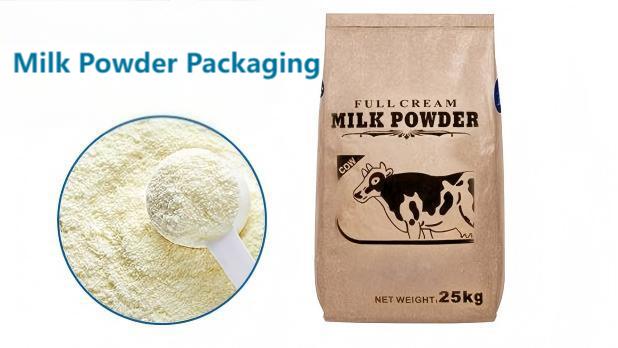
Currently, bulk milk powder in the 10-50KG range is mainly used in the food and beverage industry. Its main classifications include Instant skimmed dry milk powder, pure butter, skimmed milk powder (SMP), whole milk powder (WMP), buttermilk powder, and whey powder, making it an ideal raw material for various premixed mixtures, beverages, confectionery, ice cream, and baked goods. Most milk powder manufacturers primarily produce industrial-grade milk powder (used in baking, food additives, and dairy processing plants) and adopt a bulk processing procurement model.
In industrial milk powder packaging applications, the most commonly used packaging type is a kraft paper bag with a PE liner. Due to food safety requirements, the inner bag needs to comply with EU food contact material standards (EC 1935/2004), and the outer paper bag material is chosen for ease of recycling, complying with EU sustainable packaging policies (such as PPWR). Therefore, this type of packaging is the preferred choice for most milk powder suppliers.
1. Protecting Milk Powder Quality: Choosing a suitable packaging system better protects milk powder from moisture and impurities, extending its shelf life and maintaining a positive brand image.
2. Reducing Labor Costs: Due to the high hygiene and safety requirements of milk powder packaging, using food-grade packaging equipment not only reduces labor costs but also ensures a clean and hygienic packaging environment.
3. Preventing Nutrient Loss: Oxygen and moisture accelerate fat oxidation and vitamin degradation in milk powder, leading to nutrient reduction. The multi-layered paper bag + inner PE bag structure effectively reduces the impact of oxygen, moisture, and light on milk powder.
4. Improving Packaging Efficiency: Automated packaging equipment allows for higher production capacity and output, giving dairy companies a competitive edge in the market and promoting long-term development.
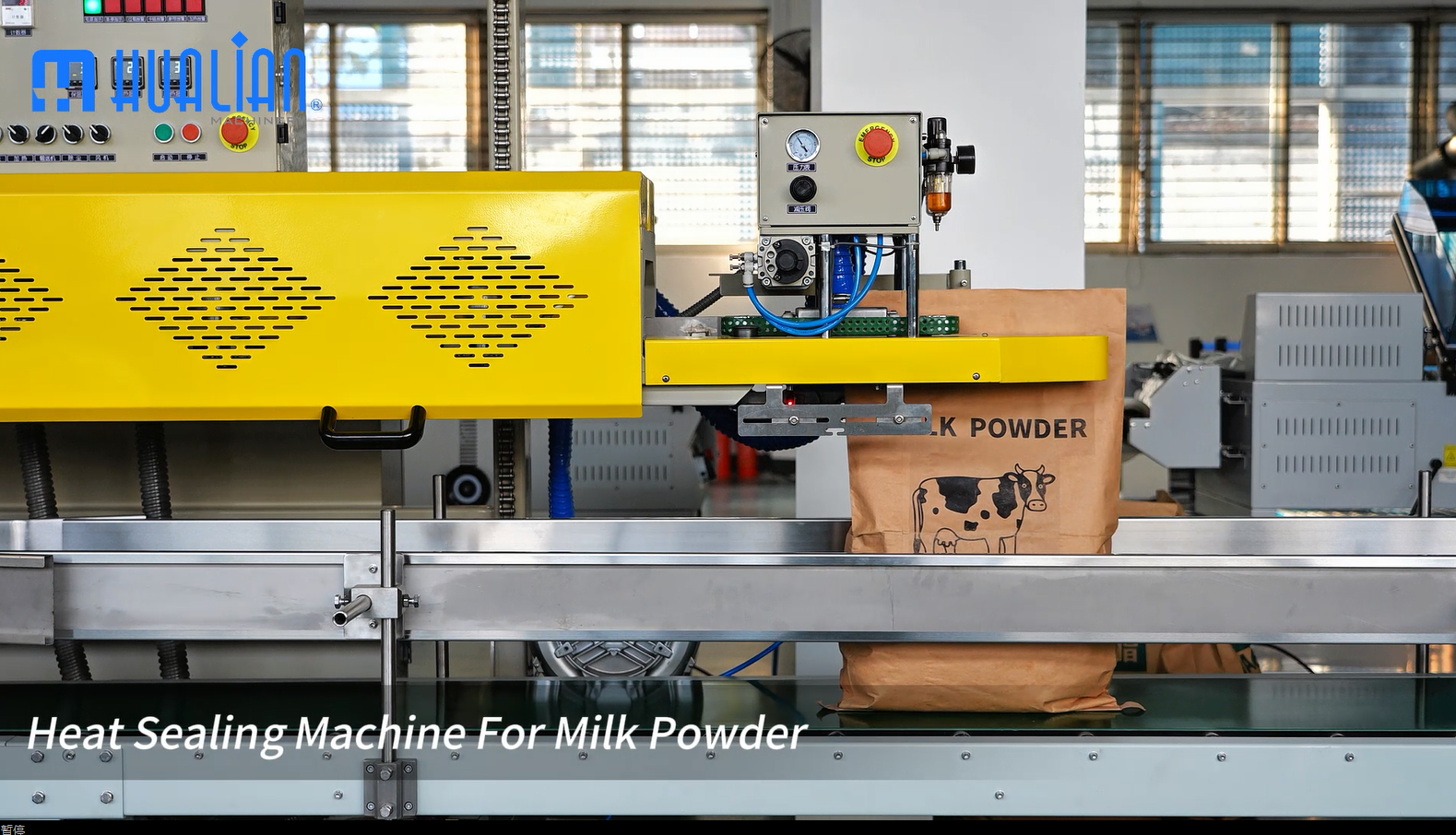
The main processes in milk powder packaging include filling and sealing, primarily involving bag closing systems and bagging systems.
FBC-2 Double Folding & Sealing Machine:After the inner bag is heat-sealed, the opening is double-folded and wrapped with hot-melt adhesive paper, providing multi-layer, secure protection that effectively prevents moisture and leakage. The sealed packaging bag offers excellent sealing performance, protecting against dust, insects, and contamination, ensuring the contents are well-protected. This packaging method also complies with EU process requirements, with no excess threads or debris. It is particularly suitable for European dairy factories, high-cleanliness standard milk powder production lines, and large-volume milk powder (food processing grade) exported to Europe and the United States.
FBP-3W Pinch Bag Sealer: The FBP series is suitable for packaging kraft paper bags with a flap closure. The inner bag is heat-sealed first, followed by hot-melt adhesive sealing of the flap, resulting in a double-layer sealed package. This method provides excellent sealing performance and offers dustproof, moisture-proof, mildew-proof, and anti-pollution functions, ensuring proper protection of the packaged goods. This model offers a high cost-performance ratio and a relatively simple process, making it ideal for large-scale raw milk powder supply chains where cost-effectiveness is a priority.

FBK-332C Automatic Bag Sewing Machine:This series of heavy-duty bag sealing and sewing machine employs a three-layer packaging method: first, the inner bag is heat-sealed, then the bag opening is sewn, and finally, a hot-melt adhesive tape is applied to the bag opening and heat-pressed. The resulting packaging bags have excellent sealing performance and exceptional strength, providing dustproof, moisture-proof, and contamination-proof protection, significantly improving the quality and safety of milk powder packaging and ensuring the milk powder is properly protected. This series is suitable for milk powder packaging factories with extremely high sealing requirements, such as export-oriented milk powder factories, bulk milk powder processing plants, and areas with complex logistics and transportation conditions. It not only guarantees packaging quality but also improves packaging efficiency.
Model | FBC-2 | FBP-3W | FBK-332C |
The mode of bag top packaging | Seal bag opening, then fold two times, and add the hot melt adhesive paper for pinching closure | It seals the inner plastic bag, and fold the bag opening to 90 degree and heats bag top hot melt adhesive with hot wind, them pinches and seals.
| First seal inner PE film, then stitch, and add top hot melt adhesive paper tape for heating closure.
|
Packaging bag style | Single (or multi-layer) kraft paper bags, paper-plastic composite bags, or paper-plastic woven composite bags. | Single or multi-layer paper bags with a flap closure | Single (or multi-layer) kraft paper bags, paper-plastic composite bags, or paper-plastic woven composite bags. |
Sealing style |
|
|
|
| Packaging style |
|
|
|
This bagging machine series provides a precise and dust-free filling process. The machine is designed for quick disassembly, allowing for easy access to internal components for cleaning and sanitization. A screw conveyor extracts the milk powder from the feeding chamber and dispenses it into open bags connected to the filling nozzle. A conveyor belt then transports the filled bags to the sealing system for sealing.
If you're planning to upgrade your milk powder packaging production line, in addition to basic bag closing and bagging systems, we can also provide fully customized packaging solutions. A complete milk powder packaging production line includes a raw material conveying system, metering system, bagging machine system, sealing equipment, coding and quality inspection, dust removal equipment, conveying and palletizing equipment, and other related packaging equipment. Furthermore, most dairy companies add outer packaging printing functionality to their production lines because attractive brand logos and informational printing on paper bags can enhance product visibility and attract consumers in the milk powder industry. If you need more information about milk powder packaging production lines, please contact us.
With our rich experience in milk powder packaging solutions, we can offer you relevant suggestions. We can customize packaging solutions according to your requirements to ensure the safety and quality of your milk powder.

 English
 简体中文
简体中文 ไทย
ไทย Pусский