Views: 0 Author: Site Editor Publish Time: 2026-03-11 Origin: Site


In our daily lives, common food preservation methods mainly include refrigeration, freezing, drying, pickling, and canning. These methods primarily slow down the spoilage process by lowering temperature, reducing moisture, and increasing salt or acidity. However, preserving quality is not the same as keeping food fresh. Preserving quality ensures that food does not spoil in the short term; keeping food fresh extends its shelf life and efficiently preserves moisture and nutrients. To achieve true freshness and extend the shelf life of food, modified atmosphere packaging (MAP) technology must be mentioned. To better explore shortcuts in food preservation, the following content will help you better understand MAP.
Modified Atmosphere Packaging (MAP) is a technology that extends the shelf life of products by filling thermoformed containers with protective gases. Building upon low-temperature storage, it artificially alters the composition of ambient gases to preserve meat, fruits, vegetables, and other stored goods. Due to its superior preservation capabilities, MAP is currently the mainstream preservation solution for fresh meat, seafood, and prepared meals, and is the preferred choice for many food manufacturers.

Modified atmosphere packaging (MAP) primarily involves first removing the air from the packaging, then filling it with gases according to the product's formula to effectively extend the shelf life of food. The formulated gases mainly include mixtures of nitrogen, carbon dioxide, and oxygen, with different proportions of other gases corresponding to different product packaging. Then, packaging materials with gas barrier properties are used to package the food. Based on the customer's specific needs, a certain proportion of O2+CO2+N2, CO2+N2, or O2+CO2 mixtures are filled into the packaging to prevent or slow down the deterioration of the food's physical, chemical, and biological properties, thereby extending shelf life and enhancing the food's value.
The main workflow involves: Unwinding the bottom film → Heating and forming → Product filling → Vacuuming → Filling → Heat sealing with top film → Cutting and separation.
Technical features | Detailed description | Technical indicators |
Vacuuming stage | Remove the air from the packaging to prepare for the filling with protective gas. | Vacuum degree: -0.85 ~ 0.95 bar |
inflation stage | Charge with a mixture of N2, CO2, and O2 according to the formula. | Gas proportioning accuracy:±0.5% |
Residual oxygen control | Residual oxygen content in the packaging after pump-fill cycle | High-end equipment: 0.1-0.5% |
Sealing quality | Heat sealing performance determines gas retention capacity | Sealing strength: >15N/15MM |

The following describes different proportions of mixed gases adapted to the properties and preservation needs of various products to achieve efficient preservation.
Fresh meat requires a higher proportion of oxygen to better maintain the oxygenated state of myoglobin, resulting in a bright red color on the shelf. Poultry and pork, with skin, contain a higher proportion of unsaturated fatty acids; low oxygen levels help prevent fat oxidation, while a more balanced carbon dioxide content provides both antibacterial properties and helps maintain the freshness of the meat.
Product Type | O2 | CO2 | N2 | Principle | Extended shelf life |
Fresh meat | 60-80% | 20-30% | 0-10% | High O2 helps maintain the oxygenated state of myoglobin (bright red color). | 3→10-14days |
Poultry/Pork | 0-30% | 30-40% | 30-60% | Moderate CO2 inhibits bacteria, while low O2 prevents lipid oxidation. | 5→12-16days |
Seafood | 0-30% | 40-60% | 30-50% | High CO2 for strong antibacterial effect | 2→7-10days |
Cooked and marinated food | 0% | 20-30% | 70-80% | An anaerobic environment prevents secondary oxidation | 5→21-30days |
Cakes and pastries | 0% | 60-70% | 30-40% | High CO2 for mold prevention | 3→14-21days |

Residual oxygen is a key indicator affecting MAP (Modified Vacuum) performance. Studies show that a 1% reduction in residual oxygen can extend the shelf life of some products by 5-10%. High-end MAP equipment achieves low residual oxygen through the following technologies:
Deep Vacuum Technology: Employing a two-stage vacuum pump (rotary vane pump + Roots booster) to achieve even lower vacuum levels.
Multiple Replacements: Vacuuming and gas-filling cycles 2-3 times to gradually dilute residual oxygen.
High-Purity Gas Source: Using industrial gases with a purity of 99.5% or higher.
Cavity Sealing: The sealing station employs a high-precision sealing structure.
If you plan to use modified atmosphere packaging (MAP), choosing the right packaging material is crucial. MAP places requirements on the packaging material's gas permeability, barrier properties, strength and durability, food safety, light transmittance, and airtightness. Only by meeting these requirements can optimal freshness preservation be achieved. Therefore, the following six properties need to be considered when selecting packaging materials:
Permeability: This refers to the degree to which a material allows gases (especially oxygen and carbon dioxide) to pass through. Depending on the type of food and the gases used, the permeability of the packaging material needs to be adjusted to maintain an ideal gas composition ratio.
Barrier Properties: In contrast to permeability, barrier properties emphasize the material's ability to prevent the penetration of oxygen, moisture, and other gases or odors. High barrier properties are more important for foods that are easily oxidized or require moisture protection.
Strength and Durability: This ensures the integrity of the packaging during transportation and storage, preventing gas leakage or food contamination due to damage. • Food Safety: Materials must meet food safety standards, must not contain substances harmful to health, and must not leach harmful components upon contact with food.
Translucency/Opaque: Transparent, translucent, or opaque materials are selected based on the food's sensitivity to light. Light can accelerate the fading or spoilage of some foods.
Sealability: Good sealing performance is crucial for maintaining the effectiveness of modified atmosphere packaging, ensuring the stability of the gas composition within the packaging.

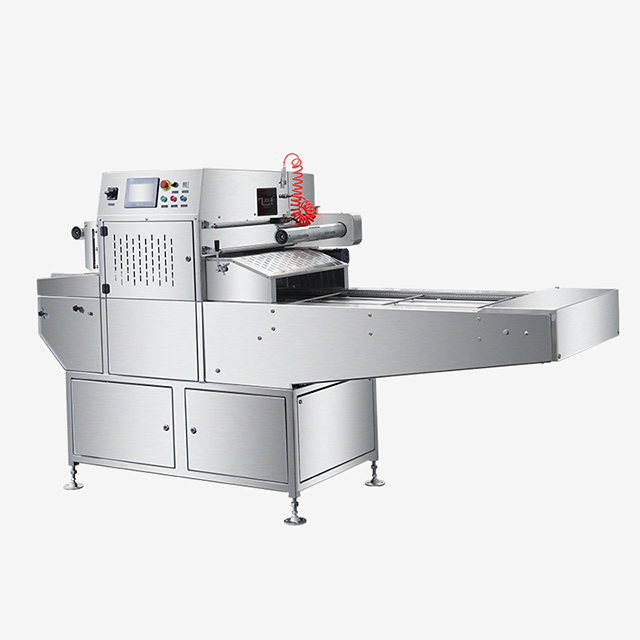
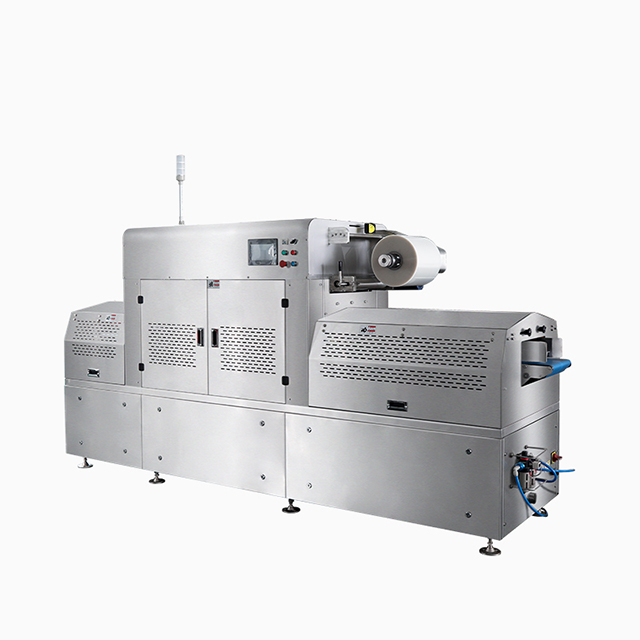
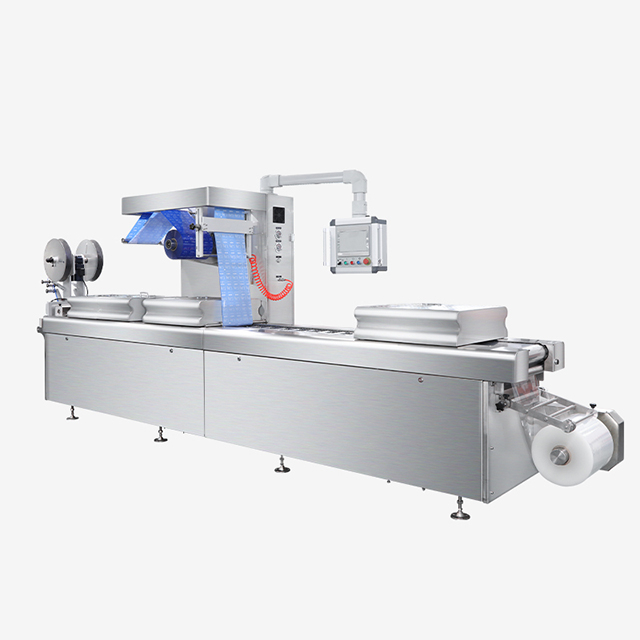
Currently, there are two main types of modified atmosphere packaging (MAP) equipment for food: MAP tray sealing machines and Map thermoforming packaging machine.
MAP tray sealing machines primarily use pre-made trays for film sealing. Products are placed in the trays, a vacuum is created to flush with a mixed gas, and finally, the trays are sealed. Currently, vertical, rotary, linear, and fully automatic tray sealing machines are available to meet different production volume and speed requirements.
Map thermoforming packaging machine primarily form trays from film, then flush with a mixed gas through vacuum. This equipment completes the entire process in one go, from forming, filling, sealing, labeling, and printing, requiring no manual operation. The only consumable cost is the film itself, which is relatively lower than the cost of the trays. While the initial cost of thermoforming packaging machine is relatively higher than tray sealing machines, in the long run, thermoforming packaging machines offer higher output, reducing labor costs and improving efficiency.
1. Extended Shelf Life: Modified atmosphere packaging (MAP) extends the shelf life of food and reduces waste and spoilage costs.
2. Enhanced Shelf Appeal: MAP results in more visually appealing shelf displays, increasing product attractiveness and boosting sales.
3. Improved Food Safety: While most conventional packaging methods cannot effectively prevent bacterial growth in food, MAP effectively prevents bacterial growth at the source, providing consumers with safer food.
4. Increased Market Share: Superior packaging, more efficient production capacity, and safer food allow for deeper and more targeted market penetration, leading to faster consumer acceptance.




 English
 简体中文
简体中文 ไทย
ไทย Pусский