Views: 0 Author: Site Editor Publish Time: 2026-04-03 Origin: Site


Table of Content
What Is Horizontal Flow Wrapping (HFFS)?
What Is Vertical Bagging (VFFS)?
HFFS vs VFFS: Which Packaging Direction Makes More Sense for Your Product?
What You Should Consider Before Choosing Between HFFS and VFFS?
Key Differences Between Horizontal Flow Wrapping and Vertical Bagging
What Are the Main Advantages of HFFS and VFFS?
Talk to Hualian About the Right Setup
When a business is setting up or upgrading a packaging line, one of the first and most consequential decisions is which direction the packaging process should run. Most automated packaging lines fall into one of two camps: horizontal flow wrapping (HFFS) or vertical bagging (VFFS). Both are well-established technologies, capable of high-speed, automated production. But, they are built around fundamentally different assumptions about what is being packaged and how.
Choosing between them affects more than machine selection. It shapes production speed, how products are handled, what the finished pack looks like, how much floor space the line needs, how well the packaging protects the product, and what the operation costs over time. Getting this decision right from the beginning saves significant time, capital, and operational difficulty later.
This guide gives you a practical framework for understanding both systems, comparing them honestly, and identifying which Hualian machines belong on your shortlist for each direction.
In a horizontal flow wrapping machine (also called an HFFS or flow pack machine), the product travels horizontally on a conveyor into the machine while a continuous film wraps around it from above or below. As the product moves forward, the film forms a tube around it, with a fin or lap seal running along the length of the pack. Sealing jaws then close and seal both ends of each pack as it exits the machine, cutting it away from the film to form a finished, individual unit.
The product itself moves on a horizontal plane throughout the process, fed in from one end and discharged as finished packs from the other. This means the product is supported and controlled throughout, rather than being dropped or gravity-fed.
The typical output of a horizontal flow wrapper is a pillow-style pack; a film pouch with a seal running along the back length and crimp seals at both ends. Fin-seal and lap-seal variations change the appearance and strength of the back seal, and the resulting pack fits closely around the product, giving a neat, presented finish that suits retail shelf display.
Horizontal flow wrapping is designed for products that can be placed or fed individually onto a conveyor. These are products with a defined shape, a consistent size, and enough structural integrity to travel through the wrapping process without losing their form. Biscuits, snack bars, chocolate bars, bread rolls, sliced bakery products, soap bars, medical devices, tools, and individually wrapped components are all natural fits.
The format also works well for products that would be damaged or disturbed by the vertical drop required in a VFFS system, making it the preferred choice when product presentation and gentleness of handling are important.
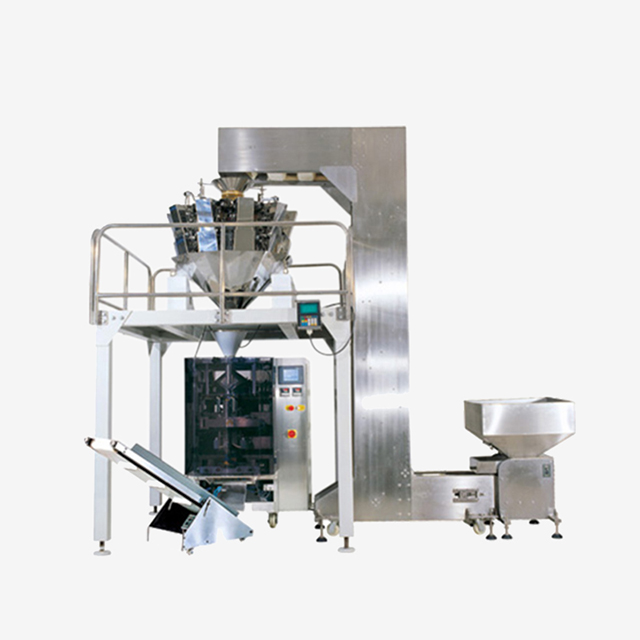
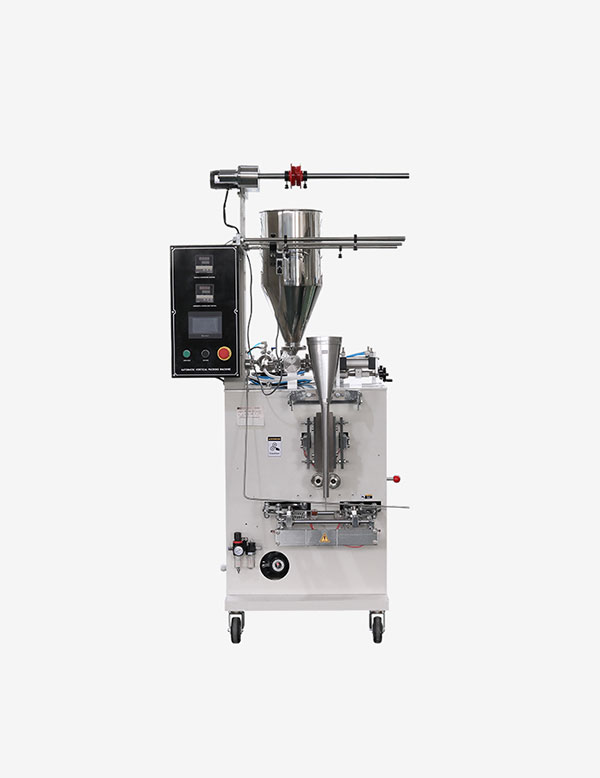
In a vertical form-fill-seal machine, the film travels downward from a roll, is formed into a tube around a vertical fill tube, and sealed along the back edge. The product is introduced from above, usually through a hopper or weighing system. Then, it falls by gravity into the forming tube.
Once the correct fill has been delivered, the machine seals the top of the current bag and the bottom of the next simultaneously, then cuts the sealed bag free from the film. The process then repeats continuously.
Everything happens on a vertical axis, and gravity does much of the filling work. This makes VFFS particularly suited to products that flow, pour, or fall predictably.
VFFS machines produce a variety of bag formats depending on the forming collar and sealing jaw configuration.
Pillow bags are the simplest and most common output, while gusset bags are widely used for products that need to stand upright on shelf. Quad-seal and block-bottom bags provide a more structured, stable format for products where shelf presentation matters and volume needs to be maximised. Many VFFS machines can switch between formats by changing the forming components.
VFFS is the natural choice for loose, free-flowing, bulk, or irregular products; basically, anything that can be measured by weight or volume and dropped into a bag from above. This includes granules, powders, grains, frozen foods, chips, pet food, coffee, sugar, nuts, dried fruit, and similar products. However, the format also suits any product where the speed and cost efficiency of high-volume gravity filling outweighs the need for individual product presentation.
Horizontal flow wrapping is usually the stronger choice when:
The product has a defined shape that needs to be preserved
Individual presentation matters for retail
Gentle handling is required to avoid product damage
The products are being fed individually from an upstream process (a bakery line, a confectionery line, an assembly process).
It is also the right direction when the product would not be suitable for gravity feeding. This means that it works for anything fragile, anything that cannot be portioned by weight or volume, and anything where the visual appearance of the packaged product is a key selling point. A wrapped chocolate bar needs to look like a wrapped chocolate bar, not like a bar that was dropped into a bag.
Vertical bagging is usually the stronger choice when the product is loose, granular, powdered, liquid, or irregular in form; anything that can be measured by weight or volume and delivered into a bag from above. The method is also the more efficient option for high-volume bulk applications where cost per pack, film usage, and output speed per square metre of floor space are the priorities.
VFFS systems integrate naturally with multi-head weighers and other filling equipment, making it straightforward to build a complete weighing and packaging line around a single VFFS machine.
The most important question when considering the perfect method for you is the nature of the product itself: is it solid and placeable, or loose and pourable?
A solid biscuit that holds its shape needs to be placed onto a conveyor and wrapped around; you can’t drop it into a vertical tube without breaking. However, a loose granule or powder has no shape to preserve and falls perfectly into a vertical filling system. This single distinction drives the majority of HFFS versus VFFS decisions in practice.
The desired final pack format is the second major consideration. Pillow packs from an HFFS machine sit differently on shelf than a gusset bag from a VFFS machine. A flow-wrapped bar communicates a different product category signal than a stand-up pouch. Before choosing a machine direction, confirm what your distribution channel and retail environment expect the packaging to look like.
To be fair, both systems can be fast. HFFS machines can reach 200+ packs per minute on the right product, and VFFS machines can match or exceed that on bulk applications.
But, they are fast in different ways. HFFS speed is constrained by how quickly products can be placed onto the conveyor and spaced correctly, while VFFS speed is driven by how fast the filling system can deliver product and how quickly the sealing jaws can cycle. To get the best fit, you want to match the machine's speed capability to your actual workflow; not just a theoretical maximum.
Some products need careful, controlled handling to avoid damage during packaging. Fragile biscuits, individually wrapped bars, and delicate components need the supported, horizontal movement of an HFFS system. Products that are robust, bulk, or not susceptible to impact (most granules, powders, and frozen foods) are fine with the vertical drop of a VFFS system. The method of handling is a protection consideration, not just a convenience one.
HFFS machines are typically longer; the product travels horizontally through the machine, and the film roll, forming section, sealing jaws, and discharge all extend along the length of the line.
A typical HFFS machine footprint might be 3.5–4.5 metres long and under a metre wide. VFFS machines are more compact in their horizontal footprint, with the film roll above and the bag discharge below, making them a natural fit for operations with limited floor area. If floor space is constrained, this consideration can tip the decision.
Both systems have their cost advantages depending on the application. VFFS machines generally use film more efficiently per unit for bulk products because the bag is formed to the fill rather than to a fixed product shape, while HFFS machines may provide better presentation and tighter product-to-film fit for regular-shaped items.
At the same time, labour integration, weigher integration, and the cost of film stock also vary between systems. The lower-cost option depends on the specific product and production scale.
Machine orientation and workflow.
HFFS machines move product horizontally on a conveyor, with film wrapping around the product as it travels. VFFS machines orient the process vertically, with film forming downward and product falling by gravity from above. This fundamental difference in orientation drives most of the other distinctions between the two systems.
Product compatibility.
HFFS suits solid, shaped, individually placed products, while VFFS suits loose, granular, pourable, or irregular products that can be gravity-fed. Trying to use either system for the wrong product type creates handling problems, quality issues, and inefficiency that no amount of adjustment can fully correct.
Packaging styles.
HFFS produces pillow-style packs and fin-seal wraps that conform closely to the product shape. VFFS produces pillow bags, gusset bags, quad-seal bags, and other flexible bag formats where the pack shape is defined by the bag geometry rather than the product shape.
Production speed and efficiency.
Both systems support high-speed production, but each is optimised for a different workflow. HFFS speed is constrained by product placement and spacing, while VFFS speed is driven by filling system capacity and sealing jaw cycle time.
Material usage and cost efficiency.
VFFS generally uses film more efficiently per pack for bulk products, since the bag is formed to the fill volume. HFFS may use more film per unit for products with irregular shapes, but produces a tighter, more presented finish.
Product protection.
HFFS provides supported horizontal movement that is gentler on fragile or shaped products. On the other hand, VFFS involves a gravity drop that is fine for robust products but unsuitable for anything fragile.
Automation and integration.
HFFS machines typically integrate into product placement lines; fed by conveyors from upstream processes or by manual loading. VFFS machines integrate naturally with multi-head weighers, auger fillers, and volumetric cup systems, making it straightforward to build a complete automated weighing and bagging line.
HFFS is ideal for solid, fragile, or individually defined products that need to be wrapped in a controlled environment. It delivers stronger product presentation than most VFFS formats, with a tight, close-fitting pack that shows the product clearly and holds its shape through distribution.
The method is also suited to continuous wrapping of uniform items at high speed, and it integrates naturally into production lines for food, personal care, and medical products where individual items need consistent, professional packaging.
VFFS excels at bulk and loose products, where gravity-assisted filling is efficient and the bag format is a practical, high-volume solution. It often uses less film per unit than HFFS for the same fill weight, and it supports multiple bag styles in a single machine with forming collar changes.
We should also mention that VFFS integrates more easily with automated weighing systems, making it the preferred direction for operations that need to scale packing output efficiently alongside production volume.
The distinction between HFFS and VFFS is clear in principle. But, in practice, there is often more nuance; products that could work in either system, operations that need both, or situations where a specific machine configuration makes one direction significantly more efficient than the other.
Hualian's range covers both directions across multiple machine models, from compact single-line systems to high-capacity integrated production lines. Their team can help you work through the product, line, and facility variables that determine which direction and which specific machine is the right fit for your operation.
Feel free to explore Hualian's horizontal packaging machines and vertical packaging machines, and you cancontact our team directly for guidance on machine selection, line configuration, and the right setup for your product and production goals.

 English
 简体中文
简体中文 ไทย
ไทย Pусский