Views: 0 Author: Site Editor Publish Time: 2026-04-30 Origin: Site


Table of Content
What Makes Plastic Pellets Challenging to Package?
Common Plastic Pellet Types and Their Packaging Needs
Bag Formats for Different Plastic Pellet Types
The Core Steps in an Efficient Plastic Pellet Packaging Line
Why Accurate Weighing Matters More Than Many Plants Expect
Bagging and Filling Methods That Improve Throughput
Sealing Quality Is a Hidden Driver of Efficiency
Packaging Machines Commonly Used for Plastic Pellets
Add-On Equipment That Makes the Whole Line Run Better
How Line Layout Affects Packaging Efficiency
Common Mistakes That Reduce Packaging Efficiency
How to Choose the Best Packaging Setup for Your Plastic Pellets
When you package plastic pellets in large volumes, the real challenge is keeping the process consistent from one bag to the next. A small issue at the packing stage can create bigger problems later, from material loss and rework to delays in storage, loading, or shipment.
An efficient packaging line influences product protection, labor efficiency, warehouse handling, and how reliably each order reaches the customer. If the line is too slow, too messy, or too dependent on manual correction, production becomes harder to control.
This guide looks at how to improve plastic pellet packaging with a more practical, line-focused approach, so you can choose a setup that supports cleaner operation, steadier output, and easier downstream handling.
Plastic pellets are not difficult to package because of one single problem. The challenge is that their behavior can change depending on the resin type, pellet size, bulk density, moisture sensitivity, additive content, and the amount of dust or fines in the material.
Many plastic pellets move quickly through filling systems. This can support faster production, but it also makes dosing control important. If the system cannot slow the flow at the right moment, bags may become overweight, underweight, or inconsistent from one cycle to the next.
Some pellet materials contain dust, fines, recycled fragments, or additives that make the filling area harder to control. These particles can collect around the bag mouth, interfere with sealing surfaces, and increase cleaning work for operators.
Static electricity can make this worse by causing pellets or lightweight particles to cling to equipment surfaces, bag openings, or nearby parts of the line.
Not every plastic resin has the same storage requirement. Some materials need better protection from moisture before they are processed. For these pellets, packaging efficiency is not only about how fast the bag is filled. It also depends on whether the bag material and sealing method can help protect the product during storage and transport.
Pellets can escape through weak closures, poorly sealed bag mouths, damaged seams, or packaging that does not match the pellet size and flow behavior. This may not always look like a major issue at the filling station, but it can become a problem during conveying, loading, or shipment.
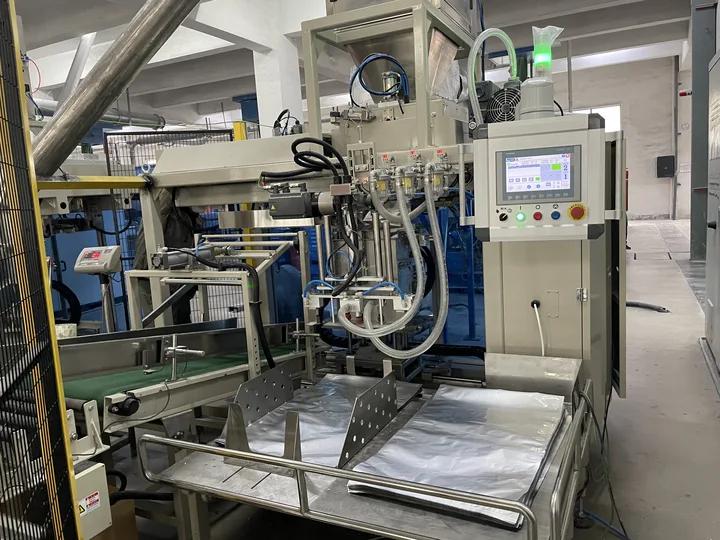
Not every plastic pellet behaves the same way once it enters a packaging line. That is why you need to understand what the material is, how sensitive it is, and what can go wrong between filling, sealing, storage, and delivery.
General-purpose pellets are packed in large quantities for molding, extrusion, compounding, resale, or further processing. This group includes common materials such as polypropylene (PP), low-density polyethylene (LDPE), high-density polyethylene (HDPE), nylon/polyamide (PA), polycarbonate (PC), polyoxymethylene (POM), polyphenylene sulfide (PPS), and polyphenylene oxide (PPO).
For these materials, your main concern is usually practical efficiency. You need stable filling, accurate bag weight, controlled packaging cost, and enough moisture resistance to keep the pellets clean and usable during normal storage and transport.
Some plastic materials are more sensitive to moisture before processing. This includes nylon grades such as PA6 and PA66, as well as materials such as polyethylene terephthalate (PET) and polybutylene terephthalate (PBT). Industry processing guides commonly treat nylon, PET, PBT, and similar engineering resins as materials that may need controlled drying before processing, because absorbed moisture can affect final part quality.
For these pellets, packaginghas to do more than hold the material. You need to think about how long the bags will be stored, whether they will be exposed to humid conditions, and how much protection the resin needs before it reaches the next production stage.
Some materials are harder to package because they are not clean, uniform pellets. This group can include polyvinyl chloride (PVC) powder, fillers, modified PPS or PPO, and glass-fiber-filled plastics.
These materials can create dust, flow unevenly, or place more stress on the bag. Glass-fiber-filled materials may be more abrasive than standard pellets, while powdery materials can make the filling area messy and interfere with sealing if fine particles collect around the bag mouth. Resin pellet movement can create fines through attrition, and those fines may affect handling and filtration if they are not controlled.
High-value additives, thermoplastic polyurethane (TPU), elastomers, and masterbatch usually need more careful packaging because the material itself is more valuable and the quality requirements are often stricter.
For these products, your packaging decision is less about choosing the lowest-cost bag and more about protecting the material until it reaches production. Depending on the grade and storage conditions, the package may need better resistance to moisture, oxygen, light exposure, or contamination.
The right bag format depends on what the material needs after it leaves the filling station. Some plastic pellets only need a practical bulk bag that keeps packaging cost under control. Others need stronger moisture resistance, cleaner filling, or better protection from oxygen, light, and handling damage.
So instead of choosing a bag only by weight, it is better to ask: How sensitive is the material, how clean does the filling process need to be, and what risks will the bag face during storage or transport?
Polyethylene bags, often called PE bags, are a practical choice for large-volume plastic pellet packaging where basic protection is enough. They are commonly used when the priority is stable filling, reliable closing, and cost control rather than advanced barrier performance.
This format can work well for standard pellet applications such as PP, PA, PC, POM, PET, PBT, PPS, PPO, LDPE, HDPE.
For these materials, the package usually needs to do three things well: hold the target weight, close securely, and protect the pellets from normal dust, dirt, and moisture exposure during handling. PE bags are not the most protective option, but they are often enough for general-purpose pellets that do not require strict barrier packaging.
FFS packaging means form-fill-seal packaging. Instead of using pre-made bags, the machine forms the bag from film, fills it, and seals it in a continuous process. This makes it a better fit for operations where speed, automation, and consistent bag production matter most. FFS systems are useful for high-throughput plastic pellet and granule packaging, especially where manufacturers want to reduce manual bag handling.
FFS packaging is great for free-flowing general-purpose pellets such as PP, LDPE, HDPE, PET, and similar resin materials. If your line is packing large volumes every day, FFS can help keep the process more consistent because bag forming, filling, and sealing are handled as part of one automated cycle.
Some engineering plastics need stronger protection because moisture can affect how they perform during processing. This includes materials such as PA6 and PA66, which are nylon grades, as well as PET and PBT in applications where moisture control matters. Polyamides are widely treated as hygroscopic materials, meaning they can absorb moisture from the air and often require controlled drying before processing.
For these materials, aluminum-plastic composite bags can be a better option because they offer stronger barrier performance than basic PE bags. The aim is to reduce exposure to moisture and air during storage or transport, especially when the pellets will be stored for a longer period or moved through humid environments.
Vacuum sealing may also be useful in some cases, but it should not be treated as automatic for every moisture-sensitive resin. It makes the most sense when the material value, storage time, humidity exposure, or customer requirement justifies the higher packaging cost.
Some plastic materials are harder to fill cleanly because they are powdery, filled, or modified. This group can include polyvinyl chloride (PVC) powder, fillers, modified PPS/PPO, and glass-fiber-filled plastics.
These materials may create dust, flow unevenly, or place more stress on the bag during handling. Valve bags are often used for powdery or granular materials because the valve opening can support cleaner filling and better containment compared with a simple open-mouth bag in some applications.
Higher-value materials such as thermoplastic polyurethane (TPU), elastomers, and masterbatch often need stronger packaging because the cost of product loss or quality damage is higher. These materials may also need better protection from moisture, oxygen, light, or contamination depending on the grade and storage conditions.
Thickened composite bags, including aluminum foil or PE composite structures, are more suitable when stronger barrier performance is needed. Aluminum foil composite bag structures are commonly used when products need stronger resistance to oxygen, moisture, and light exposure.
For premium materials, the cheapest bag is not always the most efficient choice. If a stronger package helps prevent quality loss or customer complaints, the higher packaging cost can be easier to justify.
An efficient plastic pellet packaging line is not built around one machine doing one job quickly. It depends on how well each stage connects to the next. If one step is slow, inaccurate, messy, or unstable, the whole line loses efficiency.
Feeding is the first step in the packaging process. It moves plastic pellets from storage, silos, hoppers, or upstream processing equipment into the weighing and filling system.
This step needs to keep the material supply steady. If pellets enter the system too slowly, the bagging machine waits. If they enter too aggressively, weighing accuracy can suffer. For materials that create dust, fines, or static, feeding also needs to be controlled enough to avoid messy transfer and uneven flow.
Weighing determines how much material goes into each bag. A good weighing system should balance speed and accuracy. It needs to fill close to the target weight without overfilling the bag or slowing production unnecessarily. This matters especially for heavy industrial bags, where consistent weight affects cost control, order accuracy, and customer trust.
Bag feeding prepares the bag before filling. In semi-automatic lines, an operator may place bags manually. In more automated systems, the machine can feed, open, and position bags with less manual intervention.
Filling is where the weighed pellets enter the bag. The goal is not simply to move material fast; the goal is to fill cleanly, evenly, and consistently.
Free-flowing pellets need controlled discharge so they do not rush into the bag too quickly. Dusty or modified materials need cleaner filling to reduce product loss and contamination around the bag mouth. The filling stage should also help the bag keep its shape, because an unstable bag can create problems during sealing and conveying.
Sealing protects the material and prevents leakage after filling. The right sealing method depends on the bag type and the material being packed.
Standard pellets in PE bags may only need secure heat sealing or closing. Moisture-sensitive engineering plastics may require tighter sealing or stronger barrier packaging. Powdery or modified materials need closures that reduce dust escape and prevent leakage during movement.
After sealing, the bag needs to move smoothly to the next stage. Conveying connects the packaging machine to inspection, palletizing, or warehouse handling.
This step is easy to overlook, but it affects real production efficiency. If filled bags tip over, deform, or move unevenly, operators may need to correct them manually.
Inspection helps confirm that each finished bag meets the required standard before it moves further down the line. This may involve checking bag weight, seal quality, bag shape, label accuracy, or package condition.
For plastic pellet packaging, inspection is especially useful because many problems are easier to fix before palletizing. An underweight bag, leaking seal, or damaged package should be caught early, not after the pallet has already been stacked or shipped.
Palletizing is the final handling step where sealed bags are stacked on a pallet for storage, loading, or shipment. When bags have consistent weight, stable shape, and strong seals, they are easier to stack neatly and move safely through the warehouse. Efficient palletizing depends on stable bag shape, consistent weight, and reliable sealing from the earlier stages.
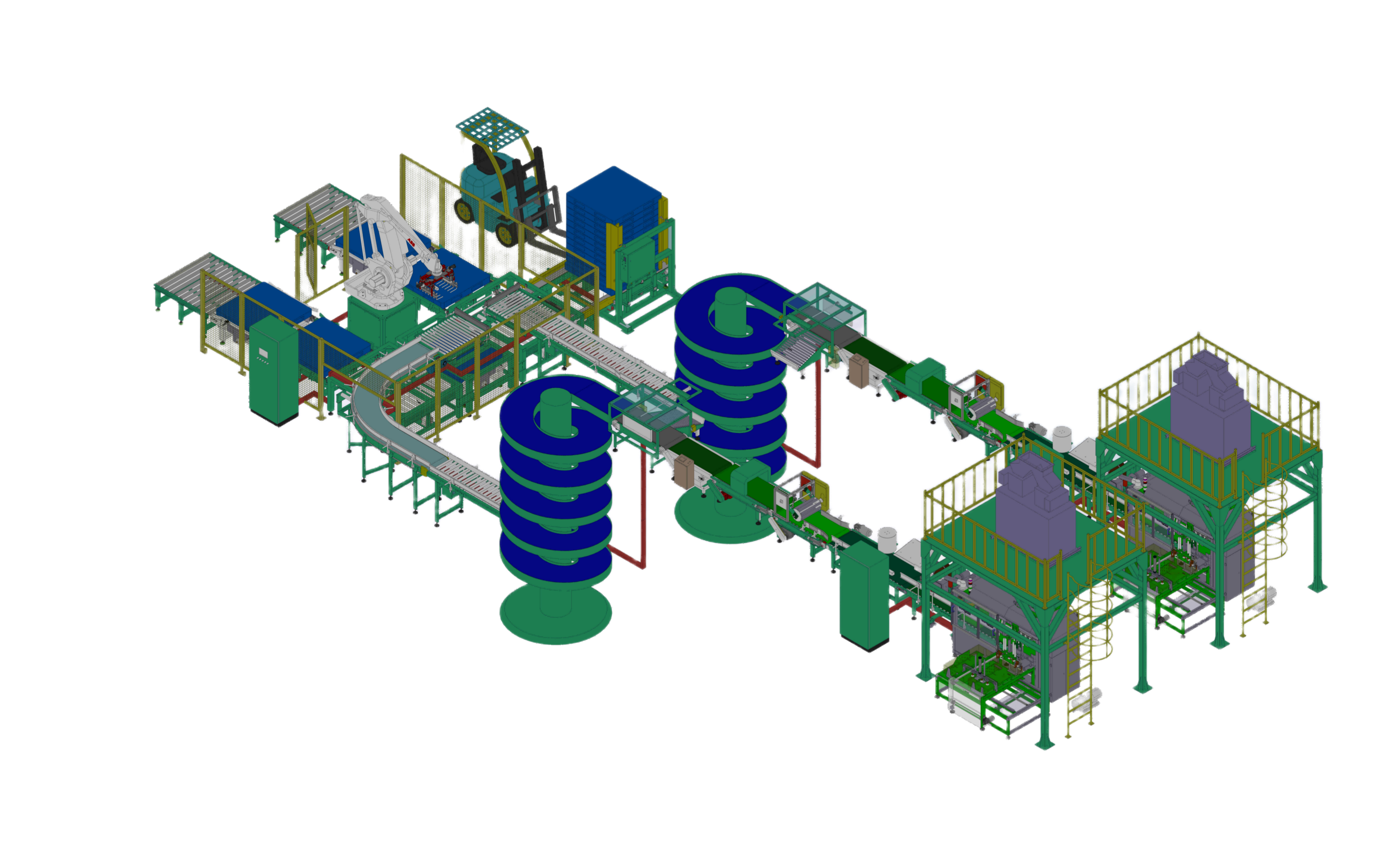
Accurate weighing is one of the most important control points in plastic pellet packaging. If the weight is wrong at this stage, every step after it becomes harder to manage.
When bags are overfilled, you give away extra material with every package. One overweight bag may not look like a major issue, but across hundreds or thousands of bags, that small excess becomes a real cost. When bags are underfilled, the problem shifts to customer complaints, rejected bags, rework, or delays while operators correct the issue.
Good weighing control helps you keep each bag closer to the target weight. This supports better cost control, more consistent orders, and a smoother packaging rhythm. It also reduces the need for manual checks and corrections, which helps the rest of the line move without unnecessary stops.
Poor weighing does the opposite. It slows filling, disrupts sealing and conveying, and creates uncertainty before the bags even reach inspection or palletizing. Operators may need to pause the line, remove bags, adjust weights, or recheck finished packages. That lost time weakens output performance even if the filling machine itself is fast.
Throughput in plastic pellet packaging is not only about how fast pellets enter the bag. A better way to think about throughput is this: how many accurate, well-sealed, stable bags can your line produce with minimal interruption? That depends on the bagging and filling method.
A simpler bagging setup can be a good fit when your plant has lower production demands, changing material types, or a need for more flexibility. In this kind of setup, operators may handle more of the bag placement, adjustment, or movement after filling..
For smaller output, the goal is not always full automation. The goal is a stable process that can fill accurately, close securely, and move finished bags without creating unnecessary downtime.
Integrated automatic bagging setups are better suited to operations that want more consistent output with less manual handling. These systems help connect the main packaging steps, including weighing, bag feeding, filling, and closure. The advantage is continuity.
This approach is useful when your plant needs higher output than a basic setup can comfortably support, but also wants better control over filling accuracy, bag stability, and downstream handling.
FFS packaging is often the stronger option when speed and automation are top priorities. Instead of using pre-made bags, the system forms each bag from film, fills it, and seals it in one continuous process. This makes FFS-based packaging a good fit for high-volume pellet production where the line needs to run with fewer manual steps.
FFS is especially useful for plants packing large volumes of free-flowing plastic pellets, where consistent bag formation and automated sealing can make the whole process easier to control at speed.
Sealing quality affects more than how a bag looks at the end of the line. A weak or uneven seal can lead to pellet leakage, contamination, moisture exposure, rejected bags, unstable stacks, and extra cleanup.
Good sealing helps each finished bag stay secure through the various stages of packaging. This becomes even more important when you are packing moisture-sensitive resins, dusty materials, or high-value pellets where product loss or exposure can quickly become costly.
In most pellet applications, the main options include open-mouth bagging machines, automatic bag closing systems, integrated bagging and sealing systems, and palletizing workstations.
Automatic open-mouth bagging machines are a practical choice for common 5–50 kg plastic pellet bagging, especially when you need steadier output with less manual bag handling. These machines can help with bag pickup, bag opening, filling, and discharge, so operators do not have to manage every bag by hand.
For general-purpose plastic pellets packed in PE bags or similar open-mouth bags, Hualian's open-mouth bagging systems can support stable bag placement, accurate filling, and smoother transfer into sealing or conveying.
Bag closing systems are important when your line uses different bag materials or closure methods. Hualian's FBH and FBK series can be matched to different bag types and sealing needs. For example, FBH systems are useful for heavy-duty PE or PP plastic bags, while FBK machines can support heavier paper, woven, composite, or liner-style bags where stronger closure performance is required.
Integrated bagging and sealing systems are better viewed as complete line solutions, not stand-alone machines. This matters in higher-volume pellet packaging because line stability affects real output.
For operations packing 20–50 kg plastic pellets, Hualian’s automatic granule filling and sealing bagging systems can connect the core packaging steps into a more continuous process. Depending on the material and bag requirement, the setup can also support options such as vacuum sealing where stronger product protection is needed.
Palletizing workstations help move sealed bags into stacking, storage, and dispatch more efficiently. Once plastic pellets are filled and sealed, the next challenge is handling heavy finished bags without slowing the line down.
A good palletizing setup reduces manual lifting, supports more stable bag stacks, and helps finished packages move more smoothly through the warehouse or loading area.
For plants that want to extend automation beyond filling and sealing, Hualian's intelligent packaging systems can connect bagging equipment with downstream handling such as conveying, robotic stacking, and pallet movement.
A plastic pellet packaging line does not become efficient through the bagging machine alone. Add-on equipment can help stabilize the process before, during, and after filling, especially when you are working with high output targets, heavy bags, dusty materials, or automated palletizing.
Quantitative packaging scales help match weighing performance to the material’s flow behavior and the accuracy your line requires. Free-flowing pellets need controlled dosing so bags do not become overweight, while powdery or modified materials may need a weighing setup that handles slower, less even flow.
Bag flattening or conditioning helps shape filled bags before they move into stacking or palletizing. This step can make bags neater, more stable, and easier to arrange on a pallet, reducing the risk of uneven stacks or manual correction after sealing.
Pallet distribution systems support automatic pallet supply before stacking. Instead of stopping the line to position pallets manually, the system helps keep empty pallets available where they are needed, improving line continuity and reducing waiting time before palletizing.
Online wrapping protects stacked loads after palletizing. By wrapping pallets as part of the line, you can reduce load shifting, bag damage, moisture exposure, and handling problems during storage or transport.
Dust removal and inspection systems make daily operation cleaner and more reliable. Dust removal helps keep the filling and sealing area under control, while inspection systems can check issues such as weight accuracy, sealing quality, bag condition, or package consistency before finished bags move further down the line.
Line layout can affect packaging efficiency as much as machine speed. If the different steps of packaging are not arranged properly, operators may spend too much time correcting bag position, moving finished packages, or managing awkward transfers between machines.
A better layout keeps material, bags, operators, and finished packages moving in a clear direction. When the full line is coordinated, each step supports the next, reducing extra movement, improving bag handling, and making palletizing faster and more stable.
Packaging efficiency often drops because of avoidable planning mistakes, such as:
Choosing bags based only on cost: A cheaper bag can lead to leakage, tearing, moisture exposure, unstable stacking, or more rejected packages.
Ignoring material behavior: Moisture-sensitive resins, dusty materials, static-prone pellets, and modified plastics may need different filling, sealing, or handling support.
Using the wrong weighing system: If the scale does not match the material’s flow, you may deal with inconsistent bag weights and frequent corrections.
Underestimating sealing requirements: Weak sealing can cause leakage, contamination, moisture problems, and poor finished-package reliability.
Treating palletizing as secondary: Slow or unstable downstream handling can reduce output even when the filling machine runs quickly.
Planning around one machine only: A strong packaging line should connect feeding, weighing, bagging, sealing, conveying, inspection, and palletizing into one coordinated flow.
Use this checklist before choosing a plastic pellet packaging machine:
Material type: Are you packing standard pellets, moisture-sensitive engineering plastics, dusty powders, modified materials, additives, or masterbatch?
Protection needs: Does the material need protection from moisture, dust, oxygen, light, or contamination?
Bag format: Are you using PE bags, FFS film, aluminum-plastic composite bags, paper-plastic bags, valve bags, or thickened composite bags?
Bag weight: Are you packing smaller bags, or mainly working in the common 20–50 kg industrial range?
Weighing accuracy: Does the material flow easily, or does it need more controlled dosing to prevent underweight or overweight bags?
Hourly output: How many finished bags do you need per hour without creating bottlenecks?
Automation level: Do you need a simple semi-automatic setup, automatic bag feeding and sealing, or a fully integrated line?
Downstream handling: Do you need conveying, inspection, palletizing, and wrapping connected to the same packaging flow?
Efficient plastic pellet packaging is not just about moving material into bags faster. The best setup fits your pellets, bag format, bag weight, output target, and downstream handling needs while keeping the process in one coordinated line.
That is how you reduce waste, improve package consistency, protect material quality, and keep finished bags moving smoothly from filling to storage or shipment.
If you need a plastic pellet packaging solution built around your actual workflow, Hualian Machinery can help you configure the right equipment for your material, bag type, and production goals. Contact Hualian to discuss a single machine or complete packaging line for your operation.

 English
 简体中文
简体中文 ไทย
ไทย Pусский