Views: 0 Author: Site Editor Publish Time: 2026-07-03 Origin: Site


Table of Content
What Is a Continuous Sealing Machine?
Why Businesses Use Continuous Sealing Machines
How a Continuous Sealing Machine Works
Main Types of Continuous Sealing Machines
What Products and Bag Materials Work Best?
How to Choose the Right Continuous Sealing Machine
Continuous Sealing Machine vs Other Sealing Machines
Common Sealing Problems Beginners Should Avoid
If your production team is filling bags faster than it can seal them, the sealing step eventually becomes the part of the line everyone waits on. That is when a continuous sealing machine comes in.
Instead of closing each bag one at a time, a continuous sealer lets you feed filled bags through the machine in a steady rhythm. The machine uses heat, pressure, and cooling to create a sealed edge, helping you close pre-made bags faster and with less variation from pack to pack.
This guide explains what continuous sealing machines are, how they work, which type to choose, and what mistakes to avoid before buying one.
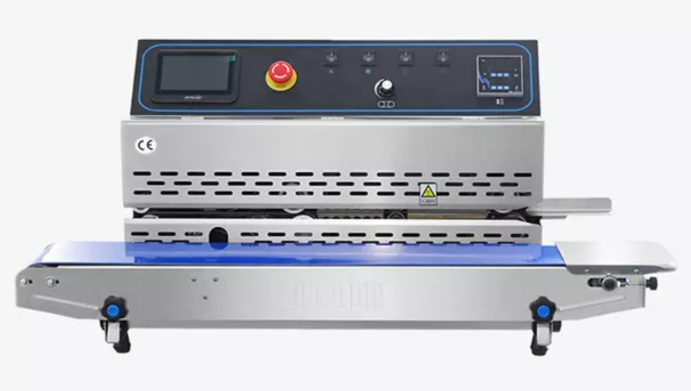
A continuous sealing machine seals bags or pouches as they move through the machine on a conveyor or feeding system.
You place the open edge of a filled bag into the entry point. The machine pulls the bag forward, applies heat and pressure to the opening, cools the sealed area, and sends the finished bag out with a closed edge.
The main difference is workflow. With hand sealing, you stop and seal one bag at a time. With continuous sealing, bags move through one after another, which makes the process faster and more consistent.
Continuous sealers are commonly used for food, powders, granules, agricultural products, daily-use goods, hardware, spare parts, and e-commerce products packed in heat-sealable bags or pouches.
If your product is already in a pre-made bag and you need to close that bag repeatedly, a continuous band sealer may be the right place to start.
You do not need a continuous sealer just because you pack products in bags. You need one when sealing starts slowing the rest of the process.
That may happen when order volume increases, seal quality changes from operator to operator, or the finished package no longer looks clean enough for retail, delivery, or storage.
A continuous sealing machine can help you:
seal bags faster
keep seal quality more consistent
reduce operator fatigue
improve package appearance
add printing or coding when needed
support growing daily production
For many businesses, the benefit is that you can keep using pre-made bags or pouches while improving the final sealing step. You get a faster process without moving straight into a full automatic packaging system.
A continuous sealer works in a simple sequence.
First, you place the open edge of the filled bag into the entry point. The bag mouth should be clean, flat, and aligned. Powder, oil, moisture, or product pieces in the seal area can weaken the final seal.
Next, the conveyor moves the bag forward at a steady speed. That speed controls how long the bag material stays in the heating and pressing section.
The heating section softens the inner sealing layer of the bag. A thin PE bag may seal quickly, while a thicker laminated pouch or aluminum foil bag may need more heat or slower speed.
Pressure then bonds the two sides of the bag together. After that, cooling helps the seal hold its shape before the package is handled, labeled, boxed, or shipped.
The main settings to watch are temperature, conveyor speed, pressure, and bag alignment. If one of these is wrong, the seal may wrinkle, burn, leak, or open during handling.
Some machines can also combine sealing with printing, coding, vacuum, air suction, or inflation, depending on what the package needs.
Before choosing a model, start with one simple question:
Should your bag lie flat during sealing, or does it need to stay upright?
That answer usually points you toward the right machine type.
A horizontal continuous sealing machine seals bags while the package lies flat or moves horizontally.
This type works well when the product is dry, stable, and not likely to spill or shift into the seal area. If the bag can lie flat without the contents moving toward the opening, a horizontal continuous band sealer may be the simplest option.
You might use this setup for snacks, tea, coffee, flat pouches, small retail goods, hardware, and other products that stay stable while sealing.
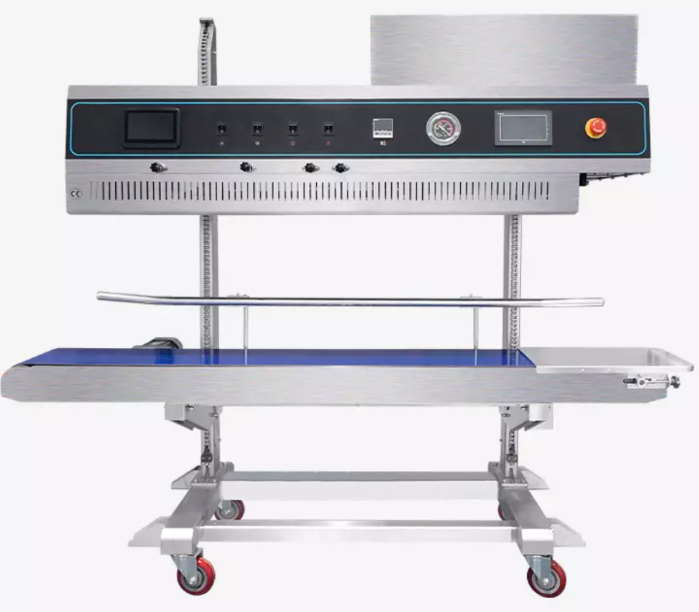
A vertical continuous sealing machine keeps the bag upright during sealing.
This is useful when the product may spill, shift, or contaminate the seal area if the bag lies flat. Powders, granules, liquids, sauces, pet food, seeds, fertilizer, and heavier filled bags often need upright support.
If your product moves toward the opening when the bag is laid down, do not force it into a horizontal process. A vertical continuous band sealer can help keep the product lower in the bag while the opening passes through the sealing section.
Some continuous sealers can seal and print in the same pass.
This is useful if your package needs a production date, expiry date, batch number, product code, or traceability mark. Instead of sealing first and coding later, you can combine both steps and reduce extra handling.
If you sell food, hygiene products, medical supplies, retail goods, or commodity products, decide early whether coding is required. It affects the machine configuration.
Some continuous sealers include vacuum, air suction, or inflation functions.
These are useful when air inside the bag affects the final package. You may need a tighter pack, reduced air, better package shape, or controlled inflation before sealing.
Do not choose these features just because they sound advanced. If your main need is simple bag closure, a standard continuous sealer may be enough. Extra functions should solve a real packaging problem.
A continuous sealer is usually a good fit when your product is already packed in a pre-made, heat-sealable bag or pouch.
The product can be food, powder, granules, pet food, agricultural goods, hardware, spare parts, daily-use goods, or e-commerce items. What matters most is how the product behaves inside the bag.
If the product is light, dry, and stable, horizontal sealing may work well. If it is powdery, oily, liquid, granular, bulky, or heavy, vertical sealing may be safer. If the package needs date or batch information, choose a model with coding. If air affects storage or appearance, look at vacuum or air-related functions.
The bag must also have a heat-sealable layer. Common options include PE bags, PP bags, laminated pouches, aluminum foil bags, composite film bags, stand-up pouches, and kraft paper bags with heat-sealable inner liners.
Do not rely only on the material name. Two laminated pouches from different suppliers may need different settings because of thickness, inner layer, coating, or structure. Test the actual bag before setting production conditions.
Start with the product, not the machine.
If the product is dry and stable, a horizontal sealer may be enough. If it is powdery, oily, liquid, granular, or heavy, vertical sealing helps the bag stay upright and keeps the product away from the seal area.
Then check the bag. A thin PE bag, laminated pouch, and aluminum foil bag will not use the same temperature, pressure, or speed. The machine should be tested with the real bag, not just a similar sample.
Bag size and weight also matter. Larger or heavier bags need proper conveyor support and height adjustment. If the bag is not supported well, the operator may have to hold it during sealing, which slows the process and affects seal quality.
Seal strength is another key point. If the product is heavy, oily, sharp-edged, or likely to be handled roughly during shipping, the seal must be strong enough for the full journey. A seal that looks neat is not enough if it opens in transport.
Production speed should match the full workflow. A fast sealer will not help much if filling, coding, labeling, or boxing is still slow. Think of sealing as one part of the packaging process, not a separate machine decision.
You should also check your workspace. Look at the machine footprint, feeding height, operator position, conveyor direction, and where sealed bags will go next. A machine can be technically correct but still awkward if it does not fit your layout.
Finally, choose extra functions carefully. Vacuum, air suction, inflation, embossing, counting, printing, coding, or stainless-steel construction can be useful, but only when they match your product and workflow.
A continuous sealing machine is not the right choice for every package. It is best when you already use pre-made bags or pouches and need faster repeated sealing.
Machine Type | Best For | Main Difference |
Continuous sealing machine | Pre-made bags and pouches | Seals bags continuously for repeated packaging |
Impulse sealer | Low-volume manual sealing | Seals one bag at a time |
Vacuum sealer | Products needing air removal | Removes air before sealing |
Tray sealer | Trays with lidding film | Seals film over trays, not bag openings |
VFFS/HFFS packaging machine | Automatic bag forming, filling, and sealing | Forms the package from film roll |
Carton sealer | Shipping cartons | Seals boxes, not bags or pouches |
Most sealing problems come from the wrong settings, poor feeding, or a mismatch between the machine and the bag material.
Wrong temperature is one of the most common issues. Too much heat can burn, wrinkle, shrink, or weaken the bag. Too little heat can create a weak seal that opens during handling. Start with a safe setting for your material, then adjust gradually.
A dirty bag mouth can also cause seal failure. Powder, oil, moisture, or product pieces in the sealing area can stop the material from bonding properly. Keep the bag opening clean before feeding it into the machine.
Poor alignment creates uneven seals. Bags should enter the machine straight and flat. If the bag enters at an angle, the seal may look crooked or fail at the edge.
Speed can also cause problems. If the conveyor moves too fast, the material may not get enough heat and pressure to seal properly. Thicker bags and laminated pouches may need slower speeds.
Machine orientation matters too. A horizontal sealer may not suit products that spill or shift easily. If the product needs to stay upright, choose a vertical sealer.
If your product requires date coding, batch coding, or product identification, decide this before choosing the machine. Adding coding later may require extra handling or another machine.
A continuous sealing machine needs regular cleaning and inspection to keep seal quality stable.
Keep the sealing area clean, especially if you pack powders, oily products, or small particles. Product buildup near the heating area can affect sealing performance and shorten the life of machine parts.
Check belts and conveyor movement regularly. Worn Teflon belts, sealing bands, or conveyor parts can lead to weak or uneven seals. If seal quality suddenly changes, inspect these parts before assuming the machine has failed.
Operators should also confirm temperature and speed settings during production. Accidental setting changes can cause inconsistent results.
Follow the machine manual for cleaning, adjustment, and replacement parts. Regular maintenance helps reduce downtime, protect seal quality, and extend the working life of the machine.
A continuous sealing machine is worth considering when hand sealing can no longer keep up with your daily packaging volume or seal quality requirements.
The first decision is usually simple: choose horizontal sealing if the bag can lie flat without spilling or shifting, and choose vertical sealing if the product needs to stay upright. From there, check your bag material, seal strength, coding needs, production speed, workspace, and whether you need vacuum, air suction, or inflation.
The right machine should fit your product, bag type, output target, and packaging workflow. It should make sealing easier and more consistent, not add another complicated step to the line.
If you are comparing continuous sealing machines for your product, bag type, and output target, Hualian Machinery can help you match the right configuration to your packaging workflow.
A continuous sealing machine seals bags or pouches as they move through the machine. The operator feeds the filled bag into the sealing area, and the machine uses heat, pressure, and cooling to create a sealed edge.
Yes. Some continuous sealing machines include printing or coding functions. They can add production dates, expiry dates, batch numbers, or simple product codes while sealing the bag.
Continuous sealers work with heat-sealable materials such as PE, PP, laminated pouches, aluminum foil bags, composite film bags, stand-up pouches, and kraft paper bags with heat-sealable liners.
Some continuous sealing machines include vacuum, air suction, or inflation functions. These are useful when the package needs air removal, a tighter shape, or controlled air inside the bag before sealing.
Weak seals are often caused by low temperature, dirty bag mouths, poor alignment, conveyor speed that is too fast, wrong pressure, worn sealing parts, or bag materials that do not match the machine settings.
Choose a continuous sealer when you need faster repeated sealing for many pre-made bags or pouches. An impulse sealer is better for low-volume manual sealing, while a continuous sealer is better when daily packaging volume increases.

 English
 简体中文
简体中文 ไทย
ไทย Pусский