Views: 0 Author: Site Editor Publish Time: 2026-07-02 Origin: Site


Table of Content
Best Foods to Vacuum Pack for Longer Freshness
Foods That Need Extra Care Before Vacuum Packing
What to Consider Before Vacuum Packing Food
Air exposure can affect color, texture, aroma, flavor, freezer quality, and storage life, especially in foods with moisture, fat, protein, or strong natural aromas. Vacuum packing helps reduce that exposure by removing much of the air from the package before sealing.
With less oxygen inside the pack, food can stay better protected against oxidation, freezer burn, aroma loss, and unnecessary movement during storage or distribution. For food businesses, vacuum packing can support cleaner storage and longer-lasting product quality.
In this guide, we cover 14 foods that are commonly vacuum packed for longer freshness, along with what you should consider before choosing a vacuum packaging machine.
The best foods to vacuum pack are usually foods that lose quality from air exposure, freezer burn, moisture loss, odor transfer, or oxidation.
Food Type | Why Vacuum Pack It? | Main Packaging Consideration |
Fresh meat | Helps reduce air exposure and freezer burn | Portion size, pouch size, hygiene, chilled or frozen storage |
Seafood | Helps protect freshness and limit odor transfer | Moisture level, pouch strength, temperature control |
Processed meats | Helps reduce oxidation and moisture loss | Shape, package size, output speed |
Cheese | Helps reduce drying and odor absorption | Softness, oil level, deformation risk |
Ready meals | Helps with storage and portion control | Meal format, sauce level, presentation needs |
Coffee | Helps protect aroma | Degassing, bag format, storage plan |
Nuts and seeds | Helps reduce oxidation | Oil content, bag strength, sharp edges |
Sauces and moist foods | Helps with cleaner storage | Chamber machine, liquid control, pouch placement |
Fresh meat is one of the most common foods for vacuum packing because it is sensitive to air exposure, moisture loss, odor transfer, and freezer burn.
Beef, pork, lamb, poultry, and portioned meat cuts can benefit from packaging that keeps portions compact and better protected during chilled or frozen storage. Vacuum packing can also make meat easier to stack, label, transport, and distribute.
For commercial meat processors, machine choice should be based on portion size, pouch size, output volume, hygiene requirements, and whether the meat will be chilled or frozen. Meat portions and other commercial food products usually need a vacuum packaging machine selected around chamber size, pouch format, sealing performance, and daily production volume.

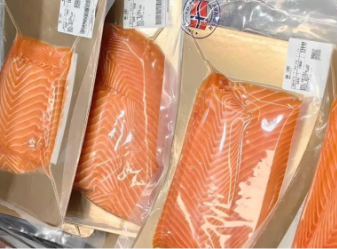
Seafood is highly sensitive to freshness loss, odor transfer, and texture changes.
Fish fillets, shrimp, shellfish, salmon, squid, and prepared seafood portions often need packaging that limits air exposure and keeps the product clean during chilled or frozen distribution. Vacuum packing can help protect seafood quality, control package shape, and reduce contact with surrounding odors.
Seafood packaging may require strong vacuum performance, hygienic machine design, careful temperature control, and suitable pouch or film selection. For suppliers managing freshness and efficient packing flow, seafood vacuum packaging should be planned around moisture level, portion size, storage method, and handling requirements.
Sausages, cured meats, sliced meats, and processed meat products often need protection from oxidation, moisture loss, and odor transfer.
Vacuum packing can help keep portions tight and easier to display, store, or distribute. It can also support cleaner handling for retail packs, foodservice portions, and wholesale distribution.
Machine choice depends on product shape, package size, production speed, and whether the company needs pouch vacuum sealing, thermoforming, or modified atmosphere packaging. For sausage and processed meat lines, packaging should be selected based on whether the product is whole, sliced, portioned, chilled, frozen, or prepared for retail display.
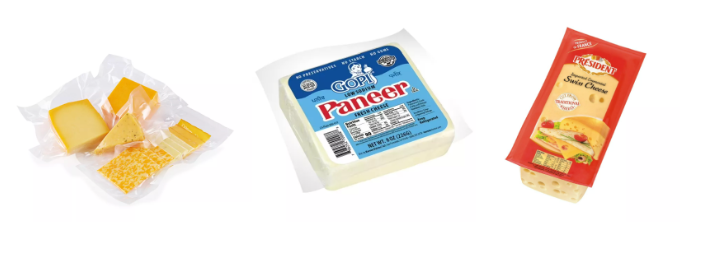
Cheese can lose moisture, absorb odors, or dry out when exposed to air.
Hard cheese blocks, sliced cheese, grated cheese, and portioned cheese products can use vacuum packing to help protect flavor, reduce drying, and support cleaner handling. For wholesale and retail cheese packaging, vacuum sealing can also keep portions compact and easier to stack.
Cheese packaging should consider product softness, oil level, moisture content, portion size, and whether the cheese may deform under vacuum pressure. A hard cheese block behaves differently from grated cheese or a soft cheese portion, so the vacuum level, pouch type, and packaging format should match the product.
Ready-to-eat meals may benefit from vacuum packing when the meal format can handle air removal without losing shape or presentation.
Cooked proteins, rice portions, side dishes, prepared meal components, and suitable pouch-packed meals can be vacuum packed for cleaner storage and portion control. However, full ready meals may sometimes be better suited to tray sealing, MAP, or thermoforming depending on appearance, sauce level, reheating needs, and shelf-life target.
Cooked food portions can be vacuum packed for cleaner storage, portion control, and reduced air exposure.
Cooked meats, stews, sauces, side dishes, meal prep components, and catering portions often need packaging that keeps portions organized and protected. This is useful for restaurants, catering businesses, central kitchens, and prepared food suppliers.
Moist foods usually need chamber vacuum sealers rather than external suction sealers because chamber machines handle liquids and soft foods more reliably. Machine settings should match moisture level, pouch type, food temperature, and storage method.
Coffee beans are sensitive to aroma loss and oxidation. Vacuum packing can help protect aroma and reduce air exposure during storage and distribution. This is useful for coffee roasters, specialty food brands, and dry food suppliers that need cleaner packaging with better aroma protection.
Coffee packaging may also need degassing considerations depending on roast freshness and packaging format. For dry food and coffee applications, a coffee vacuum packing machine should be selected based on bag size, product volume, storage plan, and sales format.
Nuts and seeds contain oils that can lose quality when exposed to air, heat, and moisture.
Almonds, walnuts, cashews, peanuts, sunflower seeds, sesame seeds, pumpkin seeds, and mixed seed products can be vacuum packed to help protect aroma, reduce oxidation, and keep portions compact for storage.
Buyers should consider bag strength, portion size, sealing width, and whether the product has sharp edges, dust, or uneven particle sizes. For larger packs, stronger pouch materials and reliable sealing are important because heavy or sharp products can stress the package during storage and transport.
Dried fruits can absorb moisture, lose texture, or become sticky if packaging is not controlled.
Raisins, dates, apricots, dried mango, figs, berries, and mixed dried fruit can benefit from vacuum packing when the goal is to reduce air exposure and keep portions cleaner and more stable. Vacuum packaging can also help dried fruit packs stay compact for storage, shipping, and retail display.
Very soft or sticky dried fruits need careful vacuum settings. Too much vacuum pressure can compress the product or affect presentation. For date products, the best packaging choice should account for moisture level, stickiness, portion size, and target market.
Rice, grains, cereals, beans, and dry staples are often vacuum packed for compact storage and better protection from air and moisture.
Vacuum packaging can make dry staple packs easier to stack, transport, and store. It can also reduce package bulk by pulling the product tighter inside the pouch.
Larger packs may require stronger sealing, suitable pouch material, and a machine chamber or conveyor setup that supports bag size and weight. Buyers should confirm whether they are packing small retail portions, family-size bags, or larger wholesale packs before choosing a machine.
Frozen foods can suffer from freezer burn, ice crystal exposure, dehydration, and flavor loss when poorly packaged.
Frozen meat, seafood, vegetables, prepared portions, and frozen meal components can benefit from vacuum packing because it reduces air inside the package before freezing. This may help protect texture and quality during frozen storage.
Buyers should consider freezer-suitable pouch materials, seal strength, portion size, and whether the food has sharp edges or high moisture content. A package that looks fine at room temperature may behave differently after freezing, stacking, and transport.
Some prepared vegetables can be vacuum packed when the process, storage temperature, and shelf-life plan are properly controlled.
Cut vegetables, peeled vegetables, blanched vegetables, and frozen vegetable portions may use vacuum packaging for cleaner storage and portion control. However, fresh produce can behave differently under vacuum because it may continue to respire, release moisture, or soften.
Some bakery products can be vacuum packed, but not all baked goods are good candidates.
Firmer products such as certain breads, flatbreads, tortillas, biscuits, and baked items that can tolerate pressure may work in vacuum packaging. Vacuum packing can help reduce air exposure and keep portions cleaner during storage or distribution.
Soft cakes, pastries, delicate breads, and decorated bakery products may be crushed or lose presentation under vacuum pressure. For delicate products, MAP, tray sealing, or flow wrapping may protect appearance better than vacuum packing.
Sauces, marinades, soups, and moist food components can be vacuum packed, but they require the right machine setup.
Liquids can move, foam, or expand during vacuum cycles if settings are wrong. Chamber vacuum machines are usually more suitable for liquids and moist foods because the whole chamber is evacuated, helping the pouch seal more reliably.
For liquid, powder, or moist food applications, a tabletop vacuum machine with an extra-deep chamber and inclined plate can help control product movement during the vacuum cycle.
Not every food should be vacuum packed in the same way. Some products need special handling, refrigeration, freezing, modified atmosphere packaging, blanching, cooling, or shelf-life testing before the packaging method is finalized.
Soft foods can be crushed or deformed under vacuum pressure.
If product appearance matters, buyers may need adjusted vacuum levels, gentler settings, tray support, MAP, or another packaging method.
Liquids and moist foods can move during vacuum sealing.
Chamber vacuum machines, inclined plates, correct pouch placement, and adjusted vacuum settings may be needed to prevent spills, foam, or seal contamination.
Fresh produce can continue to respire after packaging.
MAP, perforated films, freezing, or other packaging formats may sometimes be more suitable than standard vacuum packing, depending on the vegetable, storage method, and shelf-life goal.
Hot foods should not be vacuum packed without proper process control.
Cooling, hygiene, storage temperature, and food safety procedures should be handled according to the business’s food safety plan.
Dry foods, moist foods, oily foods, soft foods, and liquids behave differently under vacuum.
Moisture level affects machine choice, vacuum setting, pouch selection, and sealing quality.
Small retail portions, family-size packs, bulk food bags, and industrial packs may need different chambers, sealing bars, pouch sizes, and output rates.
The machine should match the real package, not only the product category.
Vacuum-packed foods may be stored chilled, frozen, or at room temperature depending on the product and safety requirements.
Perishable foods still need proper refrigeration or freezing. Vacuum packing can support freshness, but it should not be treated as a replacement for cold-chain control.
Vacuum packaging must be paired with proper hygiene, temperature control, storage management, and shelf-life validation.
It should not be presented as a replacement for safe processing or safe storage.
The pouch should match the food, storage condition, and vacuum level.
Oily foods, sharp foods, frozen foods, and heavy packs may need stronger pouch materials and reliable seal width. Pouch cleanliness is also important because oil, liquid, dust, or product residue near the seal area can weaken the final seal.
Small shops may need tabletop or single chamber machines, while factories may need double chamber, continuous, or thermoforming systems.
The machine should match daily output without creating bottlenecks at filling, sealing, cooling, labeling, or secondary packaging.
Common vacuum packing mistakes include:
vacuum packing foods that are too soft without adjusting vacuum pressure or package format
using the wrong pouch material for oily, sharp, frozen, or moist foods
packing warm foods without proper cooling and food safety control
assuming vacuum packing alone makes food shelf-stable
choosing a small chamber machine for large packs or high-volume production
ignoring seal width, sealing temperature, and pouch cleanliness
using standard vacuum packing when MAP or tray sealing would better protect product appearance
forgetting to test real product behavior before choosing the machine
Most problems can be avoided by testing the actual food, pouch, portion size, vacuum level, seal settings, and storage method before scaling production.
Vacuum packing can help many foods stay fresher for longer by reducing air exposure, protecting flavor and texture, reducing freezer burn, and keeping portions cleaner and more compact.
Fresh meat, seafood, processed meats, cheese, ready meal components, coffee, nuts, dried fruits, grains, frozen foods, and suitable moist foods are common candidates for vacuum packaging. The right result depends on food type, moisture level, pouch material, vacuum setting, seal quality, storage temperature, and production workflow.
Hualian Machinery offers vacuum packaging machines across tabletop, single chamber, double chamber, continuous, skin vacuum, MAP tray sealing, and thermoforming systems, helping businesses match equipment to product type, output volume, and packaging format.
If you need help choosing a vacuum packaging machine for meat, seafood, cheese, ready meals, coffee, dry foods, sauces, or frozen products, contact Hualian Machinery to find a setup that fits your product and production goals.
Fresh meat, seafood, processed meats, cheese, coffee, nuts, dried fruits, grains, frozen foods, and suitable cooked portions are commonly vacuum packed. The best choice depends on food type, moisture level, pouch material, and storage method.
Yes, some ready meals and prepared meal components can be vacuum packed. However, tray sealing, MAP, or thermoforming may be better for meals that need stronger retail presentation, sauce control, or reheating convenience.
Yes, liquids and sauces can be vacuum packed with the right machine setup. Chamber vacuum machines are usually better for moist foods because they handle liquid movement more reliably than external suction sealers.
Very soft foods, hot foods, fresh produce, delicate bakery products, and very moist foods should be vacuum packed with caution. These products may need adjusted settings, cooling, MAP, freezing, or another packaging method.
No. Vacuum packing does not replace refrigeration, freezing, hygiene, or food safety controls. Perishable vacuum-packed foods still need correct storage temperature and handling.

 English
 简体中文
简体中文 ไทย
ไทย Pусский