Views: 0 Author: Site Editor Publish Time: 2026-07-01 Origin: Site


Table of Content
What Is Vacuum Skin Packaging?
How Does Vacuum Skin Packaging Work?
Main Components of a Vacuum Skin Packaging System
Key Benefits of Vacuum Skin Packaging
Industries That Use Vacuum Skin Packaging
Hualian Vacuum Skin Packaging Solutions
How to Choose the Right Vacuum Skin Packaging Machine
Common Challenges in Vacuum Skin Packaging and How to Avoid Them
Future Trends in Vacuum Skin Packaging
Vacuum skin packaging (VSP) is a method in which the product is placed on a base material and tightly sealed with a transparent film that conforms closely to its shape, making the package appear almost invisible. The product can be packaged not only in clear plastic trays, but also on various carriers such as rigid base films, cardboard, and paper trays. This packaging process helps extend shelf life, minimize product movement during transportation, reduce wastage, and create an aesthetically appealing presentation.
In this article, you will learn what the process of vacuum skin packaging is, its applications, how it measures up against other packaging processes, and how you can go about selecting the most appropriate equipment for your needs. You will also learn how vacuum skin packaging by Hualian Machinery helps businesses of all sizes, including food processors and industrial companies.
Vacuum skin packaging is the packaging technique where a heated, flexible skin film is shrunk around a product through the force of vacuum pressure before sealing to a rigid tray or backing material such as paperboard.
This starts by positioning the product on a rigid tray or backing material. This step also involves ensuring the positioning of the product is correct. Correct positioning of the product will help ensure even shrinking of the film and give a more professionally packaged product.
This involves heating the skin film to make it soft and flexible. The temperature used for heating should be carefully monitored. Overheating of the skin film may lead to excessive thinning and weakening of the film, while insufficient heating may prevent proper shrinking of the film around the product. This is one of the reasons why professional vacuum skin packaging machinery gives better results than manual packaging techniques.
When the product and heated film are placed in the sealing chamber, a vacuum pump extracts the air from the package. As the air pressure lowers, the atmospheric pressure compresses the softened film down onto the product until it is firmly wrapped around it. This process allows for the removal of the oxygen that surrounds the product and makes it stable inside the package.
After reaching the desired vacuum level, the machine seals the film to the tray or other backing. It is important to have a good seal to ensure the integrity of the package during storage, transport, and distribution.
Before the packaging is labeled, boxed, or palletized, an inspection is done on the finished product. This will help to keep a consistent quality level and reduce returns.
Skin film needs to wrap items of various shapes and sizes without losing its ability to resist punctures and provide outstanding oxygen barrier properties. Very good cuts of meat with bones exposed may need more durable films than cheese or ready meals.
The tray forms the base of the pack. It provides support for the product, protects the item from damage during transport, and gives an appealing look on the shelves. The trays can be made of PET (high transparency), PP (high heat resistance), or paperboard for sustainable projects.
Vacuum pump removes air from the packaging cell. Good vacuum system guarantees the same vacuum level each time the machine is working. This will have direct effect on the shelf-life of the product, package look, and sealing quality.
The sealing system seals the film to the tray with the help of temperature, pressure, and time. New packaging machines are provided with programmable controllers that ensure a constant level of sealing parameters in the process of continuous packaging.
Due to its snug fit with the product, the vacuum skin packaging allows natural textures, colors, and forms of the item to be presented clearly without any wrinkles and bubbles of air. The outcome is an elegant and upscale look of the product, which may be considered a ‘second skin’ of the item and can improve the presentation in refrigerated displays.
Fresh meat and fish produce juices when stored. The vacuum skin packaging helps to avoid this problem as the film adheres to the surface of the product very closely. Although a purge still happens in this case, the movement of liquids in the package is reduced considerably.
The vacuum skin packaging improves the safety of the packaging system. The tight seal protects the product from external contamination when it is transported and stored. Also, because the product is firmly sealed in the tray, there is less risk of damaging the package.
Unprocessed beef, lamb, pork, and exotic meat continue to be the greatest consumers of vacuum skin packaging technology. This category enjoys an extended life on the refrigeration shelf, minimized movement of the products, and improved protection during the transportation process.
Vacuum skin packaging helps to stabilize fish fillets, shrimp, shellfish, and other seafood that are very fragile and susceptible to spoilage. In addition, the thin film minimizes the movement of the products, thus keeping the products in good shape after transport to retail stores.
Chicken, duck, turkey, and other processed poultry products enjoy the benefits of vacuum skin packaging. This provides protection during transport and improved presentation at retail stores.
Deluxe cheeses must be packed in a way that preserves taste but does not compromise on appearance. Vacuum skin packing prevents air contact and provides good visibility for consumers.
Consumers have an increasing preference for ready-to-eat and ready-to-cook meals. Vacuum skin packing is applied to improve the display of meals and their protection during transportation. This is due to the fact that the food items are firmly placed in the tray and therefore reach the consumer more attractive than upon packaging.
Numerous manufacturers of frozen foods have started using vacuum skin packaging to avoid the phenomenon of freezer burn and improve package integrity. The thin film reduces air entrapping.
The use of vacuum skin packing may also be beneficial for medical devices, surgical instruments, precision tools, electronic components and industrial hardware. This kind of packaging prevents dust, moisture and movements of items while allowing consumers to see the content without opening the package.
This compact tabletop vacuum skin packaging machine is designed for small-scale production with limited space requirements. It is widely used for fresh meat, seafood, cheese, prepared meals, and other perishable products in small workshops, retail stores, and sample production environments.
The machine features a manual operation process, including tray placement, film positioning, vacuuming, sealing, and cutting in a single chamber cycle. The vacuum system works with a heating sealing plate to ensure the skin film tightly conforms to the product surface and tray, creating a secure and transparent package.
It is compatible with plastic trays, paper-based trays, and rigid film bases, and allows adjustable temperature and sealing time for different packaging materials and film thicknesses. Compact in structure and easy to operate, it provides a practical solution for entry-level vacuum skin packaging applications.
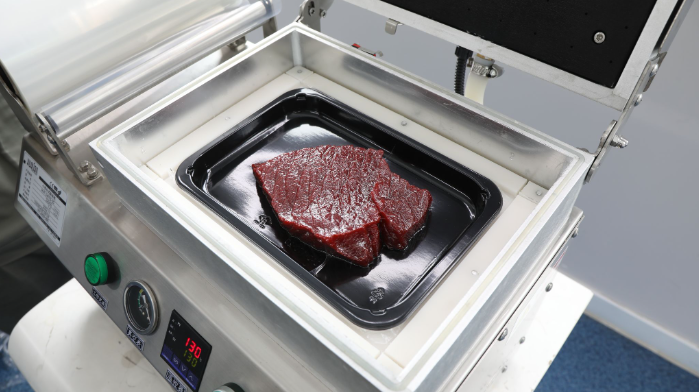
This vacuum packaging machine is an excellent solution for businesses looking to produce premium vacuum skin packages without investing in a fully automated line. It is widely used for packaging seafood such as sea cucumber, abalone, and lobster, as well as vegetables, medical instruments, hardware tools, electronic components, and crafts.
Its semi-automatic design makes it particularly suitable for small to medium-sized manufacturers that require flexibility across different product types. Equipped with a powerful vacuum pump, a spacious aluminum vacuum chamber, and a wide sealing film capacity, this machine consistently delivers consistent packaging.

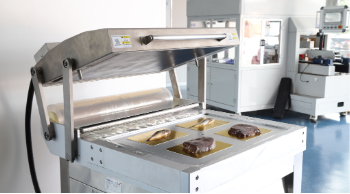
This machine model is suitable for fresh meat, fish, seafood, cooked meat products, sliced sausages, sushi, fruits, and vegetables. It is suitable for small to medium-sized food processors, supermarkets, and central kitchens.
The machine automatically performs vacuuming, gas flushing, sealing, coding (optional), and film cutting in one process. Its PLC control system with a touchscreen interface allows operators to easily adjust packaging parameters, while interchangeable moulds enable the machine to accommodate different tray sizes as production needs evolve.
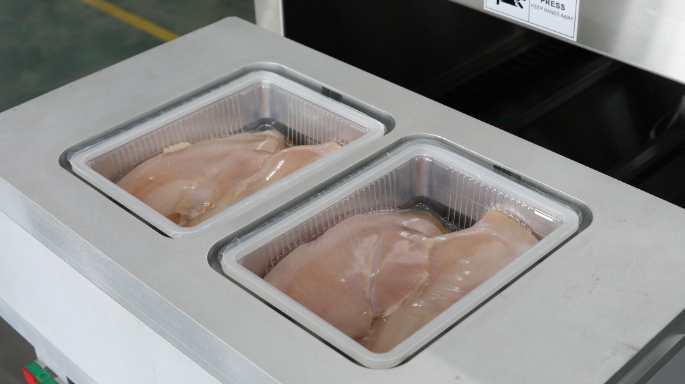
This machine is built for medium to large-scale food manufacturers that require continuous, high-efficiency packaging. It is used to package meat, sausages, sandwiches, cakes, cheese, seafood, medical products, electronics, and hardware. Additionally, it integrates film thermoforming, product loading, vacuum sealing, gas flushing, sealing, and cutting into a single automated process.
Additional features such as precise positioning, emergency safety protection, and optional coding make the HVR-420A a reliable solution for businesses seeking consistent packaging quality and increased production efficiency.
Consider Product Type: Evaluate the size, shape, weight, and moisture content of your product. This will help you choose the right film and setting on the machine to guarantee the same quality of packaging for every package. Products like bone-in meats usually have a thicker skin film, whereas a smoother product, like cheese, can use a thin film.
Evaluate Production Volume: Choose the type of machine depending on the volume of your production. Semi-automatic machines work well with low-to-medium production, whereas fully automatic ones are more suitable for large volumes.
Packaging Material Compatibility: Choose a machine that is able to accommodate the tray and skin film materials you prefer and allow you to use sustainable packaging materials.
Automation Requirements: Decide on the type of automation you require based on your production needs. Semi-automatic machines have more flexible options than automated ones do.
Consider the manufacturer: Look at the technical support, availability of spare parts, maintenance services, and upgrade options from the machine manufacturer.
Film Wrinkling: Film wrinkles mar the look of the package and are mainly caused by inconsistent heat, vacuum pressure, improper placement of the products, or wrong choice of film. To eliminate this problem, use the right type of skin film, ensure correct calibration of the heating system, and proper positioning of the products prior to sealing.
Poor Vacuum Levels: This results in extra air in the package, impacting shelf life as well as package appearance. The main causes are worn vacuum pumps, leakage, or incorrect settings. To avoid this problem, perform regular maintenance and check vacuum performance.
Seal Integrity Issues: Seal problems will shorten the shelf life and cause package failures. The main causes include dirty tray flanges, incorrect seal settings, or worn sealing parts. To avoid this, maintain clean sealing surfaces and check the condition of sealing parts.
Product Deformation: Sensitive products might deform because of the too-high vacuum level. To avoid this problem, set the vacuum level based on product specifications, not on maximum possible levels.
Sustainable Packaging Materials: Sustainability is becoming part of everyday packaging decisions. More manufacturers are switching to recyclable films, paperboard trays, and lightweight materials to reduce waste. That means packaging machines also need to keep up with these newer materials.
Greater automation: Packaging equipment is getting smarter. Many modern vacuum skin packaging machines now come with touchscreen controls, recipe storage, and production monitoring, making it easier to improve consistency, reduce setup time, and keep production running smoothly.
Growing Demand for Premium Retail Packaging: Today's shoppers often judge a product before they ever read the label. That's why more food manufacturers are choosing vacuum skin packaging to keep products fresh while giving them a clean, premium look that stands out in the display case.
Vacuum Skin Packaging is one form of packaging that has been developed in order to offer improved protection, prolong shelf-life, and enhance the visual appeal of your products during retail sale. Its capability of closely fitting packaging film onto your products makes it suitable for many firms.
But in order to make the most out of it, you have to choose the right machinery in line with your production and packaging needs. Whether you opt for a semi-automatic or a fully automatic vacuum skin packaging machine, Hualian Machinery is always available to help. Contact us now to explore our options.
Neither of them is better since they play different roles in packing. VSP is ideal for high-class packaging, locking in juices and preventing any movement of the product. MAP is best suited for packing delicate foods while maintaining the natural shape and bright, oxygen-filled color of the item. Fresh red meat is packed using MAP.
The vacuum skin packaging can range from $600 to $130,000. The pricing of these machines varies depending on extra functions and levels of automation.
Yes, the vacuum skin packaging (VSP) can be used for non-food products, especially hardware, electronic gadgets, and medical products. It wraps a clear plastic film over the item that is attached to some backing material.

 English
 简体中文
简体中文 ไทย
ไทย Pусский