Views: 0 Author: Site Editor Publish Time: 2026-07-02 Origin: Site


Table of Content
What Is a Horizontal Band Sealer?
What Is a Vertical Band Sealer?
Vertical vs Horizontal Band Sealer: Key Differences
Comparison Table: Vertical vs Horizontal Band Sealers
When a Horizontal Band Sealer Makes More Sense
When a Vertical Band Sealer Makes More Sense
Product Examples: Which Layout Fits Better?
What to Consider Before Choosing Either Machine
The best way to choose between a vertical and horizontal band sealer is to watch what the filled bag does before sealing.
If the bag lies flat without shifting, leaking, or pushing product toward the opening, a horizontal band sealer may work well. If powder, granules, liquid, oil, or heavy product moves toward the seal area, a vertical band sealer is usually the safer choice.
Both machines create continuous heat seals on pre-made bags and pouches. The difference is how they hold the package during sealing.
This guide explains when to use each layout and how to choose based on product behavior, bag material, fill level, seal quality, coding needs, operator workflow, and production layout.
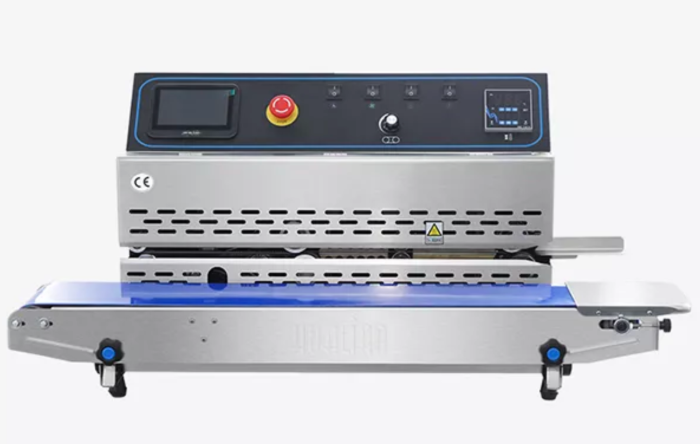
A horizontal band sealer is a continuous band sealing machine that seals the open end of a bag while the filled package lies flat or moves horizontally through the sealing section.
The bag is usually supported by a conveyor while the open edge passes through heating, pressing, and cooling sections. This layout works well when the product stays stable inside the bag and does not move toward the seal area during handling.
Horizontal band sealers are commonly used for snacks, tea, coffee, dried foods, candies, small retail goods, lightweight hardware, medical supplies, small spare parts, and flat pouches. These products can often move smoothly on a conveyor without spilling, leaking, or deforming the seal area.
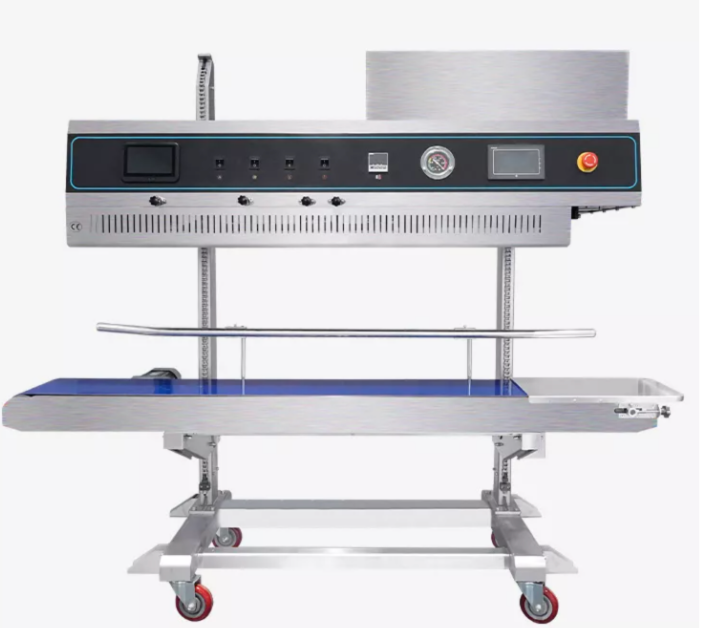
A vertical band sealer is a continuous band sealing machine that keeps the bag upright while sealing the open end.
The bag moves through the sealing section in a standing position, helping the product remain lower in the package. This can reduce the chance of powder, granules, liquid, oil, or loose product reaching the bag mouth before the seal is made.
Vertical band sealers are commonly used for powders, granules, liquids, sauces, large-particle solids, pet food, seeds, fertilizers, and heavier filled bags. They are especially useful when laying the bag flat would cause the product to spill, leak, shift, or contaminate the seal area.
Vertical and horizontal band sealers use similar sealing principles, but the bag position changes how the product behaves, how operators feed the machine, and how easily the line maintains seal quality.
Horizontal band sealers seal bags while the package lies flat or moves horizontally. Vertical band sealers seal bags while the package remains upright.
This is the main difference because bag position affects product movement, spillage risk, seal area cleanliness, bag support, and operator handling.
In a horizontal position, loose or flowing products may shift toward the seal area. This is common with liquids, powders, granules, oily products, and overfilled bags.
Vertical sealing helps keep product lower in the bag, reducing the chance of product entering the seal area before heat and pressure are applied.
Horizontal sealing works well when the product remains stable inside the bag.
Vertical sealing is safer when the product may spill, leak, or flow if placed flat. Sauces, liquids, granules, powders, pet food, and agricultural products often need this extra control.
A clean bag mouth is essential for strong sealing.
Dust, oil, liquid, powder, or product fragments near the seal area can create weak seals. Vertical sealing may help protect the seal area when the product tends to move inside the bag.
Horizontal band sealers use a conveyor to support the filled bag while sealing. This can be convenient for flat, stable, and lightweight packages.
Vertical band sealers may be better when the product’s weight or fill level requires the bag to remain upright. Heavy bags still need proper support, adjustable height, and stable feeding.
Operators should be able to feed bags comfortably and consistently.
Horizontal machines may be easier when products are flat, light, and simple to place on a conveyor. Vertical machines may be easier when operators naturally hold the bag upright after filling.
The best layout should match the actual filling and sealing workflow. If operators must twist, reach, or reposition heavy bags repeatedly, workstation layout and conveyor placement should be reviewed alongside machine choice.
Both machine types can create clean seals when the product, bag, temperature, pressure, and speed are correct.
Horizontal sealing may create a neater workflow for flat pouches and retail bags. Vertical sealing may reduce smearing, leakage, and product contact around the seal area for products that flow or shift.
Both vertical and horizontal band sealers can include coding or printing functions depending on configuration.
A band sealer with coder can seal the bag while printing dates, batch numbers, barcodes, QR codes, or traceability information. The key is whether the code position stays readable and consistent when the bag moves through the machine.
Factor | Horizontal Band Sealer | Vertical Band Sealer | Buyer Decision |
Bag position | Bag lies flat or moves horizontally. | Bag remains upright. | Test whether the filled bag can safely lie flat. |
Best product fit | Dry, stable, lightweight, non-spilling products. | Powders, granules, liquids, sauces, heavy fills, or loose products. | Choose based on product movement and spillage risk. |
Seal area cleanliness | Works well when product stays away from the bag mouth. | Helps keep product lower in the bag. | Choose vertical if product reaches the bag mouth when laid flat. |
Operator feeding | Suitable when operators can place bags flat easily. | Suitable when bags are naturally handled upright after filling. | Match the machine to the real workflow. |
Packaging appearance | Useful for flat pouches and stable retail packs. | Useful when upright handling prevents smears or leaks. | Choose the layout that supports cleaner final packaging. |
Coding option | Can support coding depending on configuration. | Can support coding depending on configuration. | Confirm code position, readability, and bag movement. |
If the filled pouch stays flat without product moving toward the opening, horizontal sealing is often the simpler layout.
This is common with snacks, tea, coffee, dried foods, candies, small parts, medical supplies, lightweight hardware, and retail pouches. These products can usually lie flat without spilling or contaminating the seal area.
Horizontal sealing is useful when the package naturally sits flat on a conveyor.
This can help operators feed bags smoothly, maintain a consistent seal line, and keep the package presentation neat for retail packs or smaller product formats.
Horizontal band sealers can fit simple production setups where an operator places each filled bag onto the conveyor and guides the open edge into the sealing section.
This works best when the product is easy to handle and the bag does not need upright support.
A horizontal layout may work well when filled bags move smoothly from filling to sealing, labeling, boxing, or secondary packaging.
Buyers should consider upstream filling and downstream handling before choosing the layout. A machine that seals well but creates awkward transfers can still slow the line.
Powders and granules can move toward the seal area if the bag is laid flat.
The issue is not only spillage. Fine particles can sit in the bag mouth and interrupt the heat seal. Flour, seasoning, grains, seeds, fertilizer, powdered products, and granular foods may need upright handling to keep the seal area cleaner.
Liquid or oily products can leak or smear around the bag mouth if the package is handled horizontally.
Even a small amount of liquid, sauce, or oil near the opening can weaken the seal or make the finished pouch look messy. Keeping the bag upright helps protect the seal area before heat and pressure are applied.
Heavier or larger products often sit more naturally at the bottom of an upright bag.
Pet food, large-particle solids, agricultural goods, hardware, and industrial items may be easier to control in a vertical position. Buyers should still confirm conveyor support, machine stability, and operator handling comfort.
Bags with a high fill level may be difficult to seal horizontally because the product can reach the sealing area.
Vertical sealing can help keep the product below the bag mouth, but it cannot replace good filling control. The bag still needs enough headspace for a clean and strong seal.
These examples are general guidelines. Final selection should be based on real product tests, bag material, fill level, and sealing requirements.
Product Type | Better Sealer Layout | Why |
Dry snacks | Usually horizontal; vertical if the bag style needs upright support | Horizontal often works if the pouch lies flat and stays stable. |
Tea and coffee | Horizontal for stable pouches; vertical for loose, dusty, or high fills | Product movement and dust decide the better layout. |
Powders | Usually vertical | Dust and product movement can affect the seal area. |
Granules and seeds | Often vertical; horizontal for small stable pouches | The best layout depends on fill level and movement. |
Liquids and sauces | Usually vertical | Upright sealing reduces leakage and seal contamination. |
Pet food | Vertical for heavier fills; horizontal for smaller stable bags | Weight and granule movement affect handling. |
Medical supplies | Usually horizontal | Many light or flat packs seal well horizontally. |
Spare parts or hardware | Horizontal for small stable items; vertical for heavy or irregular fills | Product weight and shifting matter. |
Agricultural products | Usually vertical | Seeds, grains, fertilizer, and heavier bags often need upright control. |
Product behavior should be the first decision point.
Test the filled bag, not just the empty pouch. Flowing, leaking, dusty, oily, heavy, fragile, or irregular products need different handling from dry, stable products.
PE bags, PP bags, laminated pouches, aluminum foil bags, composite film bags, gusset bags, and kraft paper bags with heat-sealable liners may all need different temperature and pressure settings.
Bag material affects sealing temperature, cooling time, seal appearance, and coding quality.
The bag should have enough headspace for sealing.
Overfilled bags are more likely to create wrinkles, product contamination, and weak seals. Vertical sealing can help manage product position, but it cannot fix poor filling control.
Heavier products, oily products, moist products, and packages used for shipping may need stronger or wider seals.
Both vertical and horizontal band sealers should be selected based on the required seal strength, not only layout.
Businesses that need date codes, batch numbers, QR codes, barcodes, or traceability information may need a band sealer with coder.
The code should remain clear and correctly positioned based on bag movement and sealing direction.
Production speed depends on more than the band sealer type.
Operator feeding, conveyor speed, temperature control, cooling time, coding speed, product stability, and downstream handling all affect real output. The fastest layout is not useful if it causes spills, weak seals, or unreadable codes.
Horizontal and vertical band sealers may fit differently into a production area.
Buyers should consider filling position, operator movement, conveyor direction, labeling, boxing, inspection, and secondary packaging. The machine should improve workflow, not create an awkward handling step.
Vertical and horizontal band sealers both create continuous seals on pre-made bags and pouches, but they solve different handling problems.
A horizontal band sealer usually makes more sense when the filled bag can lie flat without spilling, leaking, shifting, or contaminating the seal area. A vertical band sealer usually makes more sense when the product needs to stay upright because it is powdery, granular, liquid, oily, heavy, loose, or filled close to the top.
The right choice depends on product behavior, bag material, fill level, seal strength, coding needs, operator workflow, production speed, and line layout.
If you are choosing between vertical and horizontal band sealers, share your product type, bag material, fill level, sealing requirements, coding needs, and production workflow with Hualian Machinery. Contact us to find a band sealer configuration that fits the way your packaging line actually runs.
A horizontal band sealer seals the bag while it lies flat or moves horizontally. A vertical band sealer keeps the bag upright during sealing. The main difference is bag position and how that position affects product movement, spillage, and seal cleanliness.
Choose a horizontal band sealer when the filled bag can lie flat without spilling, leaking, deforming, or pushing product into the seal area. It is often suitable for dry, stable, lightweight, or flat products.
Choose a vertical band sealer when the product should remain upright during sealing. It is often better for powders, granules, liquids, sauces, heavier fills, loose products, and bags filled close to the top.
Yes. Both layouts can seal many heat-sealable materials, including PE, PP, laminated pouches, aluminum foil bags, composite films, and gusset bags. The right machine settings depend on material thickness, seal strength, and cooling needs.
Yes. Both vertical and horizontal band sealers can include coding or printing functions depending on configuration. Buyers should confirm code position, readability, and bag movement before choosing a machine.

 English
 简体中文
简体中文 ไทย
ไทย Pусский