Views: 0 Author: Site Editor Publish Time: 2026-07-29 Origin: Site


Table of Contents
As society rapidly evolves, more and more people are seeking efficient, convenient lifestyles, making ready meals a popular choice among young consumers. With the market demand for these meals surging in recent years, food manufacturers are increasingly seeking optimal packaging solutions to enhance product quality and packaging efficiency.
Are you struggling to decide on the right ready meals packaging method? If so, please read on. We have extensive experience in providing solutions for pre-prepared meals, built through long-standing partnerships with leading global food manufacturers. We can provide professional packaging advice to help you maximize profitability in the ready-to-eat industry.
Packaging for ready-made meals involves placing pre-prepared food into trays or bags containers and employing processes like sealing and gas flushing to protect the contents. Modern standards for such packaging go beyond mere protection; the packaging must extend shelf life and ensure a tight seal to prevent the leakage of sauces or juices. For certain premium ready-made meals, the packaging must also preserve the food's color and quality while maintaining an attractive appearance. So selecting the right packaging method and equipment requires considering multiple factors, including the specific characteristics of the food, storage conditions, and freshness requirements.

1. MAP (Modified Atmosphere Packaging) extends food shelf life by introducing a protective gas mixture into the container; gas ratios are adjusted to suit specific product characteristics, ensuring optimal food quality and color.

2. Vacuum packaging inhibits bacterial growth by evacuating oxygen from the vacuum bag.

3. Vacuum skin packaging involves using a vacuum to draw a flexible top film tightly against the food surface, making the product's contours clearly visible. This securely immobilizes ready-to-cook meals, preventing food displacement and juice leakage, and extends shelf life by 50–100% compared to MAP.

4. Flow packers primarily package food by forming bags; while standard flow packers do not extend shelf life, this capability can be added through the integration of modified atmosphere equipment.

Tray Sealing Machine: Tray packaging is the most common method for pre-prepared meals; the dishes are evenly distributed into the corresponding compartments of the tray, which is then sealed using a vacuum packaging. And the tray sealing machine support 4 packaging styles—MAP (Modified Atmosphere Packaging), vacuum packaging, sealing-only, and skin packaging—offering versatile functionality in a single unit. And Hualian offer a range of packaging machine models, including tabletop, vertical, rotary, linear, and fully automatic tray packaging machine, allowing you to choose the best fit for your production volume requirements.

Vacuum Packaging Machine: These machines primarily use vacuum bags and are well-suited for packaging non-fragile ready-made foods. Our lineup includes tabletop, vertical, double-chamber, and continuous-operation models.

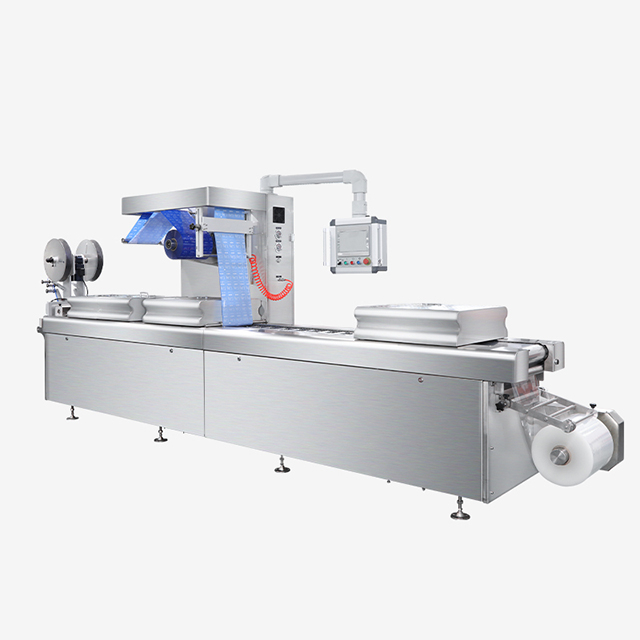
Thermoforming Packaging Machine: Thermoforming packaging machine utilize either flexible or rigid films; flexible films are ideal for cost-effective vacuum and MAP packaging, while rigid films provide a more robust packaging structure. These thermoforming packer machines offer high output and speed, making them an excellent choice for ready-made meal manufacturers with high production demands.

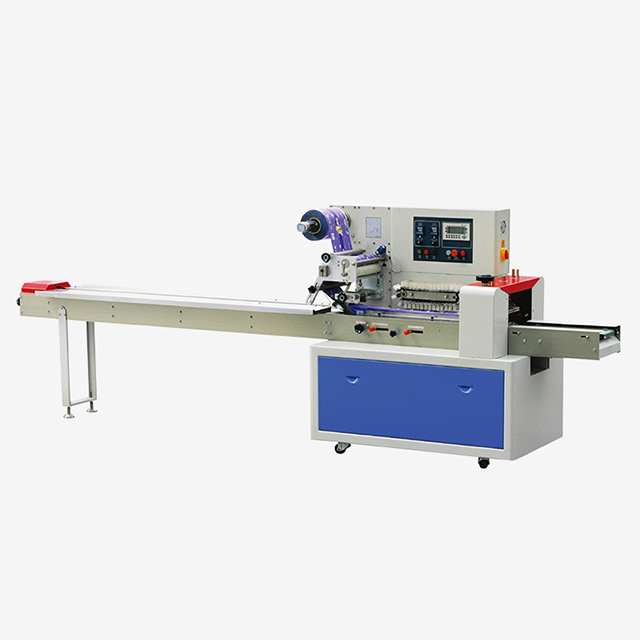
Flow Packer: Flow packers offer high packaging efficiency but do not extend shelf life on their own, making them particularly suitable for frozen foods (where shelf life can be maintained through other means).
The following outlines the workflow of the packaging solution for ready-made meal trays:
Automatic Tray Dispenser: First, the dispenser continuously places trays onto the infeed conveyor belt, which arranges them according to preset spacing.
Robotic Tray Loader: A robotic gripper automatically loads the product components in precise quantities into the trays.
Automatic MAP tray packaging machine: A servo-driven robotic gripper transfers the arranged trays into the designated position within the vacuum chamber's working area. The lower chamber then rises to meet the upper chamber, creating a sealed environment. Under PLC control, the air is evacuated, and a specific gas or gas mixture is injected as required. Next, the top film is heat-sealed to the tray while a cutter trims the film to the tray's shape. The chamber then vents and opens, completing the MAP process. Finally, a robotic gripper removes the packaged trays and places them onto the discharge conveyor, concluding the packaging cycle.
Integrated Checkweigher, Price-Labeler, and Labeling Machine: The packaged ready-made meal trays undergo additional processing steps, including weight verification and labeling.
Robotic Case Packer: The packaged trays are neatly arranged and loaded into cardboard cartons.
Case Erecting, Sealing, and Palletizing: A case erector unfolds and transports cartons to the loading area for filling. A case sealer then seals the cartons, and a robot neatly stacks the sealed cartons onto pallets.

If you would like to know more about ready meal packaging solutions, please contact us!
The following information is designed to help you select the most suitable packaging equipment; please read it carefully.
We suggest you first provide your budget. This allows us to quickly match you with the appropriate packaging equipment series, after which we can proceed with further consultation to narrow down the options.
Once your budget is established, please inform us of the type of products you handle. We will recommend a suitable packaging method based on the physical form and properties of your materials. For instance, if your ready-to-eat meals consist of meat and require color and quality preservation, Modified Atmosphere Packaging (MAP) would be ideal. If you are packaging pizzas on a limited budget, we would recommend vacuum packaging. If you require extremely high production capacity, we would suggest our high-speed packaging equipment designed for ready-to-eat meals.
Please specify your required hourly production capacity. Based on your speed requirements, we can match you with equipment such as continuous vacuum machines, high-speed linear tray sealers machine, or high-speed thermoforming packaging machines. The final choice will depend on factors such as your packaging container specifications and budget, after which we will provide a final recommendation.
In addition to standard ready-to-eat meal packaging equipment, do you require auxiliary systems such as inkjet coding, date stamping, weighing, or labeling? We can also customize features to meet your specific needs, such as easy-tear notches or additional gas-flushing functions. Please let us know your requirements, and our professional R&D team will evaluate them and provide a tailored solution.
Hualian keeps pace with industry trends, dedicated to providing optimal packaging solutions for ready-made meals and reducing food waste by extending shelf life. If you have any insights on the latest industry developments, please feel free to share and discuss them with us!





 English
 简体中文
简体中文 ไทย
ไทย Pусский