Views: 0 Author: Site Editor Publish Time: 2026-05-30 Origin: Site


Table of Content
What Is a Chamber Vacuum Sealer?
How a Chamber Vacuum Sealer Works Step by Step
Why Chamber Vacuum Sealers Handle Liquids Better
Main Parts of a Chamber Vacuum Sealer
What Happens Inside the Bag After Sealing?
Single Chamber vs Double Chamber Vacuum Sealers
Chamber Vacuum Sealer vs External Vacuum Sealer
What to Check Before Buying a Chamber Vacuum Sealer
Vacuum sealing may look like a simple final step, but the way air is removed has a major effect on the finished pack. If the vacuum cycle is poorly controlled, you may end up with trapped air, weak seals, liquid movement, uneven bag collapse, or packages that do not hold well during storage.
A chamber vacuum sealer is designed to create a more controlled vacuum environment. Instead of pulling air only from the bag opening, it removes air from the entire chamber where the bag and product sit. This is why chamber machines are widely used for food, moist products, liquids, meat, seafood, cheese, and commercial vacuum packaging.
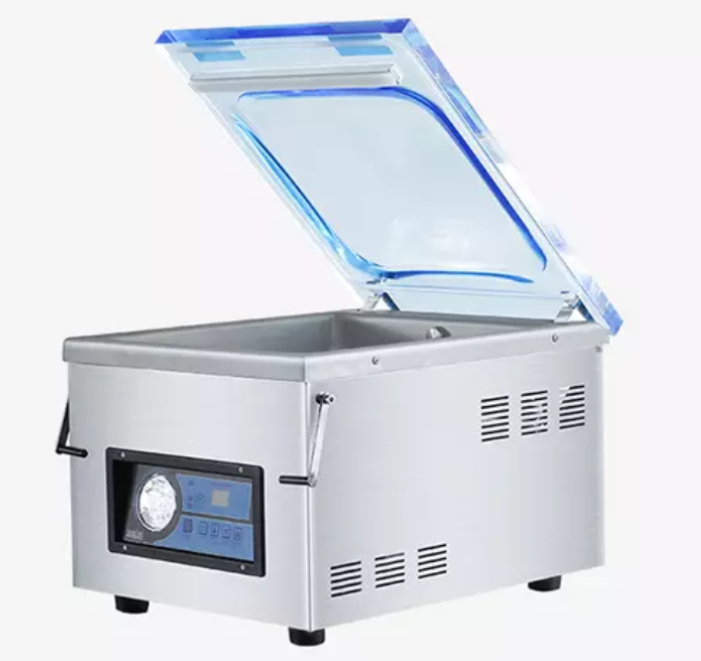
This guide explains how a chamber vacuum sealing cycle works, what happens inside the bag, why each stage matters, and what you should check before choosing a chamber vacuum sealer for your product and production workflow.
A chamber vacuum sealer is a vacuum packaging machine that places the entire bag inside a sealed chamber before removing air and sealing the bag. The product is packed in a vacuum pouch, the open end of the bag is placed across the sealing bar, and the machine removes air from the chamber before sealing the pouch.
The chamber design is what makes this type of machine different. Because the product and bag sit inside the same enclosed space, the air around the bag and the air inside the bag are removed together. This creates a more even pressure change around the product and pouch.
That controlled environment is helpful when you package products that are moist, liquid-rich, delicate, or difficult to seal with external suction. It also gives you more control over vacuum level, sealing time, cooling time, and gas flushing where available.
A chamber vacuum sealer works through a controlled sequence. The product is bagged, placed inside the chamber, the lid closes, the pump removes air, the sealing bar seals the pouch, and air returns to the chamber so the bag tightens around the product.
The process starts before the machine cycle begins. You place the product inside a suitable vacuum pouch and position the open end of the bag across the sealing bar.
The bag should lie flat, with no wrinkles across the sealing area. The seal edge should also be clean. Moisture, grease, powder, crumbs, or product residue on the open end of the pouch can weaken the seal.
Product size, moisture level, and bag material all affect the final result. A thick product may need a larger chamber and a stronger pouch. A moist product may need more careful bag placement. A sharp or irregular item may need a puncture-resistant vacuum bag.
Before starting the cycle, check:
The product fits the bag properly.
The open end of the pouch is flat on the sealing bar.
The seal area is clean and dry enough to seal.
The bag is not folded, twisted, or wrinkled.
The product is not blocking the seal area.
Good vacuum packaging starts with correct loading. A strong machine cannot fully compensate for a badly placed pouch.
Once the bag is positioned, the lid closes and the chamber becomes an enclosed space. The vacuum cycle starts only when the chamber is properly sealed.
This is where small maintenance details matter. If the lid gasket is cracked, dirty, loose, or worn, the chamber may not hold vacuum correctly. If the chamber surface is dirty or if product particles block the gasket area, the cycle may become unstable.
The chamber should be clean, the lid should close properly, and the bag should not interfere with the gasket or sealing surface. If air leaks into the chamber during the cycle, the pump has to work harder and the final vacuum level may be poor.
For consistent performance, check the lid, gasket, chamber edges, and sealing area regularly. Small leaks can lead to trapped air, longer cycle times, or weak vacuum packs.
After the lid closes, the vacuum pump removes air from the entire chamber. This includes the air surrounding the bag and the air inside the open pouch.
This is different from an external vacuum sealer. An external sealer pulls air mainly from the bag opening. A chamber sealer removes air from the whole enclosed space, which gives it more control over pressure inside and outside the bag.
Because the product and pouch are exposed to the same pressure change, chamber vacuum sealers are usually better for liquids and moist products. The bag does not immediately collapse in the same way it might with direct suction from the bag opening.
Pump performance matters here. A stronger, well-maintained pump can remove air more consistently and support smoother cycles. For example, theDZ-400/2E single chamber vacuum machine includes an oil-filled rotary vacuum pump and dual-bar wide-seal sealing system, which are the kinds of components that affect air removal, sealing strength, and cycle reliability in chamber vacuum operation.
Because the bag is open inside the chamber, air leaves the bag as air is removed from the chamber. The bag does not collapse immediately because the pressure inside and outside the pouch changes together.
This balanced pressure is one of the main reasons chamber vacuum sealers handle wet or moist products more reliably. It helps reduce sudden liquid overflow, product shifting, and uneven bag collapse.
For example, if you package marinated meat, soup portions, sauces, or seafood, direct suction from an external sealer may pull liquid toward the seal area. In a chamber machine, the pressure change is more controlled, so liquid movement is easier to manage.
That does not mean liquids are risk-free. Under strong vacuum, liquids can boil, expand, or move if the settings are too aggressive. This is why vacuum time, product temperature, chamber depth, pouch size, and operator setup all matter.
After the selected vacuum level is reached, the sealing bar heats and presses the open end of the pouch. The machine creates the seal while the chamber is still under vacuum.
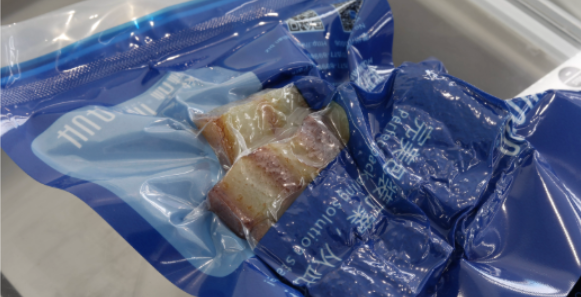
This step locks the package closed before air returns to the chamber. If the seal is weak, air can enter the pack after the cycle ends, even if the vacuum stage worked properly.
Seal quality depends on:
Seal temperature
Seal time
Sealing pressure
Bag thickness
Bag material
Clean bag edges
Proper pouch placement
Cooling time after sealing
Thicker pouches may need more sealing time or stronger sealing pressure. Moist foods may require extra attention to the seal area. Powdered or granular products can interfere with sealing if particles reach the bag opening.
A wide or strong seal may be useful for heavier packs, moist products, or commercial packaging. Weak sealing is one of the most common reasons vacuum packs fail after storage, so sealing should be treated as a core part of the process, not just the final closure.
After sealing, the machine releases air back into the chamber. As pressure returns, the sealed vacuum bag tightens around the product. This creates the final compact vacuum pack.
The sealed package can then be removed, labeled, stored, chilled, frozen, or moved to the next packaging step.
This final pressure return is what gives vacuum packs their familiar tight appearance. The bag conforms around the product because most of the air has already been removed and the pouch is sealed before the chamber returns to normal pressure.
If the bag loosens shortly after removal, the seal may be weak, the pouch may be punctured, or the vacuum cycle may not have removed enough air.
Chamber vacuum sealers handle liquids better because they remove air from the surrounding chamber instead of pulling air directly from the bag opening. This creates a more controlled pressure change around the bag and product.
With an external sealer, suction can pull liquid toward the open edge of the bag. If liquid reaches the sealing area, the seal may fail. With a chamber vacuum sealer, air is removed from the chamber and the bag at the same time, which helps reduce sudden liquid movement.
This makes chamber vacuum sealers useful for:
Sauces
Marinades
Soups
Moist meats
Seafood
Wet food portions
Cooked food components
However, liquids can still expand or boil under strong vacuum if settings are wrong. Warm liquids are more likely to bubble under vacuum, so product temperature and cycle settings should match the application.
Chamber design also matters. A deeper chamber gives more space for larger bags, bowls, or liquid-rich products. In tabletop systems, features such as an inclined plate can help position loose or wet products more effectively.
A chamber vacuum sealer looks simple from the outside, but several parts must work together for good packaging results.
The vacuum chamber is the enclosed area where the product and bag sit during the cycle. Chamber size determines what product dimensions and bag sizes the machine can handle.
A small chamber may work for single portions, small food packs, or light commercial use. A larger chamber is useful for bigger products, multiple packs per cycle, or higher-volume commercial packaging.
When comparing machines, check the usable chamber size, not only the outside machine dimensions. Your pouch and product must fit comfortably without blocking the sealing bar or lid.
The pump creates the vacuum by removing air from the chamber. Pump power affects evacuation speed, vacuum consistency, and cycle performance.
If the pump is too weak for the chamber size or product load, cycle times may become longer. If the pump is not maintained properly, vacuum performance can drop over time.
For oil-filled pumps, oil level and oil quality matter. Dust, moisture, and heavy use can affect pump performance, so routine maintenance should follow the machine manual.
The sealing bar closes the bag after air has been removed. It heats and presses the pouch material to create the seal.
Wider or stronger seals may be useful for heavier packs, moist products, thicker vacuum pouches, or products that face demanding storage and transport conditions. A weak seal can allow air back into the pack, even when the vacuum stage was successful.
The lid and gasket help keep the chamber airtight during the vacuum cycle. If the gasket is cracked, dirty, worn, or poorly seated, the chamber may leak air.
A damaged lid can also reduce vacuum performance. Operators should check the gasket and lid regularly, especially in food environments where moisture, oil, crumbs, or product residue can build up around sealing surfaces.
The control panel allows operators to adjust settings such as vacuum time, sealing time, cooling time, gas flushing where available, and other cycle parameters.
Different products may need different settings. A dry cheese portion, a wet seafood product, a pouch of sauce, and a thick meat cut should not automatically use the same cycle. The control panel helps you match the cycle to the product instead of relying on one fixed setting for every pack.
After the chamber returns to normal pressure, the sealed bag tightens around the product. The pack becomes more compact because much of the air has been removed.
This creates several practical benefits:
Reduced oxygen exposure
Better storage efficiency
Less product movement
Cleaner handling
Improved protection during transport
More compact pack shape
Easier carton or cold storage placement
However, vacuum packaging does not sterilize the product. It also does not replace proper hygiene, temperature control, product handling, or food safety management.
For food products, vacuum packaging should be used alongside correct sanitation, chilled or frozen storage where required, and proper shelf-life validation. If the product is unsafe before packaging, vacuum sealing will not make it safe.
Single chamber and double chamber vacuum sealers work on the same basic principle: the product and bag are placed inside a chamber, air is removed, the bag is sealed, and air returns to tighten the pack.
The difference is workflow.
A single chamber machine uses one chamber for loading, vacuuming, sealing, and unloading. It is practical for small to medium production, batch work, food service, smaller processors, or products that do not need continuous high-output packaging.
A double chamber machine has two chambers. While one chamber runs a vacuum cycle, the operator can unload and reload the other side. This reduces waiting time and improves output because loading and vacuuming can happen in alternating cycles.
Machine Type | How It Works | Best Fit |
Single chamber vacuum sealer | One chamber handles loading, vacuuming, sealing, and unloading | Lower to medium output, batch work, smaller production |
Double chamber vacuum sealer | One chamber runs while the other is loaded or unloaded | Higher output, commercial production, repeated packaging cycles |
Double chamber systems are usually more efficient when output demand is higher. They can be useful for meat, seafood, cheese, prepared foods, or other products that need repeated vacuum cycles throughout the day.
If your production needs higher output, Hualian Machinery’s double chamber vacuum machines fit that kind of workflow. In the same production logic, theHVC-410S/2B double chamber vacuum sealer is designed around alternating chamber use, where one chamber can be unloaded and loaded while the other runs a vacuum cycle.
Chamber vacuum sealers and external vacuum sealers both remove air and seal bags, but they do it differently.
A chamber vacuum sealer removes air from the whole chamber. An external vacuum sealer pulls air out through the bag opening.
Comparison Point | Chamber Vacuum Sealer | External Vacuum Sealer |
Air removal | Removes air from the entire chamber | Pulls air from the bag opening |
Liquid handling | Better for liquids and moist foods | More likely to pull liquid into seal area |
Vacuum control | Stronger and more consistent | Usually more limited |
Best use | Commercial use, moist foods, meats, liquids | Dry foods, light use, smaller budgets |
Typical cost | Higher | Lower |
Output potential | Better for repeated cycles | Better for occasional use |
Chamber machines are usually better for moist foods, liquids, commercial use, and stronger vacuum control. External sealers may be more practical for dry products, light use, or smaller budgets.
Before choosing a chamber vacuum sealer, start with your product and workflow. The right machine depends on product size, moisture level, pouch type, output target, and how often the machine will run.
Your product and pouch must fit comfortably inside the chamber. Check chamber length, width, and height, not just machine footprint. If the product is too tall or the bag is too long, loading will be difficult and seal placement may become inconsistent.
If you package sauces, marinades, soups, seafood, or wet meats, choose a chamber size and vacuum control setup that can handle liquid movement. You may also need to adjust vacuum time, use colder product temperatures, or position bags carefully.
For occasional packaging or smaller batches, a single chamber machine may be enough. For repeated commercial cycles, a double chamber machine can reduce waiting time and improve operator efficiency.
Check sealing bar length, seal width, sealing pressure, and pouch compatibility. Heavy packs, moist products, and thicker bags may need stronger sealing performance.
A good chamber vacuum sealer should let you adjust the cycle for different products. Look for control over vacuum time, sealing time, cooling time, and gas flushing if needed.
Vacuum pumps, sealing bars, gaskets, and control systems all need maintenance. Before buying, consider spare parts, technical support, operator training, and after-sales service. Good support matters more when the machine is part of daily commercial production.
A chamber vacuum sealer works by removing air from the entire chamber, sealing the bag under vacuum, and then allowing the bag to tighten around the product as air returns to the chamber.
This makes it different from external vacuum sealers and helps explain why chamber machines are widely used for moist products, liquids, meat, seafood, cheese, and commercial packaging.
Good results depend on the chamber, pump, sealing bar, bag material, product placement, and correct settings working together. If one part is wrong, the pack may contain trapped air, leak after sealing, or fail during storage.
If you need help choosing a chamber vacuum sealer based on product size, moisture level, packaging volume, and production workflow, Hualian Machinery can help you compare machine options and match the setup to your packaging needs.
A chamber vacuum sealer removes air from the entire sealed chamber. Because the vacuum bag is open inside the chamber, air leaves the bag as the chamber air is removed. The bag is then sealed under vacuum before air returns to the chamber.
Chamber vacuum sealers are better for liquids because they remove air from the surrounding chamber instead of pulling air directly from the bag opening. This creates a more controlled pressure change and helps reduce liquid movement toward the seal area.
A chamber vacuum sealer removes air from the whole chamber, while an external vacuum sealer pulls air out through the bag opening. Chamber machines usually offer better vacuum control and are more suitable for moist foods, liquids, and commercial packaging.
Some chamber vacuum sealers may support gas flushing or MAP functions depending on their configuration. If MAP is required, you should confirm that the machine has the correct gas flushing, sealing, control, and film compatibility features.
Check chamber size, pump strength, sealing bar length, seal width, control settings, product moisture level, bag compatibility, expected output volume, maintenance requirements, spare parts, and technical support.

 English
 简体中文
简体中文 ไทย
ไทย Pусский