Views: 0 Author: Site Editor Publish Time: 2026-07-02 Origin: Site


Table of Content
What Is Driving the Tray Sealing Machines Market?
Trend 1: Ready-to-Eat and Convenience Foods Are Increasing Demand
Trend 2: MAP and Freshness-Focused Packaging Are Becoming More Important
Trend 3: Automation Is Moving From Large Factories to Mid-Sized Producers
Trend 4: Food Safety and Hygiene Are Influencing Machine Design
Trend 5: Sustainable Packaging Pressure Is Changing Tray and Film Choices
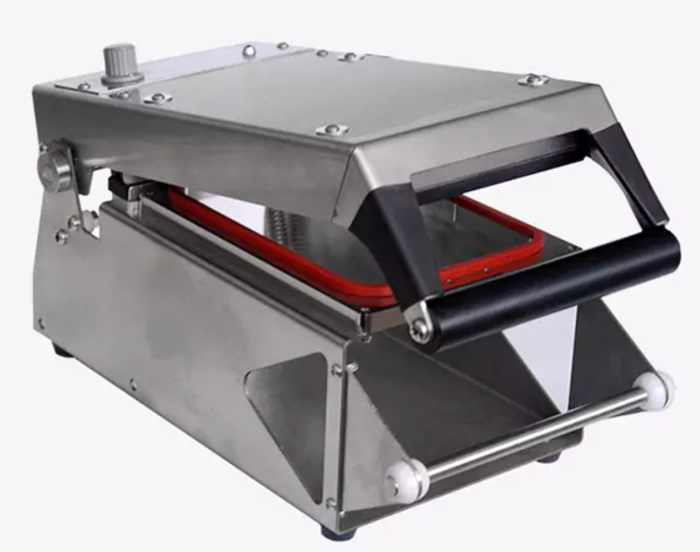
Trend 6: Compact Tray Sealers Are Growing With Small Food Businesses
Trend 7: Retail Presentation Is Becoming a Bigger Buying Factor
Trend 8: More Buyers Want Flexible Machines for Different Tray Sizes
Trend 9: Integration With Full Packaging Lines Is Becoming More Valuable
Trend 10: Asia-Pacific and Emerging Markets Are Expanding Demand
What These Trends Mean for Buyers
Tray sealing is no longer only for large food factories. As ready meals, chilled foods, fresh trays, and foodservice packaging become more common, more businesses are using tray sealers to improve presentation, protect freshness, reduce manual handling, and prepare products for retail or delivery.
If you are comparing tray sealing machines today, you are probably not looking for a machine that simply closes a tray. You may need MAP capability, faster changeovers, cleaner machine design, compact equipment for a smaller workspace, or a tray sealer that can work with labeling, coding, inspection, and secondary packaging.
That is why the tray sealing machines market is changing. The best machine is not always the fastest or most expensive one. It is the one that fits your product, tray format, shelf-life goal, output target, and production workflow.
This guide looks at the tray sealing machine market trends that matter for real buying decisions.
Tray sealing machine demand is being driven by practical changes in food production and retail.
More businesses are packaging ready-to-eat meals, chilled foods, fresh products, bakery items, deli foods, and foodservice portions. These products need packaging that can protect quality, improve shelf appearance, support portion control, and move smoothly through production.
The main drivers include ready-to-eat food growth, fresh and chilled retail demand, stronger hygiene expectations, wider use of modified atmosphere packaging, labor-saving equipment needs, material changes, compact machines for smaller businesses, and full-line packaging needs for larger producers.
Market data supports this shift. The global tray sealing machines market was valued at USD 1.29 billion in 2024, with growth projected through 2030 as demand increases across packaged food, ready meals, meat, poultry, seafood, bakery, fresh produce, and foodservice applications.
For you as a buyer, the takeaway is simple: tray sealing now affects product quality, production speed, shelf presentation, and packaging efficiency. It should be treated as part of the full packaging decision, not as a basic closing step.
Ready-to-eat and convenience foods are one of the strongest drivers of tray sealing machine demand.
Consumers are buying more meals that are easy to store, heat, transport, and serve. This has increased demand for sealed trays across ready meals, takeaway foods, supermarket prepared foods, and other chilled or fresh food categories.
Market reports on the tray sealing machines market continue to connect growth with packaged foods, fresh foods, prepared meals, and foodservice packaging.
If you package ready meals or prepared foods, tray sealing can help you create a cleaner, more consistent pack. It can also make trays easier to stack, label, transport, and display.
But the machine decision should not start with the tray sealer alone. Start with the meal. Is it saucy? Is it chilled or frozen? Does it need MAP? Will the customer reheat it in the tray? How many tray sizes do you run in a day?
For ready-meal operations, ready meal packaging should be planned around the food format, tray depth, film type, sealing method, and output target. A meal that looks good at the sealing station still needs to hold up during storage, transport, and display.
Modified atmosphere packaging is becoming more important because many food products need more than a simple sealed tray.
MAP tray sealing changes the air inside the tray before sealing. This can help support shelf-life goals and product appearance for fresh, chilled, and prepared foods.
If you are packaging products where freshness, color, odor control, moisture control, or shelf presentation matters, MAP may be part of the machine conversation. But it should not be added just because the feature exists. It has to match the product and storage plan.
Demand for modified atmosphere packaging trays reflects this wider shift toward packaging formats that support freshness, shelf appearance, oxygen control, and chilled distribution.
Before choosing a MAP tray sealer, check the details that will affect the finished pack:
gas flushing performance
tray and film compatibility
seal consistency
shelf-life target
cold-chain requirements
sealing speed
residual oxygen control, where required
For fresh and chilled food operations,MAP tray sealing equipment should be evaluated with the actual product, tray format, film structure, and shelf-life goal. The right setup should protect the food without slowing the line or creating inconsistent packs.
Automation is no longer limited to large food factories.
If your team is still sealing trays manually, you may already know where the pressure starts. Output rises. Operators work at different speeds. Pack quality varies. Filling becomes faster than sealing. The tray sealer becomes the point where production slows down.
That is why mid-sized food producers, central kitchens, catering suppliers, supermarket food-preparation teams, and meal-prep brands are moving toward semi-automatic and automatic tray sealing machines.
Automation becomes worth considering when it solves a real bottleneck. That could mean more consistent seals, fewer manual steps, faster output, or less dependence on operator speed.
Automation Level | Best Fit | Main Benefit |
Manual tray sealing | Very small production or product testing | Simple entry-level sealing |
Semi-automatic tray sealing | Growing food businesses | Better consistency without a full line setup |
Automatic tray sealing | Higher-volume production | Faster output and reduced manual handling |
Rotary or linear tray sealing | Stronger production flow | Better fit for larger packaging lines |
Tray sealing machines are often used for perishable foods, so hygiene cannot be treated as an extra feature.
If your machine is difficult to clean, has hard-to-reach sealing areas, or creates inconsistent seals, it can affect both production and product quality. A faster cycle time will not help much if the machine adds cleaning delays or handling risks.
When comparing machines, pay attention to practical hygiene features such as stainless-steel construction, easy-to-clean surfaces, accessible sealing areas, consistent sealing pressure, reduced manual contact, reliable film sealing, safe operation, and maintenance access.
You should also look at the full workflow. How are trays loaded? Where does the film contact the pack? How easy is the sealing area to clean? What happens after sealing? How often will the machine need to be cleaned during production?
Because tray sealing involves food-contact materials, you should also confirm that trays, films, and sealing surfaces fit applicable food packaging requirements.
A good tray sealer should help your team seal consistently, clean efficiently, and reduce unnecessary product handling.
Sustainability pressure is changing how food businesses think about trays, lidding film, material waste, and packaging design.
This does not mean every tray sealing format is sustainable. You should avoid broad claims unless you can verify the material, recycling route, and local packaging requirements.
The practical issue is simpler: can the machine handle the tray and film materials you want to use now and later?
More buyers are testing recyclable plastic trays, paper-based trays, mono-material systems, thinner films, lightweight trays, and lower-waste packaging designs. The challenge is that these materials may not seal the same way as the materials already running on the line.
A paper-based tray may behave differently from a plastic tray. A thinner film may need different temperature, pressure, or dwell time. A recyclable tray may require a specific sealing layer or compatible lidding film.
Before committing to a new material, test the actual tray, film, product, seal strength, appearance, and output speed. The question is not only whether the machine can seal the material once. It is whether it can seal it reliably at production speed without increasing rejects, weak seals, or waste.
Not every food business needs a high-speed automatic tray sealing line.
If you run a restaurant, catering kitchen, meal-prep brand, or small-batch food business, your main need may be a machine that fits your workspace, is easy for staff to use, seals your current tray sizes, and improves package consistency.
Compact and table-top tray sealing machines can help smaller teams move away from loose lids, manual wrapping, or inconsistent sealing methods. They can also make food packs look cleaner for pickup, delivery, chilled display, or local distribution.
The buying questions should stay practical:
Will the machine fit your workspace?
Can staff operate and clean it easily?
Does it seal the tray sizes you already use?
Does it improve the finished pack?
Can it keep up with your current daily output?
For small food production,table-top tray sealing machines can be a practical step up from manual packing without requiring a full packaging line.
Tray sealing affects how your product looks before a customer ever opens it.
For retail and foodservice products, the finished tray matters. Clear film, neat seal edges, visible portions, stable labeling space, and clean product arrangement all affect how the pack is judged on the shelf or in delivery.
A poor seal can make a good product look lower quality. Wrinkled film, uneven edges, leaking sauce, fogging, or poor tray fit can reduce confidence before the food is even tasted.
That is why you should test the finished pack, not only the machine speed. Run the actual tray, food, film, label position, storage method, and display conditions. A tray sealer that looks good in a machine demo may need adjustment when used with your real product and film.
A good tray sealing machine should help your product look clean, protected, consistent, and ready for retail or foodservice distribution.
Many food businesses do not run one product in one tray all day.
You may need single-serve trays, family-size trays, seasonal menu trays, private-label formats, or different tray depths for different products. If the machine is too limited, every new product becomes harder to package.
This is why flexibility is becoming more important.
Before choosing equipment, ask about mold changeover, tray size range, sealing area, film compatibility, tooling cost, and whether the machine can support future product expansion.
A machine that fits one tray size today may become restrictive if your product range grows. Flexible tray sealing equipment gives you more room to adapt without replacing the machine too quickly.
Tray sealing machines are increasingly viewed as part of a full packaging line, not an isolated machine.
In a growing operation, tray sealing may need to connect with filling, portioning, weighing, labeling, date coding, metal detection, checkweighing, cartoning, case packing, or palletizing. If the tray sealer does not fit the surrounding process, it can still create a bottleneck.
Look at what happens before and after sealing.
Before sealing, trays may need to be filled, weighed, arranged, or inspected. After sealing, they may move to labeling, coding, inspection, boxing, chilled storage, or shipping.
Ask these questions before choosing the machine:
Does the sealing speed match filling speed?
Can trays move smoothly into and out of the machine?
Is there space for coding or labeling?
Will sealed trays be inspected, weighed, boxed, or case packed?
Does the layout reduce unnecessary manual handling?
Can the line expand later?
In larger operations, the tray sealing machine should be selected with the surrounding workflow in mind. The right machine should support the line, not become the step everyone waits on.
Demand for tray sealing equipment is growing as packaged food, modern retail, cold-chain logistics, and food processing expand in Asia-Pacific and other emerging markets.
Asia-Pacific’s leading share of the tray sealing machines market reflects growth in packaged food production, retail modernization, cold-chain logistics, and food processing capacity.
For manufacturers, distributors, and exporters, this matters because equipment buyers in these markets often need machines that are flexible, practical to maintain, and suitable for different production scales.

Do not choose a tray sealing machine only by price or basic sealing function.
Start with the product and the workflow. What are you sealing? How many trays do you run per day? Do you need MAP? How many tray sizes do you use? Will your film or tray material change? Do you need the machine to connect with labeling, coding, inspection, or packing?
Before purchasing, consider:
current and future production volume
tray size range
MAP or vacuum needs
cleaning and maintenance
future tray and film choices
automation level
available floor space
shelf presentation
line integration
after-sales support
The best tray sealing machine should match both the product and the business plan.
It should also be tested with the real tray, film, product, storage method, and production environment. A machine that seals one tray well in a test setting may need adjustment when used with sauces, chilled foods, higher output, or different film materials.
For buyers comparing options, the goal is not to buy the most complex machine. The goal is to choose a system that seals consistently, supports product quality, fits the workflow, and can adapt as production needs change.
The tray sealing machines market is growing because food packaging needs are becoming more demanding. Buyers are no longer looking only for a machine that seals trays. They need equipment that can support freshness, presentation, hygiene, labor efficiency, material changes, and future production growth.
For some businesses, that may mean a compact table-top tray sealer. For others, it may mean a semi-automatic machine, MAP tray sealer, or an automatic system that connects with filling, labeling, coding, inspection, and case packing.
The best choice depends on your product type, tray format, output target, MAP needs, film material, available space, and production workflow.
If you are choosing tray sealing equipment for ready meals, meat, seafood, produce, bakery, deli foods, or foodservice trays, contact Hualian machinery to match the right machine configuration to your packaging goals and production plan.
Demand is growing because food businesses need packaging that supports convenience, freshness, hygiene, automation, shelf presentation, and faster production. Ready meals, fresh foods, chilled retail products, and foodservice trays are major drivers.
Tray sealing machines are widely used in ready meals, meat, poultry, seafood, fresh produce, bakery, dairy, deli foods, catering, supermarkets, and foodservice packaging.
MAP is increasing demand for tray sealing machines that can support freshness-focused packaging. Buyers want machines that can seal trays while helping protect product appearance, shelf life, and chilled distribution quality.
Sustainability pressure is pushing buyers to consider recyclable trays, paper-based trays, mono-material systems, thinner films, and lower-waste packaging formats. Machines need to support changing tray and film materials without weakening seal quality.
Yes. Compact and table-top tray sealing machines can be suitable for restaurants, catering kitchens, meal prep businesses, delis, food shops, cloud kitchens, and small-batch producers that need reliable tray sealing without a large production line.
Yes. Tray sealing machines can be integrated with filling, weighing, labeling, date coding, inspection, checkweighing, cartoning, case packing, and other packaging steps depending on the production workflow.

 English
 简体中文
简体中文 ไทย
ไทย Pусский