Views: 0 Author: Site Editor Publish Time: 2026-05-27 Origin: Site


Table of Content
Why Plastic Pellets Packaging Lines Need Regular Maintenance
Key Parts of a Plastic Pellets Packaging Line to Maintain
Automatic Open-Mouth Bagging Machine
Bag Closing and Sealing System
Match Maintenance Checks to the Bag Type
Weekly or Scheduled Maintenance Checklist
Common Maintenance Mistakes to Avoid
How Hualian Supports Plastic Pellets Packaging Line Maintenance
A plastic pellet packaging line is not just one machine. It is a connected system made up of feeding, weighing, bag feeding, filling, sealing, conveying, inspection, and palletizing equipment. If one section becomes unstable, the whole line can suffer.
That is why plastic pellets packaging machine maintenance should focus on the full line, not only the bagging unit. In this guide, we explain the core areas you should inspect, clean, calibrate, and service regularly to keep your packaging line stable, accurate, and efficient.
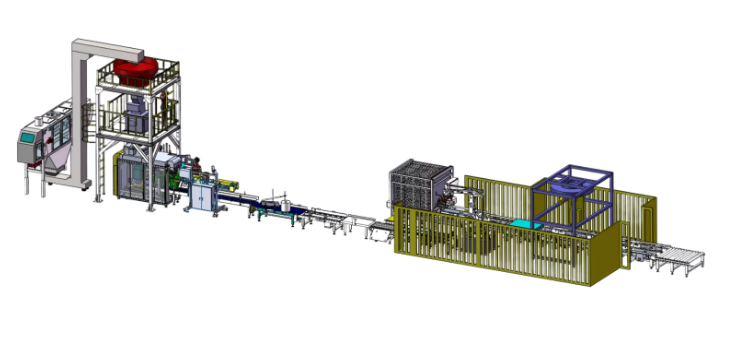
Plastic pellets are highly fluid materials. They move quickly, flow easily, and can expose weak points in your packaging line if the system is not properly maintained. Feeding, weighing, filling, sealing, and conveying all become more sensitive when you are handling small, free-flowing particles at production speed.
Without regular maintenance, you may start seeing problems such as:
Inaccurate feeding rates
Weighing drift
Pellet leakage
Dust buildup around sensors
Static issues
Weak bag sealing
Poor bag positioning
Unstable conveying or palletizing
Maintaining a plastic pellets packaging machine means maintaining the full line. Each section controls a different part of the packaging result, from material flow and weight accuracy to bag handling, sealing strength, inspection, and final stacking.
Packaging Line Section | What It Controls | What Can Go Wrong Without Maintenance |
Feeding system | Pellet flow into the line | Uneven feeding, blockages, dust buildup |
Weighing system | Bag weight accuracy | Overfilling, underfilling, rejected bags |
Open-mouth bagging machine | Bag pickup, opening, positioning | Missed bags, crooked bags, pellet leakage |
Filling section | Transfer from scale to bag | Spills, dust release, unstable filled bags |
Closing and sealing system | Bag closure quality | Weak seals, leakage, moisture exposure |
Conveying system | Bag movement through the line | Bag damage, poor tracking, slow transfer |
Inspection systems | Quality control before dispatch | Missed defects, weight errors, contamination |
Palletizing system | Final stacking and handling | Unstable pallets, bag damage, slow dispatch |
Now, let’s break down what to check and why each part matters.
The feeding system is the first maintenance point because it controls how plastic pellets enter the packaging line. If your feeder is not working properly, the weighing system may receive pellets unevenly, which can affect speed, accuracy, and bag consistency.
Pellets can also build up around flow paths, inlets, or transfer points, especially when you switch between pellet types, colors, or resin grades. If your material has dust, fines, or static behavior, buildup can happen faster.
Maintenance tips:
Check for pellet buildup around the inlet and discharge points.
Remove blocked material from flow paths.
Inspect worn parts, loose fasteners, and unstable movement.
Clean dust from the feeding area regularly.
Watch for unusual vibration, noise, or inconsistent flow.
If you change materials often, clean the feeding area before every product change. This helps reduce contamination between resin grades and keeps material flow more predictable.
The weighing system directly controls bag accuracy and product consistency. If the scale drifts, you may end up giving away too much product, underfilling bags, creating rejected batches, or dealing with customer complaints.
For plastic pellets, even small weighing errors can become expensive over time because the line may run continuously for long periods. A small error per bag can turn into a large product loss across hundreds or thousands of bags.
Maintenance tips:
Calibrate the scale at scheduled intervals.
Check load cells for damage, dust, or interference.
Clean weighing hoppers and remove trapped pellets.
Inspect sensors and electrical connections.
Make sure nearby vibration is not affecting accuracy.
Confirm bag weights before production starts.
The open-mouth bagging machine controls how empty bags are picked, opened, positioned, held, and released after filling. If this section is not maintained, you may see missed bags, crooked bags, unstable filling, pellet leakage, and repeated stoppages.
This is especially important for plastic pellets because poor bag positioning can quickly lead to spills. Once pellets leak around the filling area, they can create dust, slipping risks, sensor errors, and extra cleanup work.
Maintenance tips:
Check suction cups, grippers, and bag pickup parts.
Inspect bag opening mechanisms and bag clamps.
Clean bag detection sensors.
Check lifting components and discharge movement.
Confirm that bags are held squarely during filling.
Replace worn pickup parts before they cause repeated errors.
The filling section is where plastic pellets move from controlled weighing into the bag. If this area is not maintained, you may deal with spills, dust release, unstable bags, uneven filling, and sealing problems later in the line.
Filling performance can also change after a product switch. Different pellet types may vary in size, density, dust level, and static behavior. A setup that works well for one resin grade may not run as smoothly with another.
Maintenance tips:
Inspect filling spouts and product-contact surfaces.
Clean buildup around the outlet.
Check clamps, guides, and dust-control areas.
Watch for pellet leakage during discharge.
Confirm bag stability during filling.
Recheck filling performance after product changes.
You should not treat filling as a simple transfer step. It affects bag shape, sealing quality, line cleanliness, and downstream handling.
The closing and sealing system protects the pellets after filling. If the closure is weak, the bag may leak, absorb moisture, allow contamination, release dust, stack poorly, or fail during transport.
Your maintenance routine should match your bag material. PE bags need heat-seal checks. Woven bags need sewing checks. Paper-plastic composite bags need folding, pressing, and sealing alignment checks. Aluminum foil bags need closer seal-integrity checks because small defects can reduce moisture, oxygen, or light protection.
Bag Type | Key Maintenance Focus |
PE bags | Sealing temperature, pressure, clean sealing surfaces |
Woven bags | Sewing head, needle, thread tension, folding guides |
Paper-plastic composite bags | Folding, pressing, sealing alignment, smooth conveying |
Aluminum foil bags | Seal integrity, pressure control, clean sealing area |
Kraft paper bags | Folding guides, closure alignment, controlled handling |
Maintenance tips:
Check sealing temperature and pressure.
Inspect heating elements, belts, rollers, and pressing parts.
Check sewing parts, needles, thread path, and thread tension.
Inspect folding guides and seal alignment.
Clean sealing surfaces to prevent weak closure.
Confirm that filled bags leave the sealing area smoothly.
Conveyors keep filled bags moving smoothly between filling, sealing, inspection, and palletizing. If your conveyors are not maintained, bags may slip, tilt, drag, deform, or arrive poorly positioned at the next machine.
Conveyor problems can also damage bags or weaken fresh seals. For heavy pellet bags, even small transfer issues can affect stacking quality later.
Maintenance tips:
Check belt tension and tracking.
Inspect rollers, motors, guards, and transfer points.
Clean dust and pellet buildup from the conveyor.
Look for worn belt surfaces.
Watch for bag slippage or uneven movement.
Remove hard impact points that may deform filled bags.
The goal is simple: every bag should move smoothly from one section to the next without sudden drops, dragging, twisting, or unstable transfer.
Inspection systems help catch weight errors, sealing defects, metal contamination, and other quality problems before bags move downstream. However, inspection equipment only works well when sensors, rejection systems, and detection areas are clean, aligned, and tested.
Dust, vibration, trapped pellets, and poor sensor alignment can all reduce inspection reliability. If the system is not maintained, defective bags may continue through the line without being caught.
Maintenance tips:
Clean detection areas regularly.
Check sensor alignment.
Calibrate checkweighing equipment.
Test rejection systems.
Keep inspection points free from dust and vibration.
Confirm that rejected bags are removed correctly.
Inspection should not be treated as a set-and-forget system. Test it regularly so it can protect your line before problems reach storage, shipping, or the customer.
The palletizing system affects final handling, stacking, storage, and dispatch. Poor palletizer maintenance can cause unstable pallets, bag damage, incorrect stacking patterns, slower dispatch, and extra manual correction.
If you package heavy bags of plastic pellets, pallet stability matters. A poorly stacked pallet can create storage risks, transport problems, and rework.
Maintenance tips:
Check grippers, robot arms, or stacking mechanisms.
Inspect pallet positioning and bag alignment.
Test sensors and safety guards.
Check conveyors feeding the palletizer.
Review stacking patterns.
Watch for bag damage during handling.

Plastic pellets may be packed in PE bags, aluminum foil bags, kraft paper bags, paper-plastic composite bags, or woven plastic bags. Each bag type places different demands on sealing, sewing, folding, pressure, and handling.
Do not use one closing-system maintenance routine for every material. A setting that works for PE bags may not suit woven bags. A folding guide setup that works for paper-plastic composite bags may not be suitable for aluminum foil bags.
Use the table below as a practical guide:
Bag Material | What You Should Check Most Often |
PE bags | Heat sealing temperature, pressure, sealing surface cleanliness |
Woven plastic bags | Sewing head, needle condition, thread tension, folding guides |
Paper-plastic composite bags | Folding alignment, pressing pressure, sealing path, conveyor transfer |
Aluminum foil bags | Seal integrity, clean sealing area, pressure consistency |
Kraft paper bags | Folding guides, bag support, closure alignment |
Daily checks help you catch small issues before they become line stoppages. Before production starts, you should inspect the areas most likely to affect material flow, bag handling, weight accuracy, and closure quality.
Daily checklist:
Check for pellet buildup around feeders, filling spouts, conveyors, and sealing areas.
Clean dust from sensors, weighing areas, bag detection points, and inspection equipment.
Inspect bag pickup, bag opening, and bag clamping parts.
Confirm weighing accuracy before production starts.
Check sealing temperature, pressure, sewing condition, or folding alignment based on bag type.
Inspect conveyors for belt tension, smooth transfer, and bag tracking.
Test emergency stops, guards, and safety sensors.
Record abnormal noise, vibration, slow movement, leakage, or repeated bag errors.
Weekly or scheduled maintenance should go deeper than daily cleaning and visual checks. This is where you inspect machine condition, calibrate critical systems, and review line performance.
Scheduled checklist:
Calibrate weighing equipment and inspection systems.
Inspect motors, belts, rollers, chains, bearings, and moving parts.
Check pneumatic systems, air pressure, valves, and cylinders where applicable.
Inspect sealing elements, sewing parts, heating parts, and closing guides.
Check electrical cabinets, wiring, sensors, and control panels for dust or loose connections.
Lubricate approved mechanical parts according to the machine manual.
Review output records to spot repeated stoppages, inconsistent bag quality, or recurring line faults.
Maintenance records are important because they help you see patterns. If the same fault appears every week, the issue may be machine setup, material behavior, worn parts, or operator handling.
Some maintenance problems happen because operators focus on the most visible machine and ignore the rest of the line. Others happen because small issues are allowed to repeat until they cause bigger failures.
Avoid these common mistakes:
Maintaining the bagging machine but ignoring the feeder, conveyor, or palletizer.
Waiting for weighing errors before calibrating the weighing system.
Using the same sealing settings for different bag materials.
Ignoring dust buildup around sensors and product-contact areas.
Treating pellet leakage as a small issue instead of a warning sign.
Skipping maintenance on lower-speed lines because they seem less demanding.
Running high-output lines without a preventive maintenance schedule.
Failing to record recurring faults, output drops, and repeated bag errors.
If a problem keeps coming back, do not just clear the fault and restart the line. Find the cause before it affects weighing accuracy, sealing quality, or finished bag stability.
Hualian provides plastic pellets packaging solutions based on material type, bag type, bag weight, production target, automation level, and factory layout. This matters because maintenance is easier when the line is configured properly from the start.
Support can include layout design, additional equipment selection, engineering support, installation and commissioning, technical guidance, after-sales service, and spare parts guidance. If you need to maintain, upgrade, or reconfigure a plastic pellets packaging line, Hualian Machinery can help you review the full process instead of looking at one machine in isolation.
Plastic pellets packaging machine maintenance should be planned around the full packaging line, not one machine. Feeding, weighing, bag handling, filling, sealing, conveying, inspection, and palletizing all affect the final result.
A good maintenance plan helps protect weighing accuracy, sealing strength, bag stability, production speed, and long-term equipment performance. It also helps reduce downtime, product loss, rejected bags, and manual correction.
If you need help maintaining, upgrading, or configuring a plastic pellets packaging line based on your material, bag type, output target, and automation needs, Hualian Machinery can help you choose the right equipment and support the full packaging process.
You should perform basic cleaning and inspection daily, especially around feeders, weighing areas, sensors, filling spouts, conveyors, and sealing systems. Deeper maintenance, calibration, lubrication, and part inspection should be done weekly or according to the machine manual and production intensity.
Efficiency usually drops because of dust buildup, worn moving parts, weighing drift, weak sealing, poor bag pickup, conveyor wear, sensor misalignment, or recurring faults that are not recorded and corrected. Small issues can slowly reduce output if they are not addressed early.
The weighing, filling, sealing, and bag handling sections usually need close attention because they directly affect bag accuracy, leakage, closure quality, and line stoppages. However, the feeder, conveyor, inspection system, and palletizer also need regular maintenance to keep the full line stable.
Different bag types need different closing-system checks. PE bags need heat-seal control. Woven bags need sewing-head, needle, thread, and folding-guide checks. Paper-plastic composite bags need folding, pressing, and sealing alignment checks. Aluminum foil bags need careful seal-integrity checks.
You should consider upgrading when repeated repairs no longer solve output problems, your production volume has outgrown the line, bag quality remains inconsistent, automation is too limited, or the equipment cannot handle your current bag type, product flow, or downstream packaging requirements.

 English
 简体中文
简体中文 ไทย
ไทย Pусский