Views: 0 Author: Site Editor Publish Time: 2026-05-28 Origin: Site


Table of Content
When VFFS Machines Make More Sense
When HFFS Machines Make More Sense
Common Mistakes Buyers Should Avoid
Some packaging machine choices look simple until the product reaches the line.
A snack that drops cleanly into a bag, a biscuit that must stay aligned, and a soft product that can lose shape during handling do not need the same packaging path. Even if the final goal is the same, which is to form, fill, seal, and cut a finished package, the way the product moves through the machine can change everything.
That is where the difference between VFFS and HFFS becomes important. Both are form-fill-seal systems, but they solve different handling problems. A VFFS machine works vertically and is usually better for products that can flow, fall, or be measured into a bag. An HFFS machine works horizontally and is usually better for products that need controlled movement, fixed orientation, or gentler handling.
This guide explains the difference between VFFS and HFFS machines so you can choose the packaging format that fits your product, film, filling method, factory layout, and production workflow.
A VFFS machine, or vertical form-fill-seal machine, forms a bag from roll film, fills it from above, seals it, and cuts it into finished packs. The film moves downward through the machine, wraps around a vertical forming tube, and becomes a bag as the product is filled into it.
In a typical VFFS setup, the product is fed from above using a hopper, scale, auger filler, pump, volumetric dosing system, or another feeding device. Once the correct amount is measured, the product drops into the formed bag. The machine then seals the package and cuts it into individual units.
VFFS is usually a strong fit when your product can flow, fall, or be measured into a bag without losing quality. That includes many loose, small, granular, powdered, or measured products.
Common VFFS applications include:
Granules
Powders
Snacks
Nuts
Rice
Seeds
Tablets
Liquids
Pastes
Small loose products
The main advantage is that VFFS can combine bag forming, measured filling, sealing, and cutting in a compact vertical workflow. That makes it useful when you need efficient bagging and your product can move naturally through a filling system.
An HFFS machine, or horizontal form-fill-seal machine, forms, fills, and seals packages while the product moves horizontally through the machine. Instead of being dropped vertically into a forming tube, the product is usually carried forward on a conveyor, infeed chain, or placement system.
This horizontal movement makes HFFS more suitable for products that need controlled placement. If the product must stay aligned, avoid dropping, maintain shape, or enter the pack in a fixed orientation, horizontal movement can be more practical.
HFFS is commonly used for:
Biscuits
Bread
Bars
Soap
Trays
Medical items
Hardware
Regular-shaped solid products
Individual or grouped retail products
The main advantage is product control. HFFS machines can keep items positioned as they move into the film and sealing area. This helps when product appearance, shape, and orientation matter.
For example, if you are packaging biscuits or bars, you may not want them to drop into a bag randomly. You want them to move smoothly, stay aligned, and come out in a clean retail-style wrap. HFFS is usually better suited to that kind of packaging requirement.
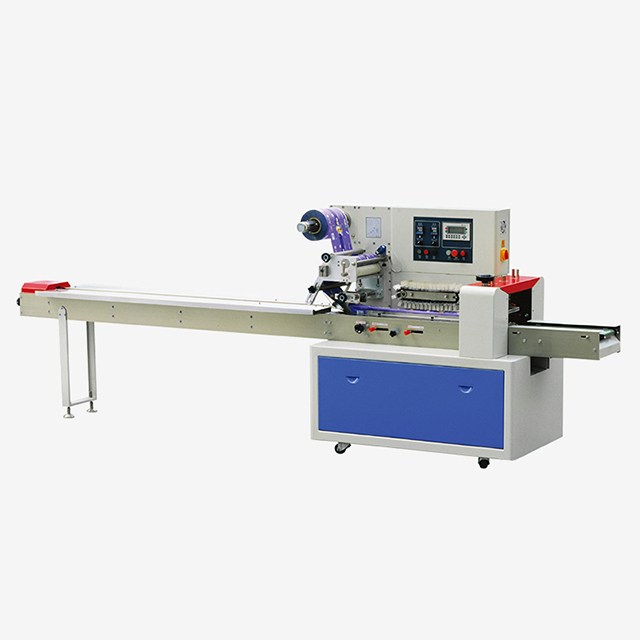
The biggest difference between VFFS and HFFS is not only machine direction. It is how the product moves, how the film forms around it, how the filling process works, and how much control you need over product placement.
Comparison Point | VFFS Machine | HFFS Machine |
Machine direction | Vertical | Horizontal |
Product movement | Product drops into the bag from above | Product moves forward on a conveyor or infeed |
Best product fit | Loose, free-flowing, measured products | Individual, grouped, fragile, or regular-shaped products |
Filling method | Weighers, augers, pumps, dosing systems | Conveyor, infeed chain, manual or automatic placement |
Product control | Lower orientation control | Higher placement and orientation control |
Common pack styles | Pillow bags, sachets, stick packs, gusset bags | Flow wraps, pillow-style horizontal packs, three-side seal packs |
Layout style | More vertical, compact footprint | Longer horizontal line path |
Main decision point | Can the product fall cleanly into a bag? | Does the product need controlled horizontal movement? |
VFFS machines work vertically. The film moves downward, the bag forms around a vertical forming tube, and the product enters from above. This setup is useful when gravity helps the packaging process.
HFFS machines work horizontally. The product moves forward, usually on a conveyor or infeed system, while the film wraps and seals around it. This setup is useful when the product needs support, alignment, or gentle movement.
The difference is not just machine shape. Direction changes the whole packaging workflow. It affects how the product is fed, how the film moves, how the pack is sealed, and how the finished package leaves the line.
VFFS usually feeds products from above. The feeding system may be a multihead weigher, linear weigher, auger filler, volumetric cup, pump, or liquid/paste filling system. This makes VFFS practical for products that can be measured before dropping into a bag.
HFFS usually carries products forward on a conveyor or infeed chain. Products are placed or transferred into position before being wrapped and sealed. This makes HFFS better for products that need stable placement rather than free falling.
The simplest way to think about it is this: if your product can be measured and dropped cleanly, VFFS may fit. If your product must stay arranged, HFFS may be safer.
VFFS is usually better for loose, free-flowing, or measured products. These products can move through hoppers, weighers, augers, pumps, or dosing systems without needing a fixed position inside the package.
VFFS works well for products such as:
Powders
Granules
Snacks
Nuts
Rice
Seeds
Candies
Tablets
Liquids
Pastes
HFFS is usually better for individual products, grouped products, or regular-shaped items that need to stay positioned. These products are not simply poured into a bag. They must be carried into the packaging area in a controlled way.
HFFS works well for products such as:
Biscuits
Bread
Bars
Soap
Medical products
Hardware
Packaged trays
Solid retail items
Your product type should be the first decision point. If the product does not suit the machine’s feeding style, the rest of the packaging process becomes harder.
Product handling is one of the clearest decision points when comparing VFFS and HFFS.
VFFS works well when the product can drop into a bag without breaking, deforming, sticking, or losing presentation. That is why it is common for snacks, pellets, powders, rice, nuts, and similar products. These products do not usually need a fixed orientation inside the bag.
HFFS is usually better when the product should be carried more gently through the line. If your product can break, crumble, flatten, smear, deform, or lose appearance when dropped, horizontal movement may be a better option.
For example, a biscuit may crack if dropped repeatedly. A soft bakery product may lose shape. A bar may need to stay facing the same direction for a neat wrap. In these cases, HFFS helps you protect product appearance and reduce reject rates.
VFFS commonly creates vertical bag formats. Depending on the machine configuration, it may produce pillow bags, gusset bags, block-bottom bags, sachets, stick packs, and similar bag types.
These formats are often used when the product is loose or portioned. For example, powder sachets, snack bags, rice packs, and granule bags often fit the VFFS approach.
HFFS commonly creates flow-wrapped packs, pillow-style horizontal packs, three-side seal packs, and other formats suited to individual or grouped products. These packs are common for bakery items, bars, biscuits, medical items, hardware, and retail products that need a cleaner wrap around a specific shape.
The desired pack format should help narrow your machine choice. If you want a vertical bag filled by weight or volume, VFFS may be stronger. If you want a clean wrap around a product with a fixed shape, HFFS may make more sense.
VFFS machines usually build upward. This can make them useful when you want a more compact floor footprint. However, you still need to think about height clearance, feeder access, film roll handling, operator movement, and downstream equipment.
HFFS machines usually require more horizontal space because products move through a longer infeed and wrapping path. The machine may need room for conveyors, product spacing, feeding systems, coding, inspection, and discharge.
Before choosing either format, look at the full line layout. The machine itself is only one part of the space requirement.
You should also consider:
Feeding or dosing equipment
Conveyors and infeed systems
Coding and date marking
Checkweighing or inspection
Finished pack discharge
Cartoning or case packing
Operator access
Cleaning and maintenance space
A VFFS machine may look more compact, but the full system can still require room for weighers or feeding equipment. An HFFS machine may look longer, but it may give you better control if the product needs horizontal movement.
Both VFFS and HFFS machines can support efficient production. The better choice is not always the one with the higher listed speed.
Real output depends on:
Product feeding
Weighing or dosing accuracy
Film tracking
Sealing time
Cutting accuracy
Operator involvement
Product spacing
Downstream handling
A VFFS machine may run fast on paper, but if the product bridges in the hopper, sticks in the filling system, or causes inconsistent weights, real output will drop. An HFFS machine may also lose efficiency if products are not fed evenly, if spacing is inconsistent, or if the infeed cannot keep up.
The faster machine on paper may not be the better machine if your product cannot move through it smoothly.
VFFS machines make more sense when your product can be measured, dropped, sealed, and cut in a vertical process without losing quality. They are often used when filling accuracy, compact layout, and efficient bagging are more important than fixed product orientation.
VFFS is usually the better choice when the product can fall into the bag by gravity without losing quality. This includes many dry, loose, small, powdered, granular, or measured products.
Common examples include:
Rice and grains
Snacks
Nuts and seeds
Plastic pellets
Powders
Candies
Tablets
Liquids
Pastes
However, “free-flowing” does not mean every product behaves perfectly. Some powders bridge or create dust. Some snacks are fragile. Some granules generate static. Some pastes need controlled pumping. You still need to match the feeding system to the product.
A product should be able to move through a hopper, scale, auger, pump, or dosing system without constant blockages, inconsistent portions, or product damage. If it cannot, VFFS may still be possible, but the feeding system becomes the real decision point.
VFFS machines often work well with filling systems that measure the product before it enters the bag. Depending on the product, the machine may connect with:
Multihead weighers
Linear weighers
Auger fillers
Volumetric cups
Pumps
Liquid or paste filling systems
This makes VFFS useful when you need portion control before sealing. For example, snacks may be weighed before filling, powders may be dosed by auger, and liquids may be pumped into a formed pouch or sachet.
Filling accuracy should be matched to the product’s flow behavior, not assumed from the machine alone. A fine powder, a sticky seasoning blend, and a clean-flowing granule may all need different feeding systems even if they use the same vertical packaging concept.
VFFS can be useful when you want bag forming, filling, sealing, and cutting in a more vertical setup. Since the machine builds upward, it can help reduce floor footprint compared with some horizontal systems.
This does not mean VFFS has no space requirements. You still need height clearance for the feeding system, access for cleaning, space for film rolls, and room for downstream handling. But when your product suits vertical filling, VFFS can help you keep the packaging line more compact.
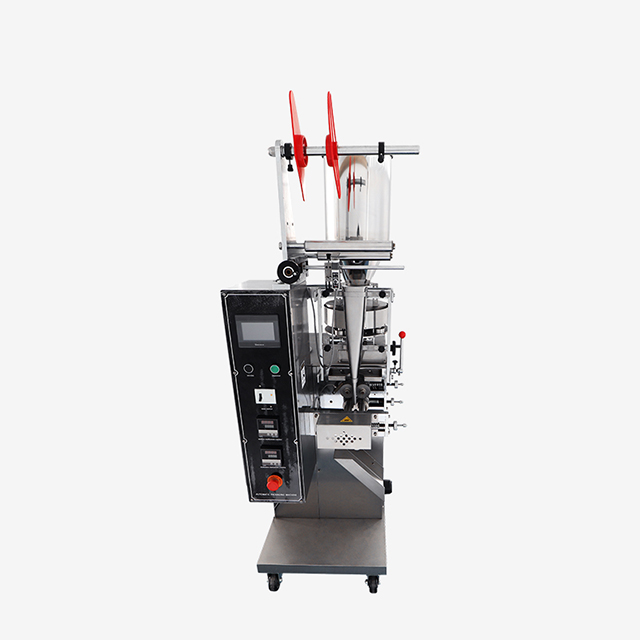
HFFS machines make more sense when the product needs controlled horizontal movement, fixed orientation, or gentler handling. They are often used when product appearance matters as much as sealing efficiency.
HFFS is usually better when products need to move forward in a controlled position. This includes individual items, grouped products, and regular-shaped goods.
Common examples include:
Biscuits
Bread
Bars
Soap
Trays
Medical products
Hardware
Solid retail items
Horizontal feeding helps products stay arranged before sealing. This is especially useful when the product has a clear front, back, top, bottom, or display side. If the product needs to enter the package in the same position every time, HFFS usually gives you more control.
HFFS avoids the vertical drop used in many VFFS setups. That matters when the product can break, deform, stick together, smear, or lose its appearance during handling.
This is common with bakery products, biscuits, soft bars, delicate confectionery, and some medical or consumer goods. In these cases, the machine choice should protect the product’s shape and presentation, not just create a sealed pack.
If you use VFFS for a product that cannot handle dropping, you may see more breakage, poor appearance, inconsistent orientation, and higher reject rates. HFFS helps reduce those risks by carrying the product through the machine more gently.
HFFS is often used when the finished product needs a clean wrap around a single item or grouped products. The product’s shape, length, and orientation are often key to getting a neat finished pack.
Flow-wrapped retail packs are common for products that need to look organized on shelves, in cartons, or in multipacks. The film wraps around the product as it moves forward, creating a package that follows the product’s shape more closely than a loose vertical bag.
Choosing between VFFS and HFFS becomes easier when you avoid the common mistakes that lead to poor machine fit.
VFFS may use less floor space in some setups, but compact design should not be the only reason for choosing it. If your product cannot drop cleanly, stay intact, or fill consistently, the smaller footprint will not solve the real problem.
Always check product behavior before layout convenience.
HFFS can produce clean retail-style wraps, but it may not be the best choice for loose powders, granules, rice, seeds, nuts, or similar products. If your product is easier to weigh and drop vertically, forcing it into a horizontal flow may make the line more complicated than necessary.
The pack appearance matters, but the product feeding method matters first.
This is one of the biggest VFFS mistakes. Some products look suitable for vertical packaging until they are tested in real movement. If the product breaks, deforms, sticks, or separates badly during the drop, VFFS may create more waste than expected.
For fragile or presentation-sensitive products, test the product path before choosing the machine.
If your product needs to face a certain direction or stay aligned inside the pack, VFFS may not give you enough control. Vertical filling is stronger for measured filling than precise placement.
HFFS is usually better when orientation matters.
Loose products often work better with VFFS because they can be weighed or dosed and then filled by gravity. Using HFFS for these products may require more complex feeding and placement than necessary.
If the product naturally flows, do not ignore VFFS.
Machine speed is only useful if the product, film, feeding system, sealing system, cutting system, and downstream equipment can keep up.
A high-speed machine can still underperform if:
The product feeds inconsistently.
The dosing system is inaccurate.
Film tracking is unstable.
Sealing time is too slow.
Cutting creates rejects.
Operators need to correct product placement.
Downstream packing cannot handle the output.
Do not compare VFFS and HFFS by speed alone. Compare the full packaging process.
Film affects forming, wrapping, sealing, cutting, and finished pack appearance. The same product may need different film depending on whether you choose VFFS or HFFS.
Before you buy the machine, confirm that the film works with the sealing method, pack format, product behavior, and desired shelf life.
The packaging machine cannot perform well if the feeding or filling system is wrong. For VFFS, the weigher, auger, pump, or dosing system is critical. For HFFS, the conveyor, infeed, product spacing, and placement system are just as important.
The main machine forms and seals the package, but the feeding system determines whether the product reaches it correctly.
VFFS and HFFS machines both form, fill, and seal packages, but they solve different packaging problems.
VFFS works better when products can be measured and dropped into bags. It is often suitable for powders, granules, snacks, nuts, rice, seeds, tablets, liquids, pastes, and small loose products. HFFS works better when products need controlled horizontal movement, gentle handling, fixed orientation, or a clean retail-style wrap.
The right choice depends on product behavior, fragility, filling method, pack style, floor space, film compatibility, output target, and line integration. If your product flows and can be measured from above, VFFS may be the more practical option. If your product must stay aligned, avoid dropping, or maintain a cleaner presentation, HFFS may be the better fit.
If you need help choosing a vertical or horizontal packaging machine based on your product, film, filling method, and production workflow, Hualian Machinerycan help you compare options and configure a packaging line that fits your real production needs.
No. VFFS means vertical form-fill-seal, while HFFS means horizontal form-fill-seal. VFFS fills products vertically from above, while HFFS carries products horizontally through the machine before sealing.
VFFS machines are usually best for products that can flow, fall, or be measured into a bag. Common examples include powders, granules, snacks, nuts, rice, seeds, candies, tablets, liquids, pastes, and other loose or portioned products.
HFFS machines are usually best for individual, grouped, fragile, or regular-shaped products that need controlled placement. Examples include biscuits, bread, bars, soap, trays, medical items, hardware, and products that need a clean flow-wrapped pack.
Neither machine is automatically faster in every situation. Real speed depends on product feeding, weighing or dosing accuracy, film tracking, sealing time, cutting accuracy, operator involvement, and downstream handling. The better machine is the one your product can move through smoothly.
Start with product behavior. If your product can be measured and dropped into a bag without damage, VFFS may be suitable. If your product needs controlled movement, fixed orientation, gentler handling, or a clean retail-style wrap, HFFS is usually the better choice.

 English
 简体中文
简体中文 ไทย
ไทย Pусский