Views: 0 Author: Site Editor Publish Time: 2026-04-22 Origin: Site


Table of Content
Continuous Shrink Wrapping Machines
Chamber vs L-Bar vs Continuous: Key Differences
How to Choose the Right Machine for Your Packaging Line
Choosing a heat shrink wrap machine is not just about picking a machine that can seal film and apply heat. Chamber, angular, and continuous systems may all fall under shrink wrapping, but they handle the job in very different ways, and those differences affect how well they fit the packaging work in front of them.
That is why the better question is not simply which machine type sounds more advanced. It is which format makes the most sense for the product, the way the film is sealed, the output expected from the line, and the demands of the wider workflow. A machine that works well for smaller and simpler packs may become limiting on a faster line, while a higher-output system may add unnecessary complexity if the packaging job does not need it.
This article compares chamber, angular, and continuous heat shrink wrap machines from that practical angle. Instead of treating them as labels alone, it looks at how each format performs and where each one makes the most sense in real packaging use.
Chamber shrink machines, sometimes called hood machines, handle sealing and shrinking in one compact cycle. The product is enclosed in film, sealed, and then shrunk within the same enclosed process, rather than being passed from one machine stage to another. That is what makes this format feel more self-contained than larger shrink-wrap systems built around separate sealing and tunnel stages.
This kind of setup is usually chosen for simplicity and compactness rather than maximum output. Many businesses choose chamber-style equipment because it combines sealing and shrinking in one step.
Chamber shrink machines are usually a good fit when the packaging job is fairly straightforward and the operation does not need a more elaborate system. They are often used for smaller product runs, simpler workflows, and workspaces where room is limited. Products such as books, cosmetics, toys, and electronic items are typical examples, because they are usually easier to wrap in a compact, all-in-one format.
Hualian’s BSF-5540 is a practical example of this kind of machine setup. It is great for spaces that value a smaller footprint and a simpler process more than higher-volume throughput such as small factories, shops, and labs.
The main strengths of chamber shrink machines are easy to see. They are compact, relatively simple to set up, and easier to work into smaller packaging areas than larger multi-stage systems. If your goal is to keep the shrink-wrap process manageable and contained, this format usually does that well.
The tradeoff is that this simplicity comes with a lower ceiling. Chamber machines are usually slower than larger or more continuous systems, and they are less suitable for bigger products or more demanding production runs. So if your packaging needs are modest, a machine like Hualian’s BSF-5540 can be a practical fit. If your line needs faster flow or more scale, this format usually starts to show its limits.
Angular shrink machines, often called L-bar systems, work by creating an L-shaped seal around the product before it moves into the shrink stage. In practical terms, the film is cut and sealed in that L pattern first, then heat is applied afterward to tighten the pack around the product.
This format is often chosen when you want a pack to look cleaner and more consistent than what a simpler compact setup might deliver, but you do not need to move all the way into a larger continuous shrink-wrap system. It gives you a more defined sealing format and a more retail-friendly finish without adding the scale and complexity of a faster continuous line.
L-bar shrink machines are usually a strong fit for smaller, regular-shaped retail products. They work best when the product is easy to position, easy to seal neatly, and expected to have a tidy finished appearance. Common examples include books, boxed goods, cosmetics, and other small consumer products where presentation matters alongside basic protection.
That is why machines in this category are often used for a broad mix of everyday packaged goods. A model like Hualian’s BSF-5640LG, which can run with PVC or PE shrink film, fits neatly into this kind of work because it suits the sort of regular products that benefit from a cleaner, more controlled retail-style wrap.
The main strength of an angular or L-bar system is the kind of pack it helps produce. It is usually a better fit when you want cleaner presentation, a more controlled seal, and a setup that works well for regular product sizes. It also offers a useful middle ground between very simple compact systems and larger continuous machines, giving you a balance of straightforward operation and more consistent output.
The tradeoff is that this format becomes less useful when the product stops being predictable. If product length varies too much, pack dimensions become awkward, or the line starts demanding more throughput than a stop-start retail-style system can comfortably support, an L-bar setup will usually start to feel limiting. That is the point where cleaner presentation matters less than flexibility or sustained flow, and another machine format often makes more practical sense.
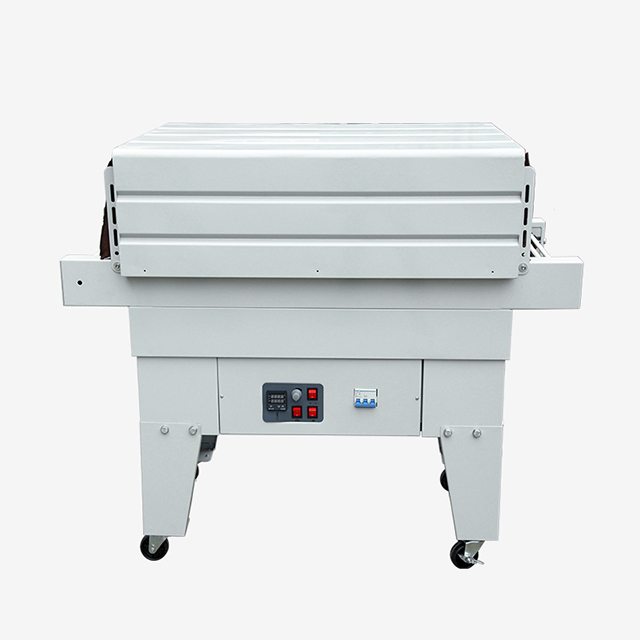
Continuous shrink wrapping machines are built to reduce the stop-start rhythm that comes with simpler shrink-wrap formats. Instead of pausing for each pack in a more segmented way, they allow products to move through the sealing stage with fewer interruptions. That creates a smoother packaging flow and makes it easier to maintain a steadier output over time.
This matters most when the packaging line is no longer limited by whether the machine can wrap the product, but by how well the machine can keep products moving. A continuous format helps by reducing pauses between packs and making the sealing stage feel more like part of an ongoing process than a repeated start-and-stop cycle.
Continuous systems are usually a better fit for higher-volume production, longer products, variable-length items, and operations that need a steadier packaging flow. They are especially useful when simpler formats begin to slow the line down because products are too long, too inconsistent, or too demanding for a more fixed sealing pattern.
Practical examples include items such as flooring boards, photo frames, aluminium sections, and woodwork, where product length or format can make more compact or stop-start systems less efficient. This is also where a setup like Hualian’s BSF-5545LE + BS-4525 fits naturally. With continuous side sealing and no product length limit, it reflects the kind of machine format that makes more sense once products become longer or less uniform and the line needs to keep moving without forcing everything into a fixed pack size.

The main strengths of continuous shrink wrapping machines are higher output, better packaging flow, and greater flexibility for longer or more irregular products. A machine like Hualian’s HWS-50C shows that clearly. With continuous sealing, a compact design, and output of up to 80 cycles per minute, it represents the faster-flow side of shrink wrapping, where the real gain is not just speed on paper, but a steadier rhythm through the sealing stage.
The tradeoff is that continuous systems usually ask more from the operation around them. They often need more floor space, involve a higher investment, and make the most sense when the rest of the line can keep up with the output they are built to support. In other words, a continuous system is usually the stronger choice when your packaging needs have outgrown simpler formats, not just when you want a machine that looks more advanced.
The clearest difference between chamber, L-bar, and continuous machines shows up in the kind of output they are built to support. They can all handle shrink wrapping, but they do not move products through the process in the same way, and that affects how well they suit different production demands.
Chamber machines: usually sit at the simpler, lower-output end of the range. Their strength is not speed. It is the fact that sealing and shrinking happen in one compact, self-contained process. That makes them useful when the packaging job is relatively straightforward and the priority is keeping the setup manageable.
L-bar systems: usually fall in the middle. They are often a step up from chamber machines in terms of output and can support a steadier packaging pace, especially when the products are regular in shape and the goal is a clean, consistent retail-style pack. They still do not offer the same line rhythm as a continuous system, but they usually give businesses a useful middle ground between compact simplicity and higher-flow operation.
Continuous machines: are generally the better fit when output needs to stay faster and more stable over time. Their main advantage is that they reduce the stop and start rhythm found in simpler formats, which helps products move through sealing with fewer pauses. That is why they are often used in higher-throughput environments or with longer and more variable products, where sustained flow matters as much as raw speed.
Another clear difference between chamber, L-bar, and continuous machines shows up in how much room they usually need and how that affects the layout of the packaging area. Space shapes how easily the machine fits into the workflow, how products move through the line, and whether the setup feels manageable in day-to-day use.
Chamber machines: usually come out strongest on compactness. Because sealing and shrinking are handled in one more self-contained process, they are often easier to place in smaller work areas without needing a longer equipment layout. That makes them a practical choice when floor space is limited and the goal is to keep the shrink-wrap process simple and contained.
L-bar systems: usually sit in the middle again. They do not demand as little space as a compact chamber machine, but they also do not usually require the same footprint as a faster continuous setup. In many cases, they offer a workable balance for operations that need a cleaner, more structured shrink-wrap process without building out a much larger packaging line.
Continuous systems: usually require more room and a more deliberate layout. That is because they are built around steadier flow, fewer pauses, and often a longer sealing-and-shrinking path. Once you move into this category, the machine is no longer just something that fits into the corner of the packaging area. It becomes part of a wider line that needs enough space for product movement, operator access, and smoother infeed and outfeed handling.
A machine may look suitable in general, but if it does not handle the actual size, shape, or length range of your products well, efficiency and pack quality usually start to suffer very quickly.
Chamber machines: are usually the most comfortable with shorter, regular, and fairly predictable products. They work best when the item fits neatly into a compact sealing-and-shrinking cycle and does not ask too much from the machine in terms of length or awkward shape. Once products become larger, longer, or less uniform, this format usually starts to feel more limiting.
L-bar systems: also tend to perform best with regular-shaped products, but they usually offer a little more flexibility than a chamber machine when the goal is a clean retail-style pack across repeated product runs. They are often a strong fit for cartons, books, cosmetics, and other products that stay within a fairly stable size range.
Continuous systems: are usually the strongest option when the product range includes longer items, variable-length products, or more irregular pack formats. Because they reduce the stop-start limits of simpler machines, they are better able to handle products that do not fit neatly into a more fixed sealing pattern. That makes them especially useful when the packaging line needs to wrap items that are not all the same length or shape without losing flow.
Packaging efficiency is not only about machine speed. It is also about how much manual loading, product positioning, monitoring, and correction the workflow demands while the line is running.
Chamber machines: usually involve the most hands-on participation. In many cases, the operator is more directly involved in loading the product, placing it correctly, and working through the sealing-and-shrinking cycle one pack at a time. That does not make them a poor choice. In smaller operations, that level of involvement may be completely manageable. But it does mean efficiency depends more heavily on operator rhythm and consistency.
L-bar systems: usually reduce some of that hands-on burden, especially when the products are regular in shape and easy to position repeatedly. They still require operator involvement, but the workflow often becomes more structured and easier to repeat across similar product runs. That can make them a practical middle ground for businesses that want cleaner pack consistency without moving all the way into a more automated continuous format.
Continuous systems: usually demand less direct intervention during the sealing process itself, especially once the line is set up properly. Because products move through with fewer pauses, the operator’s role shifts more toward feeding, monitoring, and keeping flow stable rather than constantly loading and correcting each pack individually. That can make a major difference in higher-volume packaging, where too much manual involvement quickly becomes a drag on output.
A shrink wrap machine does not just need to wrap the product. It needs to do it in a way that stays repeatable from one pack to the next. That repeatability affects more than how the pack looks on the outside. It also affects how much rework the line creates and how smoothly the finished packs move into storage, handling, stacking, or display.
Chamber machines: can produce good results, but pack consistency usually depends more heavily on operator handling and cycle control. In smaller runs, that may be perfectly acceptable. But as volume increases, differences in loading, positioning, or timing can make pack quality less uniform from one unit to the next.
L-bar systems: usually offer stronger pack consistency when the products are regular in size and shape. Because the sealing format is more defined and the workflow is more structured, they tend to produce a neater and more repeatable retail-style pack across similar runs. That makes them a practical choice when appearance matters and the product format stays fairly stable.
Continuous systems: are often the strongest option when the goal is consistent output across longer runs, especially where products need to keep moving without repeated interruption. Their main advantage is not just speed, but the fact that a steadier flow usually supports more repeatable pack formation over time, particularly in operations where stop-start handling would otherwise introduce variation.
Scalability is really about one question: will this machine still make sense when your output grows? That is where the gap between chamber, L-bar, and continuous systems becomes much clearer.
Chamber machines: are often the easiest place to start because they are compact, simpler to run, and easier to fit into a smaller operation. But that same simplicity is also what limits them. As output increases, the more self-contained, one-cycle-at-a-time workflow can start to hold the line back. What feels efficient at lower volume can become restrictive once you need more packs moving through the process with less waiting and less operator dependence.
L-bar systems: usually give you more room to grow. They can handle a steadier packaging rhythm and often make it easier to increase output without immediately moving into a much larger system. That makes them a sensible middle ground for businesses that are moving beyond basic shrink wrapping but are not yet at the point where they need a continuous line.
Continuous systems: are usually the strongest choice when growth is a real part of the decision. They are built for steadier flow, fewer pauses, and higher sustained output, so they tend to hold up better as production demands rise. In other words, they are not just machines for where the line is now, but for where it may need to go.
Start with output. If your daily volume is modest, you do not need a continuous machine just because it sounds more advanced. A simpler setup is often the better choice when it matches the real pace of the line. Output target should be one of your first filters because it quickly tells you whether you need compact simplicity, a more balanced middle-ground system, or a machine built for steadier flow.
Product shape narrows the decision quickly. Regular, repeatable packs usually fit chamber or L-bar formats more naturally. Longer, awkward, or variable-length products often push the decision toward continuous side sealing. The real issue is not just whether the machine can wrap the product, but whether it can keep doing it cleanly without constant adjustment.
A machine also has to fit the way the work area runs. Floor space, loading pattern, and operator movement all affect whether a setup feels practical. A compact machine may be the better choice if it keeps the workflow simpler and easier to manage. More speed is not much help if the layout around the machine becomes awkward.
Do not buy for theoretical output. Buy for what the line can actually feed, support, and justify. If loading is still manual or product flow is uneven, a higher-output machine may add cost without adding real efficiency. The best choice is the one that fits the product, the pace of the line, and the level of automation the operation can use properly.
A good shrink wrap machine should make the line feel easier, not heavier. It should reduce hesitation in the process, cut avoidable handling, and make it easier to keep packs moving the way they should. That is the real takeaway. The right machine is not the one with the most presence on the floor. It is the one that takes pressure off the operation.
That is why chamber, angular, and continuous formats should be judged by the kind of work they make easier. If the machine matches the product, the output level, and the way the line actually runs, it stops being just another piece of equipment and starts improving the whole packaging process around it.
If you are looking for a shrink wrapping solution that fits your operation in practical terms, Hualian Machinery offers machine formats for different pack styles, workflow needs, and production goals. Explore Hualian’s shrink packaging equipment to find a setup that helps your line run more cleanly, consistently, and efficiently.

 English
 简体中文
简体中文 ไทย
ไทย Pусский