Views: 0 Author: Site Editor Publish Time: 2026-05-27 Origin: Site


Table of Content
What Is a Thermoforming Packaging Machine?
How Thermoforming Packaging Machines Work
Main Types of Thermoforming Packaging Machines
Key Buying Factors for Thermoforming Packaging Machines
Buying a thermoforming packaging machine is not just about choosing the fastest or most automated system. The right machine must fit your product, film, mold, sealing method, loading process, factory layout, and downstream handling needs.
If these parts work together, thermoforming packaging can improve pack consistency, shelf-life protection, production flow, and finished package quality. If they do not, you may deal with poor forming, weak seals, film waste, slow loading, unstable output, or packaging that fails before it reaches the customer.
This guide explains how to choose a thermoforming packaging machine based on your product, packaging goals, production capacity, and full-line performance.
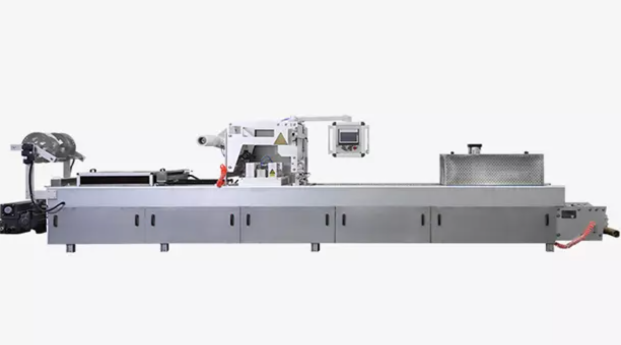
A thermoforming packaging machine is a rollstock packaging system that forms packages from film during production. Unlike pre-made trays, bags, or pouches, it shapes the bottom film, loads the product, seals the package, and cuts finished packs in one continuous process for more consistent dimensions and better line integration.
Thermoforming packaging machines follow a continuous rollstock process:
Film feeding and forming: The machine pulls bottom film from a roll, heats it, and forms it into cavities using a mold.
Product loading: Products are placed into the formed cavities manually, semi-automatically, or automatically.
Vacuuming, gas flushing, or skin packaging: The machine removes air, adds a gas mixture, or pulls film tightly around the product, depending on the packaging method.
Sealing, cutting, and discharge: The top film is sealed, finished packs are cut apart, and the packages move to labeling, inspection, or case packing.
The main thermoforming packaging machine types differ by how they protect, present, and preserve your product. Vacuum thermoforming machines remove air for tighter, longer-lasting packs. MAP thermoforming machines support vacuum and gas-flushing workflows for fresh foods that need stronger shelf-life support. Skin packaging locks the product in place for better visibility and retail display. Flexible film thermoforming creates lighter, compact packs, while rigid or semi-rigid film thermoforming gives the pack more shape, strength, and shelf appeal.
The best thermoforming packaging machine is not always the most advanced model. It is the one that matches your production capacity, application, packaging method, film structure, and factory workflow.
Before comparing machines, identify where your business fits. A small food producer moving beyond manual packing does not need the same setup as a high-volume meat plant. A ready-meal brand may care more about retail appearance and MAP control, while a medical or hardware manufacturer may focus on pack consistency and product protection.
Your Production Need | What Matters Most | Suitable Machine Direction |
Small or growing food production | Cost control, easy operation, moderate output, scalability | Compact or mid-range vacuum thermoforming |
Medium to high-volume meat, seafood, cheese, or ready meals | Speed, sealing reliability, hygiene, automation, MAP or vacuum performance | Vacuum or MAP thermoforming |
Fresh foods for retail distribution | Shelf life, pack appearance, film barrier, leak prevention, display quality | MAP thermoforming, rigid thermoforming, or tray-based MAP |
Medical, industrial, or hardware products | Product protection, puncture resistance, clean sealing, pack consistency | Flexible film, vacuum, or skin thermoforming |
Multiple product formats | Mold flexibility, changeover speed, film compatibility, future expansion | Thermoforming system with practical mold changeover |
Start with your product because it affects almost every machine decision. You need to consider product size, shape, height, weight, moisture level, fragility, oxygen sensitivity, freshness requirements, and presentation needs.
If you package meat, seafood, sausage, or cheese, your priorities may include shelf-life protection, vacuum strength, sealing reliability, and hygiene. If you package ready meals, you may need stronger pack structure, MAP support, and better retail presentation. If you package medical disposables, hardware, or industrial parts, product protection, puncture resistance, and clean cavity design may matter more than food shelf-life performance.
Soft, wet, irregular, or fragile products may need different forming, loading, sealing, and film choices than firm or uniform products. A seafood portion may need more careful loading and sealing control than a block of cheese. A sharp industrial part may need stronger puncture resistance. A fresh food product may need high-barrier film and MAP support.
You should decide whether your product needs vacuum packaging, MAP packaging, skin packaging, flexible packaging, or rigid packaging before you choose the machine.
Vacuum packaging may suit compact oxygen-reduced packs for meat, seafood, sausage, cheese, and some industrial products. MAP is stronger for fresh foods that need controlled atmosphere support and better retail presentation. Skin packaging works well when product visibility and hold are important. Rigid or semi-rigid thermoforming is often better when the pack needs more shape, structure, and shelf appeal.
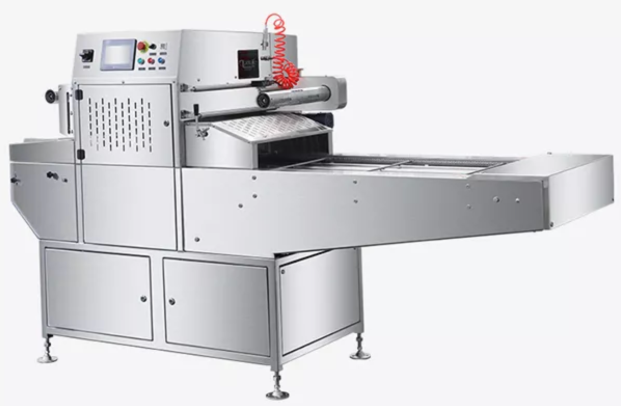
If your product already performs better in pre-made trays, a tray-based MAP option may make more sense than rollstock thermoforming.
Film choice affects forming quality, seal strength, barrier performance, appearance, and pack durability. You should consider bottom film thickness, top film structure, barrier properties, flexible or rigid film, peelable or non-peelable sealing, anti-fog needs, puncture resistance, and heat-sealing performance.
A growing food producer may prioritize films that are cost-effective and easy to run. A retail food brand may need high-barrier or anti-fog film for shelf life and display quality. A hardware or industrial product manufacturer may need stronger puncture resistance. A medical product manufacturer may care more about clean sealing and stable pack dimensions.
Even a strong machine will perform poorly if the film does not match your product and pack design. Thin film may fail in deep forming. Poor barrier film may not support shelf-life targets. A film that does not seal well around moisture can create leaks.
Forming depth determines whether your product can sit properly inside the formed cavity. Deeper packs usually need suitable film thickness, stable heating, good mold design, and accurate forming control.
This is especially important if you package meat cuts, seafood portions, ready meals, or irregular items. If the cavity is too shallow, the product may interfere with sealing. If it is too deep for the film, the pack may become weak at corners or stretched areas.
For small or growing producers, it may be better to choose practical pack sizes that are easy to run consistently. For high-volume plants, forming depth and cavity layout should support both output and product protection. For multiple product formats, mold planning becomes even more important because one machine may need to support different product heights and pack sizes.
You should not rely only on the maximum listed machine speed. Actual output depends on loading speed, product spacing, pack size, film width, number of cavities per cycle, vacuum time, gas-flushing time, cutting speed, operator skill, and downstream handling.
If you run a small operation, your goal may be stable output without making the line too complex. If you run a high-volume food plant, you may need stronger automation, faster loading, reliable cutting, and smooth discharge. If you package irregular or delicate products, manual or assisted loading may limit speed even when the machine itself can run faster.
Your packaging line is only as efficient as its slowest step. A high-speed machine will not solve a slow manual loading process. In some factories, a moderate-speed machine with easier changeover and smoother downstream integration may produce better real-world results.
Molds determine pack size, cavity shape, and pack layout. You should consider how many product formats you need, how often you will change formats, mold cost, changeover time, cleaning access, and future product expansion.
If you produce one high-volume item, a dedicated mold layout may give you better speed and consistency. If you package several product sizes, changeover becomes more important. A machine that works well for one product may become restrictive if mold changes are slow, expensive, or difficult to clean.
This is where you need to think beyond current production. If your product range may grow, ask how easily the machine can support new pack formats, different cavity layouts, or different film structures.
Sealing quality is one of the most important parts of thermoforming packaging. Weak seals can cause leaks, spoilage, failed MAP performance, contamination, poor shelf life, and product returns.
For meat, seafood, dairy, and ready meals, sealing quality directly affects shelf life and food safety. For MAP packs, the seal must help maintain the gas mixture. For wet or oily products, the seal area needs more control because moisture can interfere with sealing. For industrial or hardware products, seal strength may matter because packs can face rough handling or sharp product edges.
Sealing requirements depend on film type, product moisture, pack format, and storage conditions. Do not treat sealing as a minor technical detail. It is one of the main factors that determines whether the finished pack performs after it leaves your facility.
Loading can be manual, semi-automatic, or automatic. Manual loading may work for irregular products, lower output, or products that need careful placement. Automatic loading is better for uniform products and higher-volume lines.
If you are moving from manual packaging to thermoforming, you may start with manual or assisted loading to control cost. If you operate a higher-volume line, automatic feeding may be necessary to reach your output target. If your products are fragile, wet, or irregular, the loading method must protect the product as much as it supports speed.
Loading should be treated as part of your machine decision because it affects the whole line speed. A fast machine with slow loading will not produce high output in real production.
Hygiene is especially important if you package meat, seafood, dairy, ready meals, or other food products. You should consider machine material, open design, cleaning access, food-contact areas, film path cleaning, and sanitation requirements.
For food plants, easy cleaning helps reduce downtime and supports safer production. For medical or clean industrial products, controlled contact areas and clean sealing may also matter. If your products create liquid, crumbs, residue, or grease, cleaning access becomes even more important.
Cleaning should be considered before you buy the machine, not after installation. A machine that is difficult to clean can increase downtime, create hygiene risks, and make daily operation harder.
Thermoforming machines need space for film rolls, loading, sealing, cutting, discharge, operators, and downstream equipment. You may also need to plan for labeling, coding, inspection, checkweighing, conveying, cartoning, and case packing.
If you run a small facility, floor space and operator access may be major concerns. If you run a larger plant, the machine must connect smoothly with the rest of the packaging line. If you package retail products, downstream labeling and case packing may affect the final pack format.
Thermoforming should be planned as part of your full packaging line, not as a stand-alone purchase. A machine that fits your product but does not fit your factory layout can still create production problems.
The right thermoforming packaging machine is not simply the model that sounds most advanced. It is the machine that fits your product, film, pack format, output target, mold design, sealing requirement, loading method, hygiene needs, and production layout.
Thermoforming machines can improve consistency, shelf-life protection, pack quality, and packaging efficiency, but only when the setup matches your actual packaging goal. A vacuum thermoforming system may be right for compact oxygen-reduced packs. A MAP thermoforming system may be better for perishable foods that need controlled atmosphere support. A skin packaging system may suit products that need strong hold and better display value. In other cases, tray sealing or another packaging method may be more practical.
If you are choosing between thermoforming, tray sealing, vacuum packaging, MAP packaging, or a complete packaging line, Hualian Machinery can help you compare options based on your product needs, production capacity, packaging format, and long-term line performance.
Thermoforming packaging machines are commonly used for meat, seafood, sausage, cheese, ready meals, medical products, hardware, and industrial parts. They are best suited for products that need consistent pack dimensions, repeatable output, and better integration between forming, loading, sealing, and cutting.
A thermoforming machine is usually better for medium to high-volume production because it creates packs continuously from rollstock film. A chamber vacuum machine may be better for lower output, small batches, or products that do not justify a larger automated line.
Yes. Some thermoforming machines can support MAP by forming the pack, reducing or removing air, introducing gas, sealing the pack, and cutting finished units. MAP performance depends on gas control, film barrier, sealing quality, and product behavior.
Thermoforming can use flexible, rigid, or semi-rigid films. You should consider film thickness, barrier properties, heat-sealing performance, peelability, anti-fog needs, puncture resistance, and forming depth.
Start with your product, then define the packaging method, film type, pack size, forming depth, output target, loading method, mold requirements, sealing needs, hygiene standards, and line layout.

 English
 简体中文
简体中文 ไทย
ไทย Pусский