Views: 0 Author: Site Editor Publish Time: 2026-05-28 Origin: Site


Table of Content
What a Thermoforming Machine Does
What a Thermoforming Packaging Machine Does
Thermoforming Machine vs Thermoforming Packaging Machine: Key Comparison
What to Check Before Choosing a Thermoforming Packaging Machine
Common Mistakes Buyers Should Avoid
A thermoforming machine and a thermoforming packaging machine may sound like the same type of equipment because both use heat and molds to shape plastic film or sheet. However, they are built for different production goals.
A thermoforming machine usually produces empty trays, containers, lids, inserts, clamshells, or plastic parts. A thermoforming packaging machine forms the package, loads the product, seals it, and cuts it into finished packs.
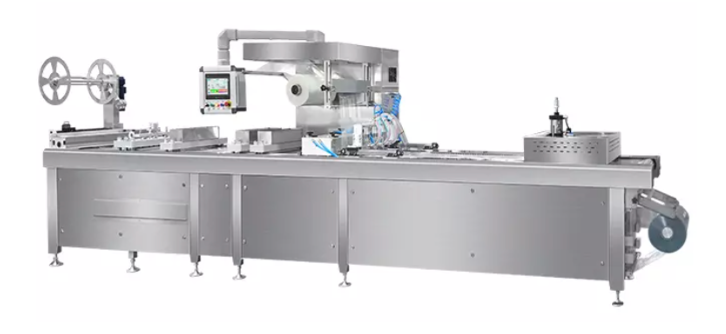
This guide explains the difference between a thermoforming machine and a thermoforming packaging machine so you can choose the equipment that fits your production goal, material, product type, and line workflow.
A thermoforming machine is equipment used to heat and form plastic sheets or film into specific shapes. The process usually involves heating the material until it becomes formable, shaping it over or into a mold, cooling the formed part, trimming excess material, and stacking the finished pieces.
The output is usually an empty formed item, not a sealed product pack. Depending on the mold and material, a thermoforming machine can produce:
Food trays
Medical trays
Plastic lids
Clamshell containers
Blister trays
Industrial inserts
Display packaging
Component holders
Other formed plastic parts
This type of machine is commonly used by tray manufacturers, packaging material suppliers, plastic product manufacturers, and companies that produce formed plastic components for other businesses.
If your business makes trays or containers that another company will later fill and seal, then a thermoforming machine may be the right equipment category. Your goal is not to package the product in one line. Your goal is to create the empty plastic part accurately, repeatedly, and efficiently.
When choosing a thermoforming machine, you should focus on factors such as sheet width, forming depth, material compatibility, mold accuracy, forming speed, trimming quality, and finished part consistency. The machine must be able to form the shape correctly, cut the material cleanly, and maintain consistent dimensions across production runs.
For example, a tray producer may care most about cavity shape, wall thickness, stacking quality, trimming accuracy, and cycle speed. A medical tray supplier may focus more on clean cavity formation, material consistency, and tight dimensional control. An industrial insert manufacturer may need thicker material, deeper forming, stronger part structure, or special mold designs.
The most important point is that a thermoforming machine creates the packaging component or plastic part. It does not usually handle the full packaging process after the product is placed inside.
A thermoforming packaging machine is different because it is built around product packaging, not only plastic forming. It forms cavities from bottom film, loads the product, applies top film, vacuum seals or gas flushes where needed, seals the pack, cuts it into finished units, and discharges the packs for the next stage.
In other words, it is not only a forming machine. It is a packaging line built around thermoforming.
A typical thermoforming packaging process may include:
Process Step | What Happens |
Bottom film feeding | Film is pulled from a roll into the machine |
Forming | The lower film is heated and formed into cavities |
Product loading | Products are placed into the formed cavities |
Vacuuming or gas flushing | Air is removed or replaced with a gas mixture where needed |
Top film sealing | The package is sealed closed |
Cutting | Finished packs are separated |
Discharge | Packs move to inspection, labeling, cartoning, or case packing |
This type of machine is commonly used for meat, seafood, cheese, ready meals, medical products, industrial parts, and other products that need sealed, consistent packaging.
If you are producing finished packs for storage, distribution, or retail, then a thermoforming packaging machine is usually closer to what you need. You are not just forming a tray. You are creating a complete pack around the product.
When choosing a thermoforming packaging machine, you usually focus on sealing quality, vacuum or MAP performance, film compatibility, loading method, forming depth, cutting accuracy, hygiene, and line integration. These factors matter because the machine must protect the product after packaging, not just form the material.
For example,HVR-420A Automatic Vacuum Thermoforming Packaging Machine is a practical example of this difference because it combines forming, product feeding, vacuum sealing, gas flushing, sealing, and cutting in one system. That kind of integrated workflow is what separates a thermoforming packaging machine from a basic forming machine.
The easiest way to compare both machines is to look at the final output first. A thermoforming machine produces empty formed parts. A thermoforming packaging machine produces sealed product packs.
That single distinction should guide the rest of your buying decision.
Comparison Point | Thermoforming Machine | Thermoforming Packaging Machine |
Main purpose | Produces empty formed plastic parts | Produces sealed product packs |
Final output | Trays, lids, clamshells, inserts, containers | Vacuum packs, MAP packs, sealed food packs, medical packs |
Product handling | Usually does not load or seal products | Forms, loads, seals, cuts, and discharges packs |
Typical users | Tray producers, plastic part manufacturers, packaging suppliers | Food processors, medical packers, industrial product manufacturers |
Key priorities | Forming accuracy, trimming, stacking, cycle speed | Seal strength, vacuum/MAP control, hygiene, cutting, line flow |
Material handling | Plastic sheet or film | Bottom film, top film, flexible, rigid, or barrier film |
Best use case | Making empty packaging components | Packaging products for storage, distribution, or retail |
A thermoforming machine produces empty formed parts. These parts may later be filled, sealed, labeled, or packed using other equipment. The machine’s job is to make the shape.
A thermoforming packaging machine produces sealed product packs. The product is already inside the package when it leaves the machine. The machine’s job is to form the pack, handle the product, seal it, and prepare it for downstream handling.
A thermoforming machine typically follows this process:
Heating
Forming
Cooling
Trimming
Stacking
The material is shaped, finished, and collected as empty parts.
A thermoforming packaging machine has a longer process because it handles both the package and the product:
Bottom film feeding
Forming
Product loading
Vacuuming or gas flushing
Top film sealing
Cutting
Discharge
This extra workflow is important. Product loading, vacuum control, gas flushing, sealing, and discharge are not minor additions. They are core packaging functions. If your production goal requires these steps, a basic thermoforming machine cannot replace a thermoforming packaging machine.
Thermoforming machines are more suitable for companies that manufacture trays, containers, lids, inserts, and plastic parts. These businesses may sell formed packaging components to food companies, medical suppliers, retailers, or industrial manufacturers.
Thermoforming packaging machines are more suitable for companies that need to package their own products. This includes food processors, meat and seafood plants, cheese producers, ready-meal manufacturers, medical product packers, and industrial product manufacturers.
For example, if you produce empty trays for other food processors, your needs are different from a meat processor that wants to vacuum pack or MAP pack fresh products. One business needs to form trays. The other needs finished sealed packs.
For a thermoforming machine, the main concerns are forming accuracy, sheet handling, cycle speed, mold quality, trimming quality, stacking performance, and finished part consistency.
For a thermoforming packaging machine, the main concerns are product loading, seal strength, vacuum or gas control, hygiene, cutting accuracy, pack consistency, and line flow.
This is why a machine built for forming trays is not automatically suitable for product packaging. Even if it can form the right cavity shape, it may not have the systems needed for loading, sealing, vacuuming, gas flushing, or clean product discharge.
Thermoforming machines often work with plastic sheets or films to create empty parts. Depending on the product, the material may be thick, rigid, semi-rigid, transparent, colored, or designed for specific part strength.
Thermoforming packaging machines usually work with bottom film and top film to create sealed product packs. The lower film forms the cavity, while the upper film seals the product inside. Film selection affects forming quality, seal strength, barrier protection, appearance, shelf life, and pack durability.
For packaging applications, film choice must match the product and packaging goal.
You should start with the production goal, not the machine name. Many buying mistakes happen because companies ask for a “thermoforming machine” without defining whether they need empty formed parts or finished sealed packs.
A thermoforming machine is usually the better choice when your goal is to produce empty trays, containers, lids, inserts, clamshells, blister trays, or plastic parts.
This may be the right option if:
You manufacture packaging components for other companies.
You produce plastic trays or containers in bulk.
You need formed parts that will be filled later.
You care most about mold accuracy, trimming, and stacking.
You do not need integrated product loading or sealing.
For example, a company that produces food trays for bakeries or meat processors may only need a thermoforming machine. The trays can be shipped empty, then filled and sealed by the customer using other packaging equipment.
A thermoforming packaging machine is usually the better choice when your goal is to form the pack, load the product, seal it, and prepare finished packs for storage, distribution, or retail.
This may be the right option if:
You package meat, seafood, cheese, ready meals, or medical products.
You need vacuum packaging, MAP, or skin packaging.
You need stronger shelf-life support.
You want consistent retail-ready packs.
You need hygienic sealing and clean discharge.
You want forming, sealing, and cutting in one line.
If your product needs vacuum packaging, modified atmosphere packaging, skin packaging, shelf-life support, hygienic sealing, or consistent presentation, then you need more than a forming machine. You need a thermoforming packaging workflow.
For example, if you produce fresh seafood portions for retail, it is not enough to form a tray. You may need vacuum or gas flushing, barrier film, reliable sealing, clean cutting, and stable discharge into labeling or cartoning. That is the role of a thermoforming packaging machine.
If you decide that a thermoforming packaging machine is the right direction, the next step is to compare the machine against your product and production needs.
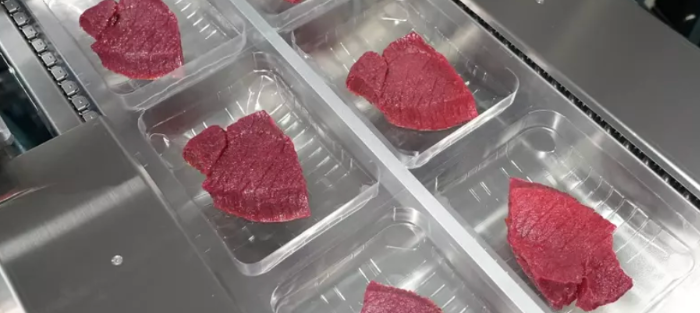
Start with your product because it affects almost every part of the machine decision. You should consider the product’s size, shape, height, weight, moisture level, fragility, oxygen sensitivity, shelf-life target, and presentation needs.
A firm cheese block, a soft seafood portion, a ready meal, a medical item, and a sharp industrial part will not behave the same way inside a formed pack. Each product may require different forming depth, loading control, film structure, sealing pressure, and cutting setup.
You also need to define the packaging method. A thermoforming packaging machine may support vacuum packaging, modified atmosphere packaging, skin packaging, flexible film packaging, rigid film packaging, or aluminum film packaging depending on the machine configuration.
Your packaging method affects:
Film selection
Forming depth
Sealing system
Vacuum or gas control
Cutting method
Pack appearance
Shelf-life performance
If you choose the machine before defining the packaging method, you may end up with a system that cannot support the pack style your product actually needs.
Film structure affects forming quality, seal strength, barrier performance, and finished pack appearance. Flexible film may suit compact vacuum packs, while rigid or semi-rigid film may be better for tray-like presentation. Aluminum film may be useful where stronger barrier protection is needed.
You should check whether the machine can handle the film thickness, forming depth, sealing temperature, and cutting behavior required by your packaging format.
Product loading can be manual, semi-automatic, or automatic. Manual loading may work for irregular products, lower output, or products that need careful placement. Automatic loading may be better for uniform, high-volume products.
Do not judge the machine by forming or sealing speed alone. If products cannot be loaded at the same pace, the full line will slow down.
Sealing quality is one of the most important parts of a thermoforming packaging machine. Weak seals can cause leakage, contamination, failed MAP performance, shorter shelf life, and product returns.
You should check how the machine controls temperature, pressure, sealing time, film alignment, and product contamination around the seal area. If you package wet, oily, dusty, or oxygen-sensitive products, sealing control becomes even more important.
Cutting accuracy affects pack separation, edge quality, downstream handling, and finished appearance. Poor cutting can create rough edges, uneven pack sizes, jams, or problems with labeling and cartoning.
If your packs move into automated downstream equipment, cutting accuracy should be part of your buying decision from the beginning.
For food and medical products, hygiene is not optional. You should look at machine material, open access, cleanability, product-contact areas, film path design, and sanitation routines.
A machine that is difficult to clean may increase downtime, create hygiene risks, and make daily operation harder for your team.
A thermoforming packaging machine rarely works alone. You may also need conveyors, labeling machines, coding systems, inspection equipment, checkweighers, metal detectors, cartoning equipment, or palletizing systems.
Before buying, check whether the machine fits your available floor space, operator access, product flow, downstream handling, and future expansion plans.
Choosing between a thermoforming machine and a thermoforming packaging machine becomes easier when you avoid the most common mistakes.
If your goal is only to produce trays, lids, or inserts, a full thermoforming packaging machine may be unnecessary. You may end up paying for packaging functions you do not need, such as loading, sealing, vacuuming, gas flushing, and cutting systems designed for finished packs.
This is the opposite problem. If you need product loading, sealing, vacuuming, MAP, or finished-pack output, a basic thermoforming machine will not meet your needs. It may form plastic parts, but it will not complete the packaging process.
Speed matters, but it is not the only measure of performance. For thermoforming packaging, you also need to consider loading speed, vacuum time, gas flushing, sealing strength, cutting accuracy, discharge flow, and downstream handling.
A machine with high forming speed may still underperform if loading or cutting cannot keep up.
If your goal is product packaging, sealing quality and film compatibility are critical. Poor film matching can cause weak forming, bad seals, poor barrier performance, and unattractive packs.
Do not assume any film will work just because the machine can form it. The film must match the product, packaging method, forming depth, and sealing system.
Not every thermoforming machine can support vacuum packaging, gas flushing, or skin packaging. These functions require specific machine design, sealing systems, vacuum chambers, gas systems, and film compatibility.
If you need vacuum or MAP, confirm that the machine is built for that workflow.
A thermoforming packaging machine must fit your full production line, not just the forming process. You need to think about loading, operator access, conveyors, inspection, coding, labeling, cartoning, case packing, and maintenance.
A machine that performs well by itself can still create problems if it does not fit your factory workflow.
Use this simple guide when deciding which machine category fits your production goal.
Your Goal | Better Machine Choice | Why |
Produce empty trays or lids | Thermoforming machine | You need formed parts, not sealed packs |
Make blister trays or inserts | Thermoforming machine | Mold accuracy and trimming matter most |
Package meat or seafood | Thermoforming packaging machine | You likely need sealing, vacuum, MAP, or barrier film |
Package ready meals | Thermoforming packaging machine | You need product loading, sealing, structure, and retail presentation |
Package medical products | Depends on output | Empty trays need forming; sealed packs need packaging |
Reduce reliance on pre-made trays | Thermoforming packaging machine | Packs can be formed from film during production |
Create retail-ready sealed packs | Thermoforming packaging machine | Finished pack quality depends on sealing, cutting, and line flow |
Thermoforming machines and thermoforming packaging machines share the same basic forming principle, but they are built for different production goals.
A thermoforming machine is mainly used to produce empty trays, containers, lids, inserts, clamshells, blister trays, or formed plastic parts. A thermoforming packaging machine is used to form the package, load the product, seal it, and produce finished packs for storage, distribution, or retail.
The best choice depends on your final output, product type, packaging method, film structure, automation needs, and line integration. If you only need formed plastic parts, a thermoforming machine may be enough. If your product needs vacuum packaging, MAP, skin packaging, hygienic sealing, shelf-life support, or retail-ready presentation, a thermoforming packaging machine is usually the better fit.
If you need help choosing a thermoforming packaging machine based on your product type, film format, pack size, and production workflow, Hualian Machinery can help you compare options and configure a system around your packaging goal.
No. A thermoforming machine usually produces empty formed plastic parts, such as trays, lids, containers, or inserts. A thermoforming packaging machine forms the pack, loads the product, seals it, and cuts it into finished product packs.
A thermoforming packaging machine forms cavities from bottom film, loads the product, applies top film, vacuum seals or gas flushes where needed, seals the pack, cuts it into finished units, and discharges the packs for downstream handling.
You should choose a thermoforming machine when your goal is to produce empty trays, containers, lids, clamshells, inserts, blister trays, or other formed plastic parts that will be filled, sealed, or used later.
You should choose a thermoforming packaging machine when you need to form the pack, load the product, seal it, and produce finished packs for storage, distribution, or retail. It is also the better choice when you need vacuum packaging, MAP, skin packaging, or shelf-life support.
You should check your product size, packaging method, film structure, forming depth, loading method, sealing quality, vacuum or MAP performance, cutting accuracy, hygiene, line layout, and downstream equipment needs.

 English
 简体中文
简体中文 ไทย
ไทย Pусский